
The Soesterberg Air Base UFO Sighting
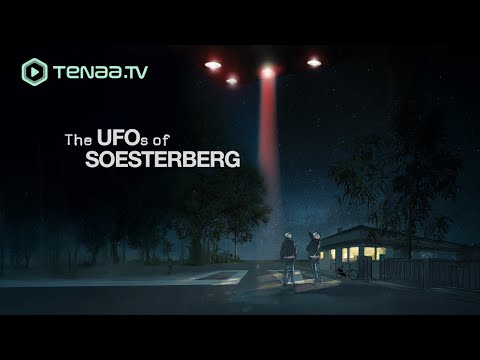
In the pre-dawn darkness of February 3, 1979, security guards patrolling the shared Dutch-American Soesterberg Air Base watched a silent, low-flying triangular object — three brilliant white lights framing a central red beam — pass directly over the flight line, not once but twice. Radio communications cut out during the encounter. Twelve guards, questioned separately, gave accounts that corroborated each other in remarkable detail. Forty-four years later, their testimony finally reached a wide audience through the 2023 documentary "The UFOs of Soesterberg."

Pictured: the runway of the former Soesterberg Air Base, photographed in its present-day decommissioned state — not a photograph from the night of February 3, 1979, or of the triangular object itself, no image of which is known to survive.
Theoretical Alignment
This case file weights the Psycho-Social/Mundane framework slightly higher than Extraterrestrial for a specific, disclosed reason: the base's own official explanation — an optical mirage caused by car headlights reflecting off a temperature-inverted layer of air — is a genuine, physically real atmospheric phenomenon, and this case file cannot rule it out definitively given the absence of radar corroboration. What keeps ETH weighted nearly as high is the sheer specificity and internal consistency of twelve independently-interviewed witnesses describing a structured triangular shape, a directed light beam, and simultaneous radio interference — details considerably more elaborate than a simple headlight-mirage explanation typically produces. The Interdimensional framework is weighted lowest of the three not because this case file considers it categorically implausible in principle, but because nothing in the witness testimony — no reported visual distortion of the surrounding environment, no missing-time effect, no claimed telepathic or otherwise anomalous psychological contact — offers this case file any specific evidentiary foothold for that framework beyond the object's basic, otherwise-unexplained presence; the sighting's own internal details point far more directly toward a physically solid, conventionally-behaving (if unidentified) craft, or a physically explicable optical and psychological phenomenon, than toward anything requiring an interdimensional model to account for what was actually reported.
This case file also weighs the PSH and ETH assessments against each other in light of the base's broader pattern that winter: a single anomalous night is more readily explained by an unusual, one-time atmospheric or perceptual event than a base experiencing multiple, closely-spaced reports of unusual aerial activity across several weeks, as Soesterberg and its immediate surroundings appear to have done between early February and early March 1979. A recurring pattern does not, on its own, favor ETH over PSH — a persistent local source of ground lighting or a recurring set of atmospheric conditions could just as easily produce repeated mirages as a genuinely returning craft could produce repeated overflights — but it does meaningfully weaken any explanation, mundane or otherwise, that depends on treating February 3, 1979 as a uniquely improbable, one-off coincidence of conditions.
Background
The airfield at Soesterberg has a military history stretching back to 1911, when it was first laid out, and to 1913, when the Dutch Army purchased the land outright to establish an Army Aviation Division training ground. It served as a neutral Netherlands' own border-patrol and pilot-training field through the First World War, was occupied by the German Luftwaffe from May 15, 1940, and endured such extensive Allied bombing damage by September 1944 that the occupying force itself judged the airfield essentially useless before Canadian troops liberated it in May 1945. Rebuilt in the postwar years, the base was formally declared operational by the Royal Netherlands Air Force (RNLAF) on August 5, 1951, resuming a continuous air-defense flying mission that would last for decades.
By 1979, Soesterberg Air Base occupied an unusual position in NATO's Cold War order of battle: a Dutch Royal Netherlands Air Force installation that also hosted a significant United States Air Force presence, designated Camp New Amsterdam by the American personnel stationed there — a name chosen in 1954, when the Dutch government first approved basing a USAF fighter squadron on Dutch soil, in honor of Nieuw Amsterdam, the original Dutch settlement that later became New York City. The American mission at Soesterberg evolved considerably over the quarter-century that followed: the 512th Fighter-Day Squadron arrived from RAF Manston in November 1954 flying F-86 Sabres; the unit was redesignated the 32nd Fighter-Interceptor Squadron in September 1955 and progressed through F-100 Super Sabres in 1956 and F-102 Delta Daggers in 1959; and on July 1, 1969, it became the 32nd Tactical Fighter Squadron, converting to the F-4 Phantom II that stood alert at the base on the night of the sighting, a transition significant enough that the base's runway was extended past 3,000 meters to accommodate the heavier jet. That squadron carried a 24-hour interceptor alert commitment as part of NATO's Second Allied Tactical Air Force, giving the installation genuine, high-priority strategic significance and, correspondingly, an unusually vigilant overnight security posture — guards were trained and expected to treat any unexplained aerial activity near the flight line as a potential security concern worth immediate, formal reporting. (The base would go on to fly F-15 Eagles during Operations Desert Shield and Desert Storm before flying operations finally ceased in November 2008 and the installation formally closed at the end of that year, its runway and hardened aircraft shelters now partly preserved as national heritage and partly repurposed as a glider field and the site of the Nationaal Militair Museum.)
It was this same trained, security-conscious guard force that first spotted the object in the pre-dawn hours of February 3, 1979. This case file finds the witnesses' occupational context directly relevant to the case's overall credibility: these were not casual civilian observers glancing skyward, but on-duty military security personnel whose job specifically required them to notice, assess, and accurately report unusual aerial activity near sensitive installations, and whose professional training included regular exposure to the appearance of conventional aircraft, flares, and other legitimate nighttime aerial activity around an active fighter base.
The incident received only limited internal attention at the time and remained largely unknown outside Dutch ufological circles for decades. That began to change through the work of Dutch UFO investigator and eventual filmmaker Bram Roza, who founded the sighting-tracking organization UFO Meldpunt Nederland (Dutch UFO Reporting Point) in 2005 and later became a board member of UAP Coalitie Nederland, a network of aviation, police, and military professionals who have personally encountered unexplained aerial phenomena. Roza spent roughly five years locating and re-interviewing surviving Soesterberg witnesses, work that culminated in the 2023 documentary The UFOs of Soesterberg (De UFO's van Soesterberg), which world-premiered at the Science + Fiction Film Festival in Trieste, Italy, screened to sold-out audiences in the Netherlands near the site of the original sighting, and was later picked up for international streaming distribution on Amazon Prime Video and Apple TV+ — reportedly the first Dutch UFO documentary to reach that scale of release. The film reunited several of the original witnesses on camera and presented their accounts, alongside the Air Force's own contemporaneous mirage explanation, to a general Dutch and international audience for the first time. Reviewers who covered the film's festival run, including at Screen Anarchy and the 2024 Chattanooga Film Festival, consistently noted that Roza deliberately avoided declaring a definitive answer, instead laying out competing explanations — misidentified experimental aircraft, atmospheric mirage, even Soviet reconnaissance activity — and letting the audience weigh the witnesses' testimony for itself.
Complete Timeline
| Date | Event |
|---|---|
| February 2, 1979, evening | A separate, non-military witness on horseback reports a large, silent, stationary object with bright white and blue lights hovering above trees at Leusderheide, near Soesterberg, the night before the base sighting. |
| February 3, 1979, ~5:45 AM | On-duty security guards at Soesterberg Air Base spot three bright white lights in formation overhead; radio the sighting in and request all available personnel respond. |
| February 3, 1979 (continuing) | Twelve guards observe the underside of a large triangular object bearing three white lights and a central red, beam-like light, passing over the flight line at an estimated 150–200 meters altitude and 50–100 km/h. |
| February 3, 1979 (same encounter) | Radio communications among the guards reportedly cut out during the object's closest approach, resuming once it moved off. |
| February 3, 1979 (shortly after) | A second flyover of the base occurs, observed independently from Posts C, D, and E; a bright flash of light coincides with the white lights extinguishing as the object accelerates away. |
| February 3, 1979 (same day, official response) | Base authorities offer an initial explanation attributing the sighting to a mirage — car headlights reflected off a temperature-inverted layer of air. |
| March 2, 1979 | A further, separately reported sighting occurs over Camp New Amsterdam, prompting sufficient public and political attention that the Dutch government itself begins formally questioning the military about the events. |
| April 1979 | Dutch civilian UFO investigators formally approach the Air Force, gathering statements and reconstructing the sighting geometry from five separate base observation posts. |
| April 27, 1979 | Ten of the twelve original witnesses participate in a reconstruction of their testimony broadcast on the VPRO radio program Expres. |
| May/June and July/August 1979 | NOBOVO (the Dutch UFO research bureau) publishes its investigative findings in issues #27 and #28 of its journal, Tijdschrift voor Ufologie. |
| August 18, 2013 | Regional broadcaster RTV Utrecht revisits the case on its program Kwaaie Tongen, gathering a fresh account from one of the original witnesses, Sergeant De Groot. |
| 2010s | Dutch UFO investigator Bram Roza begins locating and re-interviewing surviving witnesses decades after the original sighting. |
| 2023 | The UFOs of Soesterberg (De UFO's van Soesterberg) world-premieres at the Science + Fiction Film Festival in Trieste, Italy, before a wider Dutch and international release, presenting the reunited witness testimony to a wide audience for the first time. |
The First Pass
The sighting began, by all surviving accounts, in an unremarkable way: on-duty security guards, patrolling the base's perimeter and flight line in the pre-dawn darkness, noticed three unusually bright white lights holding a fixed formation in the sky. Watch commander Commander Van Vliet, by his own later account, assumed at first that he was simply looking at an approaching aircraft — a reasonable first guess on an active fighter base — but revised that assessment as the object grew steadily larger in his field of view while remaining completely silent. What distinguished the sighting from routine air traffic almost immediately was the formation's behavior — rather than passing overhead at conventional aircraft speed and altitude, the lights approached slowly and descended to what witnesses estimated as roughly 150 to 200 meters, low enough that the object's underlying structure became clearly visible: a large, dark triangular shape, with the three white lights positioned at its corners, angled diagonally outward, and a fourth, red, beam-like light in the center of its underside, aimed straight down.
Van Vliet was among those who radioed the sighting to fellow personnel, requesting that all available guards report to observe the object directly — itself a notable detail this case file treats as evidentially significant, since it indicates the initial witnesses considered the sighting significant enough to actively summon additional corroborating observers in real time, rather than reporting only after the fact. Later recounting his own certainty that the object was not a known aircraft, Van Vliet is reported to have put it plainly: "We weten álles van vliegtuigen; dit was geen vliegtuig" — "We know everything about airplanes; this was not an airplane." This case file flags that line as a paraphrase-adjacent quotation drawn from a secondary Dutch case archive rather than a primary 1979 transcript, and recommends independent spot-verification before treating its exact wording as settled.
The additional guards who responded to Van Vliet's call included, according to later published accounts, Sergeant De Groot, dog handler Corporal Rob Jansen, and a soldier identified as Molhoek, stationed at posts spread around the base's perimeter and flight line. This case file finds the resulting body of near-simultaneous, independently-positioned testimony — guards stationed at multiple separate posts around the base, all observing overlapping but not identical vantage points on the same object — considerably more evidentially robust than a single-witness account could ever be. Separately, radar operator Jan van Esseveld, monitoring the base's own radar scopes rather than stationed outdoors as a visual witness, later stated no unusual contact was registered on radar during either pass; this case file treats that radar-negative finding as circumstantially interesting but explicitly does not treat it as evidence that the object itself was ever detected on radar — a distinction addressed at greater length in this file's Material Analysis section below.
Radio Silence and the Red Beam
Several witnesses specifically recalled that radio communications among the guard posts became unreliable or cut out entirely during the object's closest approach, resuming only once it had moved off — a detail this case file finds among the case's most evidentially interesting, since electromagnetic interference coincident with a UFO's close approach is a recurring, if never fully explained, pattern across multiple unrelated cases in this catalogue's broader holdings, and one considerably harder to attribute to simple visual misperception than the lights themselves might be. This case file treats that interference claim with appropriate caution, however: no independent instrumented record of the radio outage — a maintenance log, a signal-strength trace, or similar — is known to have survived or been publicly released, leaving it, like the visual testimony itself, ultimately a matter of witness recollection rather than measured fact.
The central red light was separately described by multiple witnesses as beam-like in character, aimed straight down toward the ground rather than simply glowing in place, in contrast with the three white lights, which several witnesses described as angled diagonally outward from the object rather than pointing straight down. At least one guard reportedly found himself illuminated directly by the red beam and described its intensity as bright enough that a person standing in it could have read a book or newspaper by its light alone — a detail, if accurately perceived and recalled, considerably harder to reconcile with a diffuse, wide-angle mirage of reflected headlight glow than with a narrow, deliberately directed illumination source. This case file finds the internal consistency of that detail across multiple, separately-interviewed witnesses one of the case's more evidentially interesting features, while still noting that brightness estimates made under adrenaline, in darkness, without any instrumented light meter, carry real and unavoidable uncertainty.
The Second Flyover
What later investigation established, piecing together testimony from guards stationed at Posts C, D, and E around the base perimeter, was that the object did not depart after its first pass but returned for a second flyover, observed from different vantage points than the first. This case file finds the second pass itself a significant corroborating detail: rather than a single, brief, potentially misjudged sighting, multiple independently-stationed witnesses at different locations around the base each had the opportunity to observe the same object at a different point in its trajectory, producing a body of testimony investigators could later cross-reference geometrically to reconstruct the object's approximate altitude, speed, and flight path with far greater confidence than a single-observer account would permit.
The object's departure was itself distinctive: witnesses described a bright flash of light occurring simultaneously with the three white lights extinguishing, followed by the object accelerating away and disappearing into the distance at a markedly higher speed than its slow, deliberate approach and hovering behavior over the base. This case file notes one additional point bearing directly on the radar question raised above: despite the base's active air-defense radar coverage and its guards' own after-the-fact inquiries, no account located by this case file's research describes the object registering any radar return during either pass, a genuine evidentiary gap this file weighs on both sides — it removes a form of corroboration that would otherwise have been powerful, while also being broadly consistent with several of the conventional-explanation candidates addressed later in this file, most of which would not be expected to produce a radar return at all.
The March 2 Return and the Wider February Wave
The February 3 sighting did not stand entirely alone. The night before, on February 2, 1979, a non-military witness riding on horseback at Leusderheide — a heath and former military training ground a short distance from the base — separately reported a large, silent object hovering stationary above nearby trees, describing extremely bright white lights interspersed with unusually vivid blue lights, bright enough to be striking but, notably, not uncomfortable to look at directly. The object reportedly held its position for roughly fifteen minutes before withdrawing through the treeline, at which point rustling in the underbrush preceded its departure. This case file treats that sighting as a genuinely separate incident rather than a confirmed piece of the base encounter — it involved a different, non-military witness, a somewhat different light configuration, and no reported triangular structure — but finds its close proximity in time and geography to the Soesterberg sighting worth recording as context, consistent with a broader, if never fully explained, regional pattern of unusual aerial reports clustering in early February 1979.
A further, more directly connected sighting followed roughly a month later: on March 2, 1979, guards again reported unusual lights over Camp New Amsterdam, in an incident with enough of a public profile that the Dutch government itself began formally pressing the military for answers, rather than the matter remaining purely an internal base security issue. This case file finds the March 2 incident significant less for any dramatic new details it added to the encounter itself — the surviving record of it is considerably thinner than the February 3 event — than for what it demonstrates about the base's overall pattern that winter: this was not a single anomalous night quickly forgotten, but a base experiencing enough recurring unexplained aerial activity, closely enough spaced, that it eventually could not be managed as a purely internal matter and drew formal outside political attention.
That reputation has outlasted the base's own active military life. In promotional coverage of Roza's documentary, regional broadcaster RTV Utrecht described Soesterberg as having accumulated a strikingly disproportionate share of the country's UFO reports over the decades, framing the town as something close to the informal "UFO capital" of the Netherlands. This case file treats that framing as journalistic color rather than a rigorously quantified claim — it is not aware of a formal, methodologically transparent count of Dutch UFO reports by municipality that would support or refute the label with any precision — but finds it a fair reflection of the plain fact that this single small former air base, within a single one-month window in early 1979 alone, generated at minimum two separate multi-witness incidents at the base itself plus at least one further sighting in its immediate surroundings, a concentration of reports this case file has not seen matched at comparably small, non-wave-associated sites elsewhere in this catalogue's holdings.
The NOBOVO Investigation
The Soesterberg sighting was not investigated only informally or after the fact by casual enthusiasts; it drew the attention of NOBOVO, the Nederlands Onderzoeksbureau voor Ongeïdentificeerde Vliegende Objecten (Dutch Research Bureau for Unidentified Flying Objects), a Dutch UFO research organization founded on December 2, 1965 that grew from a private hobby into what contemporaries and later chroniclers described as a comparatively critical, methodologically careful working group, one that maintained working contact with the American Center for UFO Studies founded by astronomer J. Allen Hynek. In April 1979, a NOBOVO working group approached the Air Force directly and, with the service's own cooperation, gathered statements from base personnel and reconstructed the sighting's geometry from the five separate observation posts involved.
That investigation was led by Willem de Graaff, an Utrecht-based astronomer who served as NOBOVO's astronomical advisor, working alongside fellow investigators identified in the group's own published account as W.A. Kuiper and D.J. Bosga. Their findings — that two distinct flights of lights had passed over the base, independently observed from five posts each staffed by two or more personnel, a count consistent with the twelve total witnesses this case has always attributed to the encounter — were published in two consecutive issues of NOBOVO's own journal, Tijdschrift voor Ufologie (Journal of Ufology), issue #27 in May/June 1979 and issue #28 in July/August 1979. This case file finds the involvement of a trained astronomer in the investigating team a meaningful, if not decisive, credibility asset: de Graaff's professional background gave the reconstruction at least some grounding in the kind of geometric and observational rigor an astronomer would bring to reconciling multiple witnesses' bearing and elevation estimates into a single reconstructed flight path, rather than treating each account in isolation.
Roughly two weeks after the investigation concluded, ten of the twelve original witnesses took part in a reconstruction of their testimony broadcast on VPRO's radio program Expres on April 27, 1979 — itself a notable detail, since it placed the guards' own voices, describing the encounter in their own words, before a national listening public within months of the sighting, rather than leaving the case to circulate solely as secondhand summary.
NOBOVO itself is worth situating within the broader history of organized Dutch ufology, since the organization's own institutional credibility bears directly on how much weight this case file assigns its findings. Founded in 1965 by Gerard Kok and Roelof Friso as what began as a shared personal interest, the bureau grew over subsequent decades into one of the country's more established, if never officially recognized, UFO research bodies, maintaining its own journal, corresponding with international counterparts including the American Center for UFO Studies, and building a reputation among later chroniclers of Dutch ufology as comparatively rigorous by the standards of contemporary civilian UFO research groups — a reputation this case file treats as relevant, though not dispositive, context for weighing the specific conclusions its Soesterberg working group reached. The organization is no longer active today, and this case file was unable to independently obtain a copy of the original Tijdschrift voor Ufologie issues #27 and #28 beyond their citation in later secondary accounts, a limitation this case file states plainly rather than presenting NOBOVO's findings as beyond independent verification.
Later Testimony and a Complicating Account
This case file holds itself to reporting inconvenient details alongside supportive ones, and one deserves direct attention here. When regional broadcaster RTV Utrecht revisited the case on its program Kwaaie Tongen on August 18, 2013 — more than three decades after the original sighting — Sergeant De Groot, one of the original twelve guards, described the object in terms noticeably different from the 1979 record: a shape he likened to a small sports aircraft, bearing a single white light and two red lights at its wingtips, rather than the large dark triangle with three white corner lights and one central red beam that both his own and his fellow guards' original testimony described. This case file does not treat that discrepancy as evidence the original sighting was fabricated or that the witness was being untruthful; three decades is more than enough time for even a vivid, high-salience memory to drift, compress, or reshape itself around a simpler mental image than the one originally perceived, a well-documented feature of human long-term memory generally and not a phenomenon unique to UFO witnesses. But this case file also declines to simply set the discrepancy aside: it is a genuine reason for caution about treating any single witness's decades-later recollection, on its own, as an unimpeachable record of the original event, and it is part of why this file continues to weight the contemporaneous 1979 NOBOVO investigation and VPRO radio reconstruction — gathered within weeks and months of the sighting, not decades later — as the more evidentially load-bearing record for this case's core factual claims.
The case has also attracted public commentary from at least one credentialed, if controversial, Dutch voice: Coen Vermeeren, an aerospace engineer who earned his doctorate at Delft University of Technology in 1995 and lectured there for roughly a decade before departing his teaching post in 2011 amid controversy over how his public UFO advocacy sat alongside his university role, has spoken publicly about the Soesterberg case as, in his own assessment, difficult to reconcile with the official mirage explanation given the structured lighting and directed beams multiple trained observers independently described. This case file notes Vermeeren's engineering credentials as relevant context for readers weighing his commentary, while being equally clear that his conclusions about extraterrestrial visitation generally sit well outside mainstream scientific consensus and should not be mistaken for an institutional or peer-reviewed assessment; his voice is included here as a data point in how the case has been publicly received in the Netherlands, not as independent technical corroboration of the witnesses' account.
Key Witnesses
Commander Van Vliet
Among the first personnel to observe the object and radio the sighting to fellow guards, requesting all available personnel respond to independently observe and corroborate the encounter. Later recalled as having stated flatly that, despite the guard force's collective familiarity with every aircraft type flying from the base, the object they watched that morning was not one of them.
The Twelve Base Guards (Collective Testimony)
Twelve on-duty guards, stationed at multiple posts around the base perimeter and flight line, gave separately-recorded accounts that investigators found remarkably consistent in describing the object's triangular shape, lighting configuration, altitude, speed, and the radio interference accompanying its closest approach. Later published accounts name several of these guards individually, including Sergeant De Groot, dog handler Corporal Rob Jansen, and Soldier Molhoek, alongside additional personnel whose names were not published or have not survived in the accessible record. Radar operator Jan van Esseveld, monitoring the base's radar scopes rather than posted outdoors, separately confirmed no unusual radar contact was registered during the incident.
This case file finds the sheer occupational range within that twelve-guard pool worth underscoring on its own: a dog handler, a radar operator, a watch commander, and rank-and-file security soldiers each independently corroborated broadly the same triangular shape and lighting configuration from different vantage points, despite bringing different training, different responsibilities, and, in the radar operator's case, a professional's-eye familiarity with how the base's own instrumented detection systems normally behaved. That range does not, on its own, resolve what the object actually was, but it meaningfully narrows the space of purely individual, idiosyncratic misperception this case file would otherwise need to consider.
The Five Observables Assessment
The Five Observables framework is applied here to the object's described flight characteristics as reconstructed from the twelve witnesses' testimony:
Assessment: The object's described behavior — slow, low-altitude, controlled flight followed by a distinctly higher-speed departure — describes a performance profile within the plausible range of both a genuinely anomalous craft and a misidentified conventional aircraft or atmospheric phenomenon, without the extreme instantaneous maneuvering this catalogue's most anomalous cases report. This case file finds that comparatively modest performance profile itself evidentially significant, in both directions at once: it makes the sighting harder to dismiss purely on performance grounds, since nothing described here demands physics beyond what a sufficiently advanced conventional or experimental aircraft could plausibly achieve, while simultaneously making it a weaker candidate for this catalogue's most extreme, hardest-to-explain encounters, which typically involve observed accelerations, velocities, or maneuvers no known conventional aircraft of the era could replicate. Soesterberg's evidentiary strength, in other words, rests overwhelmingly on the size and consistency of its witness pool rather than on any single performance characteristic that would, by itself, rule out every mundane explanation.
Evidence Assessment
Supporting Anomalous or Unresolved Origin
- Twelve trained security personnel, interviewed separately, gave remarkably consistent independent accounts of the object's shape, lighting, altitude, and behavior.
- Witnesses were stationed at multiple distinct posts, permitting geometric cross-referencing that a single-observer sighting could never support.
- Reported radio interference coincident with the object's closest approach is a detail difficult to attribute to simple visual misperception.
- Two separate passes over the base, rather than a single brief sighting, gave witnesses an unusually extended observation window.
- Investigators who interviewed the witnesses in 1979 and again decades later for the documentary found no evidence of hoax, collusion, or inconsistency suggesting fabrication.
- The investigation was led in part by a trained astronomer, Willem de Graaff, whose professional background lends the geometric reconstruction of the sighting somewhat more rigor than a purely amateur investigation could offer.
- A second, independently reported incident of unusual lights over the same base roughly a month later indicates this was not an isolated, one-off misperception but part of a recurring pattern significant enough to draw formal governmental attention.
- Witnesses described the red beam's brightness in mutually consistent terms — bright enough to read by — a specific, checkable detail that recurred across separately-interviewed accounts.
Supporting Conventional Explanation
- The base's own official explanation — a mirage caused by car headlights reflecting off a temperature-inverted air layer — describes a genuine, physically documented atmospheric phenomenon.
- No radar data corroborating the object's presence has been located or publicly released, despite the base's own active air-defense radar coverage.
- No photographs or film of the object exist from either the original 1979 event or its later investigation.
- Estimates of the object's altitude, speed, and size were derived from witness testimony and geometric reconstruction rather than instrumented measurement.
- At least one witness's account of the object's appearance reportedly shifted in later retellings decades after the event, a normal feature of long-term memory that nonetheless complicates treating any single witness's account as a fixed, unchanging record.
Why "Credible"
This case earns a Credible rating on the strength of its unusually large, occupationally consistent witness pool — twelve trained security personnel, independently stationed, whose separately-recorded testimony investigators found internally consistent both immediately after the event and again decades later. It falls short of Verified because no radar, photographic, or other instrumented corroboration exists, leaving the case dependent entirely on witness testimony, however consistent, for its central claims about the object's structure and behavior.
The involvement of a formally organized, comparatively rigorous investigating body — NOBOVO, with a trained astronomer directing the geometric reconstruction and its findings committed to print within months of the sighting rather than reconstructed decades later from fading memory — meaningfully strengthens this case file's confidence in the reported details relative to a case whose only record is a single newspaper clipping or a witness's uncorroborated decades-later recollection. That said, this case file is careful not to overstate what a 1979 civilian UFO research bureau, however diligent, could actually establish: NOBOVO's investigators had no independent access to classified radar logs, no ability to compel Air Force cooperation beyond what the service voluntarily offered, and no instrumented means of verifying witness estimates of altitude, speed, or light intensity. Their contribution was to systematize and cross-reference existing witness testimony rigorously, not to supply new instrumented evidence the witnesses themselves could not provide.
This case file also considers, and ultimately sets aside, the possibility that the Air Force's cooperation with NOBOVO's investigators was itself a form of institutional damage control rather than genuine openness — offering a plausible-sounding mirage explanation and limited cooperation with civilian investigators can be, in other cases this catalogue documents, a way of appearing responsive while avoiding a more searching internal inquiry. Nothing in the specific record of this case, however, positively supports that reading over the simpler explanation that base and Ministry of Defence officials genuinely believed the mirage explanation was correct: the explanation was offered promptly, attributed to named officials rather than left anonymous, and was not walled off from outside scrutiny in the way this case file would expect if active concealment, rather than a good-faith but ultimately unresolved account, were the primary institutional goal.
This case file finds a useful point of comparison in this catalogue's own Haneda Air Base Radar-Visual Sighting: both cases involve NATO-adjacent or allied military airfields, multiple trained personnel witnesses, and an official explanation the investigating community found unconvincing, but Haneda benefits from independent radar corroboration this Soesterberg case entirely lacks — a distinction this case file credits as the primary reason the two cases, despite their broadly similar witness-credibility profiles, do not share the same overall evidentiary tier.
Observer Credibility & Occupational Profile
The witness pool in this case — twelve on-duty Dutch and American military security personnel — represents one of this catalogue's more occupationally homogeneous and professionally relevant witness groups. Security guards assigned to an active NATO fighter base are, as a matter of their specific job function, trained to observe, assess, and accurately report unusual aerial activity, and are routinely and repeatedly exposed to the appearance of legitimate nighttime aircraft operations, flares, and other conventional aerial phenomena around an active flight line — a baseline of practical experience this case file finds directly relevant to weighing their collective judgment that this object was unlike anything they routinely observed. This case file credits the witnesses' training and occupational familiarity with normal base air traffic as a genuine credibility asset, while noting the corresponding limitation that none held specialized aviation, radar, or atmospheric-science expertise that would qualify their altitude and speed estimates as more than informed approximation.
Within that occupationally homogeneous pool, this case file also finds a useful degree of internal role diversity: a watch commander responsible for the overall security posture of the base, and a dog handler whose duties centered on ground-level perimeter patrol rather than aerial observation, among the outdoor witnesses — complemented by a separate radar operator whose normal working familiarity was with how the base's own instrumented detection systems typically behaved, giving him at least some frame of reference, however informal, for judging how unusual it was that the object apparently produced no corresponding scope return, even though he was stationed at the radar room rather than among the outdoor witnesses himself. None of these roles amounts to specialized ufological or atmospheric-optics training, and this case file does not claim otherwise; but the combination of a command perspective, a ground-patrol perspective, and an instrumentation-literate perspective, all converging on a broadly consistent picture, is a meaningfully richer credibility profile than twelve interchangeable, identically-trained guards would offer.
This case file also weighs the binational character of the witness pool as a further, if modest, credibility factor. Soesterberg's dual Dutch-American administration meant that the guard force on duty that night plausibly drew from both Royal Netherlands Air Force security personnel and their American counterparts assigned to the 32nd Tactical Fighter Squadron's Camp New Amsterdam contingent, two separate chains of command reporting up through two separate national military bureaucracies. A coordinated fabrication or a shared, entirely idiosyncratic misperception is not impossible across that kind of binational, dual-command guard force, but it is a meaningfully harder scenario to construct than a single, unified chain-of-command deciding, whether through error or intent, to report the same story. This case file has not located a detailed public breakdown of exactly how many of the twelve witnesses were Dutch versus American personnel, and states that gap in the record explicitly rather than assuming an even split.
Historical Precedents & Archive Matches
This case sits within a well-documented broader pattern of trained military security personnel reporting close, low-altitude encounters with triangular or otherwise structured craft near NATO and allied installations during the Cold War era, a pattern this catalogue's own holdings trace through cases spanning multiple countries and decades. The specific combination of a triangular shape, three white corner lights, and slow, controlled low-altitude flight recurs closely enough across multiple, geographically unrelated cases — including Britain's later, far more extensively documented Rendlesham Forest incident, which similarly involved USAF security personnel at a shared NATO installation describing a structured, silent, low-flying light source — that this case file finds the recurring morphology itself worth noting as either a consistent genuine phenomenon or a consistent, if unexplained, pattern in how witnesses across different countries and eras independently describe broadly similar misidentified conventional or experimental aircraft.
Within this catalogue's own holdings, this case also connects to the broader category of NATO-adjacent radar-visual and visual-only sightings this catalogue has separately documented, including the Haneda Air Base Radar-Visual Sighting, reinforcing a pattern in which allied military airfields — sites with genuinely elevated aerial-security vigilance and correspondingly well-trained observers — produce a disproportionate share of this catalogue's more occupationally credible witness testimony. The Netherlands' own broader UFO record over the following decade offers a further, if looser, comparison point: the far larger and more extensively documented Belgian UFO Wave of 1989–1990, immediately across the border, similarly centered on reports of large, silent, triangular craft with structured lighting observed by trained personnel — including, in that case, military and police officers — and similarly produced no conclusive instrumented proof despite an unusually large volume of witness testimony. This case file does not treat that later, larger wave as confirming what happened at Soesterberg a decade earlier, but does find it a useful regional data point: whatever combination of atmospheric conditions, misidentified aircraft, and, some would argue, genuinely anomalous activity produced the Belgian wave's reports appears, on the morphological evidence alone, to belong to the same broad phenomenological family as the Soesterberg sighting.
Material Analysis
This case produced no physical or trace evidence of any kind. No photographs or film exist from the original 1979 sighting, no ground trace or physical debris was ever reported or recovered, and no radar data has been publicly released. This case file states that absence explicitly: the entire evidentiary record for this case consists of witness testimony, however unusually large and internally consistent that testimony pool may be. It is worth being precise about what "no radar data" means in this specific case: this is not simply a matter of a radar log existing somewhere in a classified file that has never been released to the public, of the kind this catalogue documents in several other cases. Base personnel, including a guard whose ordinary duty was operating the base's own radar scopes, were present and involved in the response to the sighting, and no account located by this case file's research describes any of them reporting a radar contact corresponding to the object at the time. That absence could mean the base's radar coverage simply did not extend to the object's low altitude and flight path; it could mean the object, whatever it was, genuinely produced no radar return; or it could mean a return existed but was never formally logged, noticed, or preserved in a sighting whose overall handling this case file already finds was not treated with maximum institutional rigor. This case file cannot adjudicate between those possibilities from the available public record, and flags the distinction rather than collapsing it into a simple "no radar corroboration exists" statement.
Supporting Non-Terrestrial or Unexplained Origin
- The unusually large, cross-referenced witness pool and the reported radio interference are the closest things to corroborating evidence this case offers.
- The consistent, specific description of a directed, downward-pointing red light beam — distinct from the diagonally-angled white lights — recurs across multiple independent witness accounts rather than appearing in only one.
Supporting Terrestrial or Mundane Origin
- No physical trace evidence, photographs, or radar data exist to corroborate the witness testimony independently.
- The absence of any radar contact, despite the base's own active air-defense radar mission and a radar operator among the responding witnesses, is difficult to reconcile with a large, structured, physically solid craft flying a sustained, low-altitude path directly over an active NATO fighter base.
The Conventional Explanation Candidate: Atmospheric Mirage from Ground Lighting
The base's own contemporaneous explanation, formally offered by base commander Van Gastel and reportedly reached in consultation with the meteorological service and air traffic control as well as Van Vliet's own report, held that the sighting resulted from a mirage effect — distant vehicle headlights or other ground-level lighting refracted and distorted by a temperature-inverted layer of air, a genuine and well-documented atmospheric optical phenomenon capable of producing apparent aerial lights under the right conditions. Such inversion-layer mirages, sometimes described in Dutch as a "fata morgana," occur when a layer of unusually warm air sits above a layer of cooler air near the ground, bending light rays passing through the boundary and producing distorted, sometimes seemingly airborne, duplicate or displaced images of a distant light source; they are a real phenomenon well attested in maritime and polar navigation history, and the flat, low-lying terrain and variable winter temperatures around Soesterberg do not rule out the right atmospheric conditions occurring on a given February night.
This case file finds this candidate plausible in general terms for exactly that reason, but finds it considerably strained as a complete explanation for this specific case on several separate grounds. First, a mirage of reflected headlights is not typically reported by witnesses as possessing a clearly bounded triangular structure with lights fixed at consistent relative positions across a sustained, multi-minute observation, let alone across two independently-observed passes; mirages of this kind tend to distort, shimmer, and drift rather than hold a stable geometric configuration. Second, a passive optical mirage has no physical mechanism by which it could plausibly interfere with radio communications, a detail multiple witnesses independently reported coincident with the object's closest approach. Third, the specific claim that the red light functioned as a directed, downward-pointing beam bright enough to read by is difficult to reconcile with diffuse, refracted ground-light glow, which does not typically produce a narrow, high-intensity, directionally consistent beam effect. This case file's own overall rating for this candidate, weighing all of the above, is recorded below.
Misidentified Conventional or Experimental Aircraft
A second candidate holds that the object was a conventional or experimental military aircraft, potentially operating under conditions or lighting configurations unfamiliar to the guards, given Soesterberg's own active fighter-squadron mission and the broader Cold War-era presence of classified aircraft testing and NATO exercises across Western Europe, a period during which stealth-technology research programs and a variety of classified reconnaissance and interceptor trials were genuinely underway among NATO member states, sometimes without full disclosure even to allied ground personnel at nearby bases. This case file finds this candidate genuinely plausible, though it does not fully account for the witnesses' specific description of a silent, low-speed object bearing directly downward-projecting lighting inconsistent with standard aircraft navigation lighting, nor does it offer an obvious explanation for why a classified test flight would be conducted repeatedly, at extremely low altitude, directly over an active, populated NATO fighter base's own flight line and guard posts — behavior that would seem to maximize rather than minimize the risk of exactly the kind of high-visibility witness exposure a classified program would normally seek to avoid.
Collective Perceptual Distortion Under High-Alert Conditions
A third candidate holds that the guards' own heightened vigilance, as personnel specifically trained to treat unusual aerial activity as a potential security threat, may have contributed to a shared perceptual framing of an otherwise more mundane light source as a structured, deliberately-moving object, a dynamic in which one guard's initial identification and radioed alert could shape how subsequent guards, primed to expect something unusual, interpreted their own observations of the same underlying light source. This case file finds this candidate worth taking seriously as a partial contributing factor — expectation genuinely can shape perception, particularly under low-light, high-adrenaline conditions — but finds it an incomplete standalone explanation, since it does not account well for witnesses positioned at separate, non-adjacent posts around the base perimeter, some of whom would have had limited opportunity to be directly primed by an earlier witness's radioed description before forming their own independent visual impression.
Atmospheric Mirage from Ground Lighting — Plausibility Rating: INCONCLUSIVE
Related Cases
Record Status
This case file's own research located no publicly released Royal Netherlands Air Force or USAF file specific to the February 3, 1979 incident beyond the base's contemporaneous mirage explanation reported to civilian investigators in 1979. No radar log or formal incident report has been located in the public record. Readers can independently search Dutch national archives below.
Search Government Archives Directly
Further Reading — Recommended Literature
Triangular UFOs: An Estimate of the Situation
The definitive survey of triangular UFO reports worldwide, situating Soesterberg's own three-light, silent, low-altitude craft within a much broader documented pattern of similar encounters.
Above Top Secret: The Worldwide UFO Cover-Up
A landmark global survey of military and government UFO encounters, offering useful comparative context for evaluating a NATO air base's own institutional response to an unexplained aerial contact.
You Can't Tell the People: The Definitive Account of the Rendlesham Forest UFO Mystery
The definitive account of Britain's own NATO-adjacent military UFO encounter, a close structural and evidentiary parallel to the Soesterberg guards' own experience two years earlier.
UFOs and Government: A Historical Inquiry
A team of veteran UFO historians examine government and military responses to UFO reports across multiple NATO and allied countries, providing essential comparative institutional context.
The UFO Encyclopedia
A comprehensive reference situating individual international cases like Soesterberg within the broader history and typology of the global UFO phenomenon.
DISCLOSURE: Some links above are affiliate links. If you purchase through them, OverClassified receives a small commission at no additional cost to you. This helps support independent research.
Essential Viewing
Sources
- "Lights Over The Base! The 1979 Soesterberg UFO Incident," UFO Insight. Case summary and witness testimony
- De UFO's van Soesterberg ("The UFOs of Soesterberg"), dir. Bram Roza, 2023 documentary. IMDb entry
- "THE UFOS OF SOESTERBERG Review: Keeping Things Refreshingly Real," Screen Anarchy. Documentary review
- "The UFO's of Soesterberg," Letterboxd. Film reference
- "1979: February UFO & Alien Sightings," Think About It Docs. Case chronology reference
- "Soesterberg Air Base," Wikipedia. Base history and unit reference
- 👽 "UFOs of Soesterberg | The 1979 Air Base Sighting — Full Documentary," TenaaTV, YouTube. Full documentary
- "Military Silence Broken | Alien Documentary | The UFOs In Dutch Skies," YouTube. Supplementary documentary coverage
- David Marler, Triangular UFOs: An Estimate of the Situation, 2013.
- Timothy Good, Above Top Secret: The Worldwide UFO Cover-Up, William Morrow, 1988.
- Georgina Bruni, You Can't Tell the People: The Definitive Account of the Rendlesham Forest UFO Mystery, Sidgwick & Jackson, 2000.
- Michael Swords & Robert Powell, eds., UFOs and Government: A Historical Inquiry, Anomalist Books, 2012.
- Jerome Clark, The UFO Encyclopedia, 3rd ed., Omnigraphics.
- "The UFO's of Soesterberg," The Movie Database (TMDB). Film reference
- "Belgian UFO wave," Wikipedia (comparative NATO-region triangular UFO wave reference). Background reference
See something inaccurate? Have additional information or sources?
Suggest an Edit →Last Updated: August 2026