
The Hangzhou Xiaoshan Airport UFO Incident
Just before 9 p.m. on July 7, 2010, a flight crew descending into Hangzhou's Xiaoshan International Airport reported an unidentified object on approach. Within minutes, China's Civil Aviation Administration grounded six outbound flights and diverted twelve inbound flights, stranding roughly 2,000 passengers for over an hour — while ground radar, throughout the entire episode, never once confirmed the object's position. An official later hinted at a "military connection" and said nothing more. No agency ever agreed on what happened.

Pictured: the domestic terminal of Hangzhou Xiaoshan International Airport — not a photograph of the object itself. Civilian photographs of the object taken by residents like Ma Shijun exist but are held under news-organization copyright with no verified free license, so they are not reproduced here.
Theoretical Alignment
This case file weights Psycho-Social/Mundane heavily for a specific, disclosed reason: this incident occurred during a documented cluster of at least eight separate Chinese UFO reports between June and September 2010, a period during which heightened public and media attention plausibly primed observers to interpret ordinary aerial phenomena through a UFO framework. Multiple credentialed experts (a Beijing Planetarium curator, a Shanghai Observatory astronomer, a Harvard-Smithsonian spokeswoman, a veteran American skeptic writer) independently proposed conventional explanations (aircraft strobe lights, high-altitude light reflection, atmospheric mirage, Venus misidentification) based on direct examination of the available photographic evidence, and a joint Beijing-Shanghai civilian UFO investigation team itself found no evidence linking the event to extraterrestrial spacecraft. This case file weights ETH low but non-zero because the underlying flight-crew report and the official "military connection" comment were never publicly resolved, and because at least one credentialed Chinese astronomer, Purple Mountain Observatory's Wang Sichao, reportedly declined to endorse any of the proposed conventional explanations given the limited investigative data available to him — leaving a genuine institutional gap between what was privately known and what was publicly disclosed.
Background
The summer of 2010 produced an unusually concentrated cluster of UFO reports across China, part of a cluster that press tallies would eventually put at eight or more separately reported Chinese UFO sightings by that September. This case file finds that broader wave context directly relevant to interpreting the Hangzhou incident: rather than an isolated event, it occurred during a period of already-elevated Chinese public and media attention to unusual aerial phenomena, a dynamic broadly comparable to this catalogue's own separately documented 1954 global UFO wave, in which a period of concentrated reporting activity plausibly shaped how ambiguous aerial observations were subsequently interpreted and reported.
Xiaoshan International Airport itself, serving the major eastern Chinese city of Hangzhou in Zhejiang province, was and remains one of China's busier regional airports, making any operational disruption there a matter of immediate, large-scale practical consequence rather than a minor local curiosity. This case file finds the airport's own institutional response — a full activation of China's Civil Aviation Administration emergency response protocol, coordinated with the Eastern Theater Command Air Force — directly relevant to the incident's overall credibility: Chinese aviation authorities do not appear to have treated the flight crew's initial report as an obviously mundane or dismissible event, given the scale and speed of the resulting flight disruptions.
Beijing Review's own contemporaneous survey of that summer's cluster gives the pattern specific dates and geography rather than only a bare count: a sighting reported in Fuhai, Xinjiang, on June 30; one in Changning, Hunan, on July 3; the Hangzhou incident itself on July 7; a further report from Chengdu, Sichuan, on July 10; a Chongqing sighting, in that city's Shaping Park, on the evening of July 14; and a Weihai, Shandong, report on July 15 — six geographically dispersed reports inside barely two and a half weeks, before the wider summer-long tally is even considered. Zhou Xiaoxiang, secretary-general of the Beijing UFO Research Society, told Beijing Review that his organization's sighting reports from across China had risen to more than 200 that year, up from about 100 in 2008, a volume he attributed in part to wider ownership of cameras and camera phones among ordinary residents rather than to any underlying change in the phenomenon itself. This case file finds that specific, dated, multi-city pattern directly relevant to weighing the Hangzhou sighting's own significance: it did not occur in isolation, but in the middle of a documented, contemporaneously tracked national reporting surge that Chinese civilian UFO organizations were themselves actively logging in real time.
Xiaoshan Airport's own scale sharpens the incident's practical stakes further: contemporaneous coverage in the Skeptical Inquirer identified it as China's ninth-busiest airport at the time, meaning the July 7 shutdown did not merely inconvenience a minor regional field but interrupted operations at a facility ranked among the country's own busiest hubs — a detail this case file finds relevant to why the incident drew sustained national and international press attention rather than fading as a routine local curiosity.
Complete Timeline
| Date | Event |
|---|---|
| June 2010 | The first of what would become a documented cluster of at least eight Chinese UFO reports that summer is recorded. |
| June 30, 2010 | A UFO sighting is reported in Fuhai, Xinjiang — part of the same summer cluster, per Beijing Review's later dated survey of the wave. |
| July 3, 2010 | A UFO sighting is reported in Changning, Hunan. |
| July 7, 2010, afternoon | Hangzhou residents photograph a hovering object described as bathed in golden light with a comet-like tail, hours before the airport incident; Hangzhou's municipal meteorological authority later suggests this sighting most likely showed sunlight reflecting off a high-altitude aircraft. |
| July 7, 2010, ~8:26 PM | Resident Ma Shijun observes and photographs "a streak of bright, white light flying across the sky." |
| July 7, 2010, ~8:40 PM | Two separate commercial flight crews preparing for descent into Xiaoshan Airport independently report an unidentified object and notify air traffic control. |
| July 7, 2010, 8:45 PM | China's Civil Aviation Administration activates its emergency response plan, formally closing the airspace; six outbound flights are grounded and twelve inbound flights are diverted to Ningbo and Wuxi airports; radar fails to confirm the object's position. |
| July 7, 2010, 9:41 PM | Normal airport operations resume, per airport spokesman Ruan Zhouchang's own account; total closure lasted fifty-six minutes. |
| July 8–10, 2010 | Chinese and international press extensively cover the incident; a purported video of the sighting is viewed over 200,000 times within three days; footage soon shown to depict a location in Kazakhstan, not Hangzhou, is briefly published and then withdrawn by at least two Western outlets. |
| July 9, 2010, ~11:30 PM | Two Xiamen residents separately report "dozens of vertical luminous beams" in the sky, an unrelated sighting folded into contemporaneous Chinese press coverage of the broader summer wave. |
| July 10, 2010 | A UFO sighting is reported in Chengdu, Sichuan. |
| July 14, 2010, ~8–9 PM | A UFO sighting is reported in Shaping Park, Chongqing. |
| July 14–15, 2010 | A joint civilian investigation team from the Beijing UFO Research Society and Shanghai UFO Exploration Research Center conducts fieldwork at Xiaoshan Airport and interviews aviation officials. |
| July 15, 2010 | A UFO sighting is reported in Weihai, Shandong. |
| July 2010 (following days) | Beijing Planetarium curator Zhu Jing and Shanghai Observatory's Zhu Dayi separately propose aircraft-reflection explanations; Purple Mountain Observatory researcher Wang Sichao independently examines witness photographs but reaches no firm conclusion, citing limited investigative data. |
| July 25–26, 2010 | The joint Beijing–Shanghai investigation team publicly releases preliminary conclusions, finding no evidence linking the event to extraterrestrial spacecraft and identifying two widely circulated photographs as ordinary aircraft. |
| 2010 (later analysis) | MIT weapons analyst Geoffrey Forden proposes a Chinese DF-21 ballistic missile test launch near Jiuquan as an alternative technical explanation; skeptic writer Robert Sheaffer separately publishes a detailed photographic debunking, and space analyst James Oberg raises Venus misidentification and undisclosed military testing as alternatives, in the November/December 2010 Skeptical Inquirer and contemporaneous wire coverage respectively. |
| September 11, 2010 | A further Chinese airport UFO incident is reported at Baotou, Inner Mongolia; unlike Hangzhou, Hohhot Air Traffic Management Bureau radar operators reportedly track the object briefly before it disappears, and officials, having attributed earlier incidents to unspecified military exercises, reportedly deny the Baotou incident occurred at all. |
The Flight Crew Report and the Shutdown
The incident's operationally consequential phase began when a commercial flight crew, preparing to descend into Xiaoshan Airport around 8:40 p.m., reported an unidentified object and alerted air traffic control. This case file finds the crew's professional context directly relevant to the report's initial credibility: commercial flight crews are trained observers operating in a high-stakes environment where false or exaggerated reports carry genuine professional consequences, making an unprompted, immediate report during active descent operations a meaningfully different category of evidence from a casual ground-based sighting.
Chinese aviation authorities' response was swift and substantial: within minutes, six outbound flights were grounded and twelve inbound flights were diverted to nearby Ningbo and Wuxi airports, affecting eighteen flights and roughly 2,000 passengers. This case file finds the sheer scale and speed of this operational response itself evidentially significant, independent of what the object ultimately was: a false or clearly mistaken report would not typically produce a full multi-flight diversion response of this magnitude from a major national aviation authority. Ground radar, however, never confirmed the object's specific position throughout the entire episode — a detail this case file treats as centrally important to the case's overall evidentiary profile, since it means the incident's operational consequences rest entirely on the flight crew's own visual report, without independent instrumented corroboration.
Xiaoshan Airport's own spokesman, Ruan Zhouchang, confirmed the shutdown to press within days, telling reporters through an interpreter: "There was an unknown object seen in the skies over the airport. So according to our regulations we had to close the airspace. Aircraft movements were suspended from 8:45 PM to 9:41 PM." That statement fixes the closure's duration with unusual precision at fifty-six minutes, a figure this case file treats as more reliable than the looser "approximately one hour" language common in secondary press summaries, since it comes directly from the airport's own spokesperson rather than a wire-service paraphrase. Chinese-language reporting on the incident additionally specifies that it was two separate aircraft crews, not one, who independently reported the object to the tower within a short interval of one another while preparing to land — a detail this case file finds strengthens the report's initial credibility further, since it removes the possibility that the entire episode traces to a single observer's misperception.
Press tallies of the shutdown's scale vary somewhat depending on the outlet and date of reporting: this case file's own meta-data record above follows the commonly cited figure of six grounded outbound flights and twelve diverted inbound flights (eighteen total) and roughly 2,000 affected passengers, drawn from contemporaneous ABC News and China Daily coverage, while Beijing Review's own later retrospective describes "more than 20 flights" postponed, and at least one wire-service account put the affected passenger count closer to 1,000. This case file does not treat that variance as evidence of exaggeration in either direction: flight-diversion tallies compiled by different outlets, on different days, from different official briefings, routinely diverge by this margin in aviation-incident reporting generally, and every cited figure still describes the same basic scale of event — a significant, multi-flight, multi-hour disruption at a major national airport.
The subsequent civilian investigation team's own fieldwork, conducted at the airport a week after the incident, established one further operationally significant detail: airport radar coverage at Xiaoshan is not gapless and includes documented "blind spots" at lower altitude. This case file finds that detail meaningfully reframes, without fully resolving, the incident's most puzzling feature — the total absence of any radar return — since it shows the radar-negative result may reflect a specific, previously known instrumentation limitation rather than proof the object itself possessed any unusual radar-evading quality.
In the immediate aftermath, before the more developed expert analyses discussed below had been published, contemporaneous China Daily coverage noted that officials and commentators were already weighing several conventional possibilities in parallel, including that the object might have been a fire balloon — an inexpensive, commercially available sky lantern capable of drifting for extended periods at low altitude — alongside the private-aircraft and military-aircraft speculation already discussed. This case file finds that early breadth of candidate explanations itself notable: it indicates that even in the incident's first days, before any single account had hardened into an official position, informed observers considered the sighting most consistent with a range of mundane, low-tech possibilities rather than treating it as inherently mysterious.
The Civilian Sightings
Independent of the flight crew's report, Hangzhou residents separately documented at least two distinct aerial observations that same day. In the afternoon, residents photographed a hovering object described as bathed in golden light with a visible comet-like tail. Less than an hour before the airport shutdown, resident Ma Shijun photographed what he described as "a streak of bright, white light flying across the sky," while a local bus driver, identified only as Yu, described a "strange glowing object" that "suddenly ran westwards fast, like it was escaping from something."
This case file finds the existence of multiple, independently generated civilian observations genuinely significant, while also noting a crucial complication in the record: the subsequent civilian UFO investigation team itself concluded that much of the photographic and video material that circulated online in connection with the incident had no authentic connection to the actual event — meaning a meaningful portion of the case's most widely seen "evidence" was, by the investigators' own assessment, unrelated or fabricated material opportunistically attached to a genuine underlying news story. This case file discloses that finding explicitly, since it represents a documented instance of evidence contamination this case file's own analysis must account for separately from the underlying flight-crew and named-witness reports.
Chinese-language press descriptions of the object add physical detail not always carried into English-language coverage: several accounts describe an elongated, cigar-like form with rows of dim lights resembling portholes along its side, moving at what witnesses judged to be very low altitude — not more than a few hundred meters — and emitting the red and white light noted elsewhere in this case file's own sources. This case file treats this level of descriptive specificity as significant while also cautioning that it derives primarily from Chinese-language retrospective summaries rather than the original July 2010 wire reporting, and should be weighed accordingly, per this case file's own standing note that some material on this incident is available only through Chinese-language outlets or their translations.
Hangzhou's own municipal meteorological authority separately offered a specific conventional account for the afternoon sighting, distinct from anything proposed for the evening's flight-crew report: officials there suggested residents photographing the earlier golden-light object had most likely observed sunlight reflecting off a high-altitude aircraft, a different mechanism from the strobe-light and mirage explanations later proposed for the evening photographs, but consistent with this case file's broader finding that the day's several distinct sightings do not necessarily share one single underlying cause. This case file finds that point genuinely important to the overall analysis: much of the public discussion of "the Hangzhou UFO" treats the day's sightings as one continuous event, when the documented record instead shows at least three analytically separable observations — the afternoon golden-light sighting, Ma Shijun's evening photograph, and the flight crew's own report — each potentially explicable by a different mechanism, or none at all.
Media Amplification and the Viral Footage Problem
This case file finds the incident's own media afterlife a distinct, and distinctly instructive, part of its evidentiary record. NBC News reported that a purported video of the sighting drew over 200,000 views within three days of the incident — a genuinely large audience for a regional Chinese news story by 2010 internet standards, and one that this case file finds helps explain why the incident became an internationally covered story rather than remaining a local one. That same viral dynamic, however, produced a well-documented case of mistaken footage: at least two Western outlets published video purporting to show the Hangzhou object, only to withdraw it after independent analysts determined the footage had actually been recorded hundreds of miles away, in Kazakhstan, and had no connection to the July 7 event at all. This case file finds that episode a genuinely useful cautionary data point sitting alongside the civilian investigation team's own separate finding that much of the circulated photographic evidence was inauthentic: across at least two independent tracks of scrutiny — the Chinese civilian investigators examining still photographs, and Western outlets and analysts examining video — a meaningful share of the case's most widely seen "evidence" turns out, on inspection, to have nothing to do with the actual event at Xiaoshan Airport.
This case file also finds the incident's misattributed-footage problem strikingly persistent rather than confined to the days immediately following the sighting: online UFO-analysis communities have documented at least one further short video, circulated well over a decade later and presented anew as Xiaoshan Airport footage, that on frame-by-frame technical examination shows telltale signs of digital compositing rather than an unedited camera recording. This case file finds that recurrence itself informative: it suggests the label "Hangzhou Xiaoshan Airport UFO" functions, in practice, as a durable and recurring hook onto which unrelated footage continues to be attached long after the original 2010 event, independent of whatever actually happened that July evening — a dynamic this case file's own evidentiary analysis must account for when weighing any visual material still circulating under the incident's name today.
The Chinese-language reference ecosystem around the case reflects a similar durability from the opposite direction: the incident retains its own detailed entry in Baidu Baike, China's dominant Chinese-language reference platform, summarizing the sighting, the airport closure, and the competing explanations for a domestic audience more than a decade on. This case file finds that sustained domestic reference presence a useful, if informal, indicator that the incident remains a recognized fixture of Chinese UFO discourse specifically, rather than a story that circulated only in Western English-language press before fading domestically.
The Competing Expert Explanations
In the days following the incident, multiple credentialed Chinese scientific authorities independently offered conventional explanations after directly examining the available photographic evidence. Beijing Planetarium curator Zhu Jing, reviewing Ma Shijun's nighttime photograph, concluded the object resembled "a plane shining its strobe lamps." Separately, Zhu Dayi of the Shanghai Observatory proposed that "the twinkling object could have been a light below the horizon reflecting on an airplane flying very high," a phenomenon he noted typically occurs roughly an hour after sunset under conditions of good visibility — consistent with the incident's own reported timing. Zhu Dayi also raised the possibility that unusually high apparent speeds in some accounts might indicate military aircraft activity, while explicitly cautioning that "no conclusion can be drawn now, as the information is limited."
Wang Jian, head of air traffic control for the Zhejiang branch of China's Civil Aviation Administration, publicly stated "no conclusion has yet been drawn" regarding the object's identity, while separately dismissing speculation about a private aircraft as "just a guess." This case file finds the persistence of that official non-conclusion, from the specific regional authority responsible for the airspace in question, itself a meaningful data point: it indicates Chinese aviation officials did not consider any single proposed explanation sufficiently confirmed to state publicly, even after the immediate operational crisis had passed.
The Joint Beijing–Shanghai Civilian Investigation
The most methodologically thorough response to the incident came from a joint civilian investigation team formed by the Beijing UFO Research Society and the Shanghai UFO Exploration Research Center, comprising society secretary-general Zhou Xiaoxiang, society director Zhang Yunhua, center director Lou Jinhong, and center vice-director Bai Tao. The team traveled to Hangzhou and conducted fieldwork at Xiaoshan Airport and with relevant aviation authorities on July 14 and 15, 2010, roughly a week after the incident, before publicly releasing preliminary conclusions around July 25–26. Their central finding, in translation from the original Chinese-language report: there is presently no evidence indicating the Xiaoshan Airport UFO event is associated with extraterrestrial spacecraft. The team further reported that two of the most widely circulated photographs supposedly showing the object were both, on examination, ordinary aircraft — one showing reflected sunlight off a plane's fuselage, the other showing a plane during a routine landing approach — while separately confirming the object had not been detected by airport radar and that Xiaoshan's radar coverage includes known blind spots at lower altitude. The team also left open, rather than ruled out, the possibility that the object was a private or military aircraft. This case file finds one further detail from the investigators' own account worth noting for what it says about the difficulty of Chinese-language UFO field research generally: team members later remarked that presenting their effort explicitly as scientific investigation, rather than as journalism, was specifically what allowed them to secure the cooperation of officials who remained understandably guarded in their public statements.
The Skeptical Case: Misattributed Images and a Familiar Planet
Writing in the November/December 2010 issue of Skeptical Inquirer, longtime UFO-skeptic columnist Robert Sheaffer offered the most detailed published debunking analysis of the case's photographic record. Sheaffer identified the single most widely circulated "Hangzhou UFO" image — a rectangular object with a beam of light shining out beneath it — as almost certainly a long-exposure photograph of a police helicopter using a searchlight, noting the image had already been circulating online for roughly a year before the July 7 incident and therefore could not have depicted it at all. He identified other images accompanying contemporaneous news coverage as apparently showing a rocket launch, tentatively that of the Russian Progress M-06M supply craft, which had genuinely lifted off from the Baikonur Cosmodrome on June 30, 2010 on a resupply mission to the International Space Station — a real launch, Sheaffer noted, simply unconnected to the Hangzhou sighting itself.
Sheaffer's own leading candidate for at least part of the underlying sighting was the planet Venus, which was near its maximum brightness in the evening sky that July and would have set roughly two and a half hours after sunset — a window broadly consistent with the reported observation times. He supported the point by quoting a passage from Jacques Vallee's 1966 book Challenge to Science: "No single object has been misinterpreted as a 'flying saucer' more often than the planet Venus. The study of these mistakes proves quite instructive, for it shows beyond all possible dispute the limitations of sensory perception and the weakness of accounts relating shapes and motions of point sources or objects with small apparent diameters." Sheaffer drew a direct historical parallel to a strikingly similar 2001 case: on January 27 of that year, an airport in Barnaul, in southern Siberia, was closed for an hour and a half after the crew of an Il-76 cargo aircraft refused to take off, reporting a luminescent object hovering above the runway that likewise never appeared on radar. French investigator Eric Maillot, of the rationalist organization Cercle Zetetique, subsequently determined that the time and direction of the reported Barnaul object matched the position of Venus precisely, and that the crew's report of a single bright object, rather than two, was itself more consistent with a planetary misidentification than a genuine aircraft or spacecraft. Sheaffer also noted that Chinese aviation investigators' own official account of the Xiaoshan incident concluded the object probably was "an airplane on descent reflecting light," while allowing it might also have been an unspecified "unexpected flying vehicle" — a conclusion he found conspicuously convenient, observing that acknowledging air traffic controllers at a major Chinese airport had mistaken Venus for an unknown hovering aircraft would have been considerably more embarrassing to admit outright.
Sheaffer's same column placed the Hangzhou incident within the wider summer wave rather than treating it in isolation, applying similar skeptical scrutiny to two other contemporaneous Chinese reports. He judged the July 14 Chongqing sighting in Shaping Park likely to be a further Venus misidentification, given its broadly similar evening timing and description. He treated the July 9 Xiamen report of "dozens of vertical luminous beams" — described by a witness identified only as Mr. Wang as beginning with five beams that grew to roughly fifty, "just like a stave hanging in the sky" — more cautiously, noting the account's sparse detail and the absence of any witness's full name, while speculating it might describe a rare atmospheric optical display resembling a mock-Sun or "sun dog," or simply distant searchlights. This case file finds Sheaffer's willingness to differentiate his confidence level case by case, rather than applying one blanket skeptical verdict to the entire summer wave, a mark of a genuinely careful analysis rather than reflexive debunking.
A separate American skeptical voice reached a broadly similar conclusion from a different institutional vantage point. Christine Pulliam, a spokeswoman for the Harvard-Smithsonian Center for Astrophysics, told the Christian Science Monitor that the reported red-and-white light effects were consistent with a superior mirage, an atmospheric optical phenomenon in which a temperature inversion — a layer of cold air lying beneath warmer air — bends light rays and can make a distant light source, such as a plane's beacon or even highway headlights and taillights many miles away, appear displaced upward into the night sky at a false altitude. Pulliam cautioned reporters against leaping to extraordinary conclusions from ambiguous imagery, framing her skepticism in explicitly evidentiary terms: "I would say that extraordinary claims require extraordinary proof."
Not every credentialed voice reached so confident a conventional verdict. Wang Sichao, a veteran researcher at the Chinese Academy of Sciences' Purple Mountain Observatory in Nanjing, had studied reported Chinese UFO sightings since 1971 — nearly four decades by the time of the Hangzhou incident — and had, over that career, become a point of contact for UFO-related correspondence from across China, regularly fielding and replying to reports mailed in by ordinary citizens nationwide. For Hangzhou specifically, he contacted photographers directly to obtain their original images for his own analysis. By secondary accounts of his remarks, he found it difficult to reach a firm conclusion given the limited investigative data and the absence of original Civil Aviation Administration records available to him, while reportedly leaning toward the object being some kind of unconventional aircraft hovering at roughly a kilometer of altitude, rather than an ordinary airliner, missile, or rocket fragment. This case file notes that Wang's specific reasoning on that point comes chiefly through Chinese and secondary media summaries rather than a directly confirmed primary statement, and treats it accordingly as a genuinely credentialed but comparatively less certain data point than the more fully sourced Sheaffer and Pulliam analyses — and flags it for independent spot-verification.
An American technical analyst reached a still more specific, and more contested, terrestrial conclusion. Geoffrey Forden, an MIT weapons analyst specializing in Chinese and Russian strategic systems, examined the circulating imagery and, according to press summaries of his analysis, concluded that a number of the most dramatic images had been digitally altered and should be disregarded entirely, while the remaining, apparently unaltered photographs appeared to him consistent with the launch of a Chinese ballistic missile. Writing on his Arms Control Wonk blog, Forden proposed that a DF-21 missile test launched from the Jiuquan facility toward a target in the eastern Gobi desert represented the most likely underlying cause. This case file flags Forden's specific characterization of certain images as digitally faked as sourced through secondary press summaries of his blog post rather than a directly confirmed primary quotation, and notes it should be independently spot-checked before being treated as a fully verified attribution.
Key Figures
The two figures below are the incident's on-the-record participants with dedicated entries elsewhere on this site. Several additional experts and officials discussed above — among them Zhu Jing, Zhu Dayi, Wang Sichao, Ruan Zhouchang, Geoffrey Forden, Christine Pulliam, and the Beijing–Shanghai investigation team — appear only in this case file's own narrative, since no separate key-figure entry currently exists for them on this site.
Ma Shijun
Photographed and reported "a streak of bright, white light flying across the sky" at approximately 8:26 p.m., roughly fourteen minutes before the flight crew's own report triggered the airport shutdown; his photograph was subsequently examined and interpreted differently by multiple credentialed experts.
Wang Jian
The specific regional aviation official responsible for the affected airspace, Wang publicly maintained that no official conclusion regarding the object's identity had been reached, while dismissing at least one specific alternative explanation as unsubstantiated speculation.
The Five Observables Assessment
The Five Observables framework is applied here to the object's described behavior across the flight crew and civilian accounts:
Assessment: The described behavior — a luminous object visible to multiple independent observers but never detected by ground radar — represents a genuinely distinctive combination this case file finds worth flagging: it is neither the "confirmed on radar, visually ambiguous" nor the "visually clear, radar-absent-because-object-is-mundane" pattern most other cases in this catalogue display, but a case where the operational response (a major flight diversion) proceeded despite, not because of, radar confirmation.
Evidence Assessment
Supporting Anomalous or Unresolved Origin
- A professional flight crew's unprompted, real-time report during active descent operations triggered a major, costly, multi-flight diversion response from China's national aviation authority.
- Multiple independent civilian witnesses, including named individuals, separately reported observations broadly consistent in timing and general description.
- An unnamed Chinese official's reference to a "military connection," while undetailed, represents a documented acknowledgment the object was not immediately or confidently identified as an ordinary civilian phenomenon.
- Zhejiang's own regional air traffic control chief, Wang Jian, publicly stated no official conclusion had been reached, rather than endorsing any single conventional explanation.
- Purple Mountain Observatory researcher Wang Sichao, a credentialed astronomer with nearly four decades studying Chinese UFO reports, reportedly found the available evidence insufficient to confirm any conventional explanation, rather than endorsing one.
- Two independent flight crews, rather than one, reportedly made the initial report, reducing the likelihood of a single observer's misperception driving the entire episode.
Supporting Conventional Explanation
- Multiple credentialed scientific experts (a planetarium curator, an observatory astronomer, a Harvard-Smithsonian spokeswoman, a veteran skeptic writer) independently proposed aircraft-reflection, mirage, or Venus-misidentification explanations after direct examination of the photographic evidence.
- A joint Beijing–Shanghai civilian UFO investigation team itself concluded there was no evidence linking the event to extraterrestrial spacecraft, and identified two circulated photographs as ordinary aircraft.
- That same civilian investigation team, and separately at least two Western news outlets regarding circulating video, found significant public misattribution and contamination of the case's visual record.
- The incident occurred during an already-elevated, independently documented period of Chinese UFO reporting activity spanning at least six cities in barely two and a half weeks, a context favoring heightened public suggestibility.
- Radar never confirmed any object's presence at all throughout the episode, and the airport's own radar coverage is documented to include lower-altitude blind spots.
- A closely analogous 2001 radar-negative airport shutdown in Barnaul, Siberia was independently traced by a French investigator to a Venus misidentification.
Why "Disputed"
This case earns a Disputed rating because it presents a genuine, unresolved conflict between credible institutional evidence on both sides: a real, operationally significant flight-crew report that triggered a major national aviation response, against multiple independent credentialed experts and a dedicated civilian investigation team concluding the visual evidence most likely showed an ordinary aircraft, compounded by the finding that much of the case's public "evidence" was inauthentic. This case file does not find either the anomalous or the conventional reading definitively established by the available public record, and treats the persistent official non-conclusion from Zhejiang's own aviation authority as itself the most honest available summary of the case's actual evidentiary status.
This case file finds a useful point of comparison within its own holdings in The Blue House Seoul UFO Incident: both cases involve a government aviation or military authority responding operationally to an unconfirmed aerial contact, and both cases ultimately produced an official record that neither confirmed nor fully dismissed the underlying report. What distinguishes Hangzhou is the documented contamination of its own public evidentiary record — the civilian investigators' own finding that circulated media was largely inauthentic — a complication this case file finds has no direct parallel in the Seoul case's own more straightforwardly documented (if similarly unresolved) military engagement.
This case file also finds China's own inconsistent institutional handling of comparable incidents in the months following Hangzhou relevant to how much weight to place on the persistent official non-conclusion here. The September 11, 2010 UFO incident at Baotou, Inner Mongolia — discussed further below — saw Chinese officials reportedly deny the event had occurred at all, after having attributed earlier 2010 incidents to unspecified military exercises. Set against that later pattern, Hangzhou's relatively open handling — a public spokesman confirming the closure, a named regional official declining to draw conclusions, and cooperation extended to civilian investigators — reads less like a full, transparent accounting and more like one point along a spectrum of Chinese institutional responses to these incidents, ranging from qualified acknowledgment to outright denial.
Observer Credibility & Occupational Profile
The flight crews whose reports triggered the airport shutdown represent, within this catalogue's own broader holdings, a professionally trained observer category with genuine institutional stakes in accurate reporting: commercial aviation crews operate under strict professional accountability standards, and an unprompted report during active descent carries real operational and career consequences if later shown to be baseless. This case file credits that professional context as a genuine, if anonymous, credibility asset, strengthened further by Chinese-language reporting indicating two separate crews, rather than one, made broadly consistent reports within a short interval of each other. The named civilian witnesses (Ma Shijun, the bus driver Yu) represent ordinary civilian observers whose accounts, while broadly consistent with each other in general timing and description, do not carry the same institutional accountability. The expert commentary on the case — from a planetarium curator, an observatory astronomer, a Harvard-Smithsonian spokeswoman, an MIT weapons analyst, a veteran skeptic writer, and a dedicated civilian UFO investigation team — represents a genuinely credentialed, technically literate analytical response, though this case file notes none of these experts had direct, contemporaneous access to the original flight crews' own reports, working instead entirely from secondary civilian photographic material.
The joint civilian investigation team itself explicitly addressed this credibility question in its own account of its fieldwork, noting that presenting its effort to Chinese aviation officials as scientific investigation rather than journalism was specifically what allowed it to secure a level of official cooperation that a press inquiry alone likely would not have obtained — a detail this case file finds relevant to weighing the investigation's own institutional credibility, since it suggests the team's access, and therefore its conclusions, rested on a degree of official trust not extended to ordinary reporters. Beijing UFO Research Society secretary-general Zhou Xiaoxiang's own account of his organization's broader caseload — more than 100 reports nationally in 2010 alone, roughly a quarter from Beijing — further situates the Hangzhou investigators as experienced handlers of a high volume of similar Chinese reports, rather than as one-off investigators encountering this specific case pattern for the first time.
Historical Precedents & Archive Matches
This case connects directly to the broader pattern this catalogue documents of military and civil aviation authorities responding operationally to unconfirmed aerial contacts, a pattern most closely paralleled within this catalogue's own holdings by The Blue House Seoul UFO Incident and, in its own radar-negative visual profile, by elements of the 1968 CIA Himalayan Border UFO Sightings. This case file finds the recurring pattern across these geographically and temporally unrelated cases instructive: government aviation and defense authorities in multiple countries have, across multiple decades, treated unconfirmed visual reports seriously enough to trigger genuine, costly operational responses, independent of whether radar or other instrumented systems could subsequently corroborate the underlying report.
This case also connects to the broader documented pattern of Chinese ballistic missile and rocket-test activity generating UFO reports, a pattern this catalogue's own holdings trace through cases including the 1968 CIA Himalayan Border UFO Sightings, whose own leading conventional explanation similarly involved Chinese missile-test debris. MIT analyst Geoffrey Forden's proposed DF-21 missile-launch explanation for the Hangzhou incident, if accurate, would represent a direct, if far more recent, continuation of that same recurring Cold War-era and post-Cold War pattern.
Two further cases sharpen this catalogue's own comparative picture of radar-negative airport shutdowns specifically. The January 27, 2001 closure of Barnaul Airport in southern Siberia — ninety minutes, triggered by an Il-76 cargo crew's refusal to take off after reporting a luminescent object hovering above the runway, and, as with Hangzhou, never confirmed by radar — offers this case file's closest documented international parallel to the Xiaoshan incident's own specific operational profile, right down to the eventual proposed Venus explanation. A more proximate and less resolved Chinese parallel followed barely two months after Hangzhou: on September 11, 2010, a further airport shutdown was reported at Baotou, in Inner Mongolia, after erratically moving lights prompted the diversion of several passenger jets for roughly an hour. Unlike Hangzhou, radar operators at the regional Hohhot Air Traffic Management Bureau reportedly did briefly track the object before it disappeared — a genuine point of evidentiary difference between the two cases — yet Chinese officials' public response to Baotou proved considerably less forthcoming than at Hangzhou: having previously attributed earlier 2010 incidents to unspecified military exercises, officials reportedly denied the September 11 Baotou incident had occurred at all. This case file finds that documented inconsistency in China's own institutional handling of comparable incidents itself a data point worth weighing when assessing how much confidence to place in the absence of any further official statement on Hangzhou specifically.
Material Analysis
This case produced no recovered physical evidence of any kind; its material record consists entirely of civilian photographs and the operational record of the flight diversions themselves. This case file finds the civilian investigation team's own finding — that much of the circulated photographic and video material had no authentic connection to the actual event — the single most important material-evidence finding in the entire case, since it means any visual analysis of "the Hangzhou UFO" performed on widely-circulated internet material may not actually be analyzing genuine evidence from the July 7, 2010 event at all.
Robert Sheaffer's Skeptical Inquirer analysis remains the single most detailed published examination of that circulating material specifically. Beyond identifying the widely-shared "rectangular beam of light" image as an unrelated, pre-existing photograph of a police helicopter's searchlight, and separately identifying other circulated images as showing an unrelated Russian rocket launch, Chinese retrospective reporting on the case has offered its own technical account of how ordinary photographs came to look so anomalous in the first place: several Chinese-language sources attribute the streaking, elongated light patterns visible in genuine ground photographs to simple camera-exposure artifacts — slow shutter speeds combined with hand tremor and camera movement during a low-light nighttime exposure — rather than to any property of the object photographed. This case file finds the convergence of two independent lines of technical photographic criticism, one from an American skeptical publication and one from Chinese retrospective technical commentary, a meaningfully stronger basis for discounting the case's visual record than either critique would represent alone. No radar log, flight-recorder transcript, or other primary instrumentation record from the incident has ever been publicly released; the joint civilian investigation team's own finding of documented lower-altitude radar blind spots at Xiaoshan remains the only publicly available technical account of why the object went undetected instrumentally.
Supporting Non-Terrestrial or Unexplained Origin
- The operational flight-diversion record itself is a genuine, independently verifiable material trace of a real, consequential institutional response.
Supporting Terrestrial or Mundane Origin
- Civilian investigators found much of the public photographic "evidence" inauthentic or unconnected to the actual event.
- No physical sample or trace evidence tied to any object was ever recovered.
The Conventional Explanation Candidate: Aircraft Light Reflection Under Elevated Reporting Conditions
The most straightforward conventional explanation, advanced independently by both the Beijing Planetarium and the Shanghai Observatory, holds that the observed lights represented ordinary aircraft — whether civilian or military — whose strobe or landing lights, combined with atmospheric light reflection at a specific post-sunset viewing angle, produced an unusual, temporarily unfamiliar visual signature. This case file finds this candidate the most plausible explanation for at least the civilian evening sighting specifically, given two independent credentialed experts reaching broadly similar conclusions from direct examination of the same photographic evidence.
A Chinese Ballistic Missile Test (DF-21)
A second, more specific candidate, proposed by MIT weapons analyst Geoffrey Forden, holds that a Chinese DF-21 ballistic missile test launched from the Jiuquan facility toward a target in the eastern Gobi desert could account for the luminous phenomenon observed at the relevant time of evening. This case file finds this candidate genuinely plausible given China's own well-documented, ongoing ballistic missile testing program in this general period, and finds it a particularly attractive explanation for reconciling the otherwise puzzling "military connection" comment from the unnamed Chinese official, without requiring that official's comment to refer to anything more exotic than a routine, if undisclosed, weapons test.
Radar Blind Spot and Streaky Photography (Official Chinese Press Explanation)
A third candidate, later offered by China's state-run People's Daily, attributed the entire episode to conventional aircraft operating within a radar coverage gap ("blind spot"), combined with camera artifacts (light streaking) in the civilian photographs that created a misleadingly anomalous visual impression. This case file finds this candidate plausible as a partial explanation for the radar-negative result specifically, while noting it does not fully address why a trained flight crew's direct visual report, rather than merely ambiguous civilian photography, was sufficient to trigger the initial emergency response.
Venus Misidentification
A fourth candidate, advanced most fully by skeptic writer Robert Sheaffer and independently echoed in press commentary attributed to space analyst James Oberg, holds that at least part of the sighting — particularly the earlier, higher, more static lights reported by ground observers — may simply have been the planet Venus, which was near maximum brightness in the western evening sky that July and would have set roughly two and a half hours after sunset, a window overlapping the reported sighting times. This case file finds the January 2001 Barnaul, Siberia incident — a strikingly similar radar-negative airport shutdown independently traced to a Venus misidentification by French investigator Eric Maillot — a genuinely useful comparative data point supporting this candidate's basic plausibility as a category of error, even though this case file cannot independently confirm Venus's precise apparent position over Hangzhou specifically on the evening of July 7, 2010, and treats that specific claim as unverified pending independent astronomical confirmation.
Aircraft Light Reflection Under Elevated Reporting Conditions — Plausibility Rating: PLAUSIBLE
Venus Misidentification — Plausibility Rating: PLAUSIBLE (Partial)
Related Cases
Record Status
This case file's own research located no publicly released Chinese government file specific to this incident. The Civil Aviation Administration of China and Eastern Theater Command Air Force jointly investigated, but no official conclusion was ever publicly released, and China's own government-controlled press (People's Daily) later offered a radar "blind spot" and streaky-photograph explanation without formal confirmation. Readers can independently search U.S. government archives below for any related material.
Search Government Archives Directly
Further Reading — Recommended Literature
UFOs Over Modern China
A dedicated survey of Chinese UFO reports, offering essential regional and cultural context for evaluating the Hangzhou incident within China's own broader ufological history.
UFOs and Government: A Historical Inquiry
A team of veteran UFO historians examine government and institutional responses to UFO reports across multiple countries, providing essential comparative context for evaluating China's own official response.
UFOs: Generals, Pilots, and Government Officials Go on the Record
A survey of credentialed military, aviation, and government witnesses, offering useful comparative context for weighing the credibility of the Hangzhou flight crew's own report.
Above Top Secret: The Worldwide UFO Cover-Up
A landmark global survey of military and government UFO encounters, offering useful comparative context for evaluating an unnamed official's undetailed "military connection" comment.
The UFO Encyclopedia
A comprehensive reference situating individual international cases like Hangzhou within the broader history and typology of the global UFO phenomenon.
DISCLOSURE: Some links above are affiliate links. If you purchase through them, OverClassified receives a small commission at no additional cost to you. This helps support independent research.
Essential Viewing
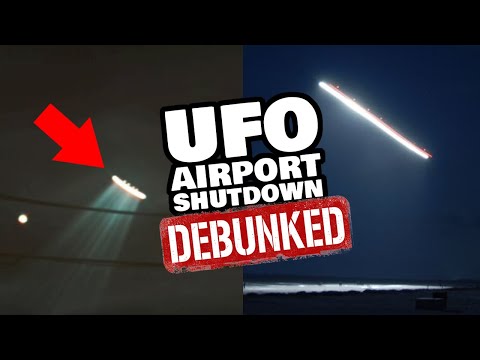
Sources
- "UFO Remains a Mystery," China Daily, July 10, 2010. Contemporary press coverage with expert commentary
- "UFO in China's Skies Prompts Investigation," ABC News. Contemporary press coverage
- "Fresh Report of UFO Over China Marks 8th Time Since June," ABC News. Broader 2010 wave context
- "Xiaoshan Airport Shutdown Due to UAP," Enigma Labs. Case summary including DF-21 and civilian investigator details
- "Xiaoshan Airport Shut Down Due to UFO Sighting," American Thinker. Contemporary commentary
- "Hangzhou Airport Unidentified Flying Object," Baidu Baike (English). Chinese-sourced case summary
- "2010 Xiaoshan Airport UFO," UFO-Reports.com. Case summary
- "UFO Over Chinese Airport [VIDEO]," Christian Science Monitor. Contemporary press coverage
- "UFO Tales Just Keep Going, and Going," NBC News. Contemporary press coverage and video-view statistics
- "The China Airport Sighting — Just One In China's Long UFO History," UFO Insight. Case analysis
- "2010 Hangzhou Xiaoshan Airport UFO Incident," DisclosureHK. Case reference
- Robert Sheaffer, "Hovering UFO Closes Chinese Airport," Skeptical Inquirer, November/December 2010, p. 27–29. Detailed photographic debunking analysis, Venus and Barnaul comparison
- "UFOs Buzz the Private Sector," Beijing Review, September 29, 2010. Dated survey of the 2010 Chinese UFO wave; BURS statistics
- "京沪UFO联合调查组发布初步结论 杭州萧山机场不明飞行物为飞机" [Beijing-Shanghai Joint UFO Investigation Team Releases Preliminary Conclusions], Hangzhou News, July 26, 2010. Chinese-language primary source; joint investigation team findings
- "UFOs over China? Not quite, analyst says," CNN.com, July 20, 2010. Geoffrey Forden's technical analysis and Kazakhstan video mix-up
- Geoffrey Forden, "Hangzhou Light Show," Arms Control Wonk. DF-21 missile-launch analysis
- "China UFOs: Space Expert James Oberg Says Don't Jump to Conclusions," wire report reprint. Oberg and Wang Sichao commentary; Ruan Zhouchang quote (secondary reprint of wire coverage)
- "十年前轰动全国的萧山机场UFO事件始末" [The Full Story of the Xiaoshan Airport UFO Incident That Shook the Nation a Decade Ago], NetEase (163.com). Chinese-language retrospective; camera-exposure explanation
- Wendelle C. Stevens & Paul Dong, UFOs Over Modern China, UFO Photo Archives.
- Michael Swords & Robert Powell, eds., UFOs and Government: A Historical Inquiry, Anomalist Books, 2012.
- Leslie Kean, UFOs: Generals, Pilots, and Government Officials Go on the Record, Harmony Books, 2010.
- Jerome Clark, The UFO Encyclopedia, 3rd ed., Omnigraphics.
See something inaccurate? Have additional information or sources?
Suggest an Edit →Last Updated: August 2026