
Technosignature / Interstellar Probe Hypothesis
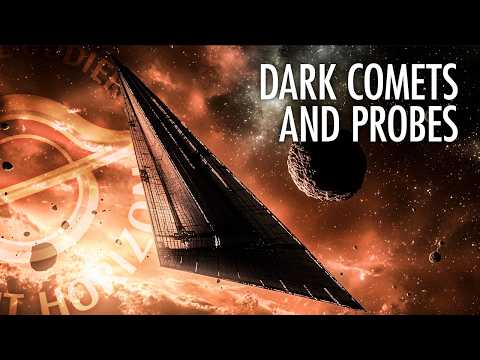
Examines the real, funded astrobiology research discipline built around searching for physical byproducts of extraterrestrial technology — “technosignatures” — rather than waiting to intercept a deliberate radio message, and the specific “Lurker hypothesis”: that a small, passive probe, or the detectable trace of one, could already be sitting undiscovered somewhere inside our own solar system.
Mainstream, NASA-Funded Research Discipline — Zero Confirmed DetectionsCore Thesis
If an extraterrestrial civilization wanted to study a young technological species — or simply be found, eventually, without the centuries-long delay of a radio conversation — mainstream SETI theory has argued since 1960 that it might not rely on broadcasting at all. It could instead send a small, durable, autonomous probe and either let it announce itself once triggered by a target civilization's own emerging technology, or leave it stationed indefinitely nearby, watching in silence. That second, more passive posture is the “Lurker hypothesis”: a probe, or the physical trace of one — a “technosignature,” any detectable evidence of technology — already present and undiscovered somewhere in our own solar system, whether co-orbital with Earth, parked at a gravitationally stable point, resting on the Moon, or hidden among the asteroids. Unlike a radio signal, which exists only for the instant it is transmitted, a Lurker or its leftover hardware would remain physically searchable indefinitely, which is exactly why a real, funded, peer-reviewed corner of astrobiology now treats hunting for one as a legitimate research program rather than idle speculation.
This file is a deliberately narrower companion to this site's own Non-Human Machine Intelligence Hypothesis, and the difference matters enough to state before anything else. That file asks a broad, interpretive question about UAP reports themselves: could some sightings simply describe autonomous machines — unpiloted probes or self-replicating hardware — sent in place of a biological crew? It draws its evidence broadly from UAP case files read as candidate machine behavior. This file asks a narrower, methodological question: what does the real scientific discipline of technosignature research — NASA's own formal search for physical or passive evidence of extraterrestrial technology, distinct from classic radio SETI — actually look like, who built it, and how, if at all, do its specific search targets (a stationed Lurker probe, a Dyson-sphere-like waste-heat excess, an artificial light-sail) map onto anything in the UAP record. Where the companion file surveys the machine-intelligence argument broadly, including the Hart–Tipler debate over galaxy-wide probe saturation, this file goes deep on one specific corner of that argument — the Lurker hypothesis and the funded search discipline built around it — and treats UAP case files only as a final, secondary question, not a starting point.
Origin & History
The idea that an advanced civilization might leave physical evidence of itself for another species to find, rather than or in addition to transmitting a radio signal across interstellar distances, has two separate, almost simultaneous points of origin in 1960 — both covered in far more depth in this site's own Non-Human Machine Intelligence Hypothesis file, but worth restating briefly here because this file builds on both halves together, not either alone. On May 28, 1960, Stanford radio astronomer Ronald N. Bracewell published “Communications from Superior Galactic Communities” in Nature, arguing that a genuinely advanced civilization would recognize that a physical, autonomous interstellar probe — now called a Bracewell probe — could hold a real-time “conversation” once contact was triggered, avoiding the decades- or centuries-long round-trip delay a pure radio exchange would require. Less than a week later, on June 3, 1960, Institute for Advanced Study physicist Freeman Dyson published an entirely independent paper in Science, “Search for Artificial Stellar Sources of Infrared Radiation,” making a related but distinct argument: any civilization advanced enough to harness a large share of its own star's total energy output would be bound by simple thermodynamics to radiate the resulting waste heat into space as detectable infrared radiation, whether or not it ever intended to communicate with anyone at all. Where Bracewell's probe is deliberately built to eventually announce itself, the technology Dyson proposed searching for — nicknamed a “Dyson sphere,” a label Dyson himself said he never much cared for, since he had a diffuse swarm of independently orbiting collectors in mind rather than a rigid shell — would be detectable purely as an involuntary physical byproduct, found whether or not its builders ever wanted it to be. The research community that grew from Dyson's proposal now calls this search mode “Dysonian SETI”: hunting for the accidental fingerprints of technology rather than waiting for a deliberate greeting.
Taken together rather than separately, the two 1960 papers are the actual founding documents of the research tradition this file follows: searching physical space and the electromagnetic spectrum for byproducts of extraterrestrial technology, as an alternative or complement to waiting to intercept a message a civilization has chosen to send. Neither paper used the word “technosignature” — that term would not exist for another forty-seven years — and neither specifically proposed that such a probe or artifact might already be sitting quietly inside our own solar system rather than orbiting a distant star. That narrower, more immediately searchable claim, the Lurker hypothesis proper, took nearly two more decades to arrive, and it came from a different direction than either Bracewell or Dyson had proposed.
In 1978, a paper presented to the International Astronomical Union argued that if an extraterrestrial probe had ever visited the solar system, the most plausible place to look for it was not open interplanetary space at all but the asteroid belt, where a probe could shelter among millions of small bodies, draw on real raw material, and remain effectively undetectable to the era's instruments indefinitely. Nanotechnology researcher Robert A. Freitas Jr. — whose 1980 self-replicating probe engineering analysis is covered at length in this site's Non-Human Machine Intelligence Hypothesis file — narrowed the search further with a collaborator in a pair of papers, “A Search for Natural or Artificial Objects Located at the Earth-Moon Lagrangian Points” (1980) and a 1983 follow-up, arguing that the five gravitationally stable Earth-Moon Lagrange points — positions where a small object can sit fixed relative to both bodies without expending fuel to stay there — were exactly the kind of low-maintenance, geometrically obvious parking spot a probe's own designers might choose. Freitas gave the whole research program a name in a separate 1983 paper, “Search for Extraterrestrial Artifacts” (SETA), proposing it formally as a complement to, not a replacement for, conventional radio SETI. For more than three decades afterward, this specific artifact-search literature remained a minor, largely unread footnote inside a field itself starved of funding and mainstream respectability — overshadowed first by radio SETI's higher public profile, then by the political embarrassment that followed Congress's 1993 cancellation of NASA's own brief SETI-related microwave survey program.
The idea was revived, given its modern name, and given a genuinely testable modern search target by physicist James Benford in a 2019 Astronomical Journal paper, “Looking for Lurkers: Co-orbiters as SETI Observables.” Benford — a plasma physicist and president of Microwave Sciences, Inc., and the identical twin brother of physicist and science-fiction author Gregory Benford, who elaborated on the idea in his own follow-up piece for the astrobiology newsletter Centauri Dreams — coined “Lurker” as the term now used across the technosignature literature for a hidden, passively observing probe, and proposed a more attractive modern hiding place than the asteroid belt or the Lagrange points: Earth's own co-orbital asteroids, a small population of near-Earth objects (including 2016 HO3, nicknamed Earth's “quasi-satellite”) that pass unusually close to Earth every year while orbiting the Sun on a path gravitationally linked to our planet's own. Benford's argument was practical rather than purely theoretical: a co-orbital object would offer a Lurker concealment among ordinary-looking rock, a stable anchor, and raw material for repair or replication, all within an easy, low-fuel trip of Earth — and he proposed a genuinely executable next step, combining planetary radar “painting” of specific co-orbital targets with simultaneous radio SETI listening, an active search he argued carried none of the ethical objections raised against transmitting our own interstellar messages, since any Lurker sophisticated enough to be there at all would already know Earth was inhabited.
Scientific Foundations
Where this site's Non-Human Machine Intelligence Hypothesis file traces the mathematics of self-replication and the Hart–Tipler galactic-saturation debate, this file's scientific core is institutional and methodological: how “technosignature research” went from a scattered, largely ignored set of individual proposals to a named, funded, taxonomized discipline inside mainstream NASA-affiliated astrobiology.
1. The Ĝ Infrared Survey — Operationalizing Dyson's 1960 Proposal
Penn State astronomer Jason T. Wright is the single figure most responsible for turning Dyson's 1960 thought experiment into an active, ongoing observational survey. Beginning with a pair of 2014 papers, “The Ĝ Infrared Search for Extraterrestrial Civilizations with Large Energy Supplies,” Wright and collaborators used data from NASA's Wide-field Infrared Survey Explorer (WISE) satellite to search roughly 100,000 nearby galaxies for anomalous mid-infrared excess emission — the specific waste-heat signature a civilization capable of enclosing a large fraction of its home star's energy output would be expected to produce. The Ĝ survey, since expanded to individual Milky Way stars as well as external galaxies, has to date found zero confirmed Dyson-sphere-like waste-heat signatures, ruling out the very largest, most energy-hungry hypothetical civilizations from the surveyed sample rather than confirming anything — a genuinely falsifiable null result, not an absence of effort.
2. NASA's 2018 Technosignatures Workshop — Naming a Discipline
Wright's influence extended well beyond his own survey. He was lead organizer and lead author of the report from NASA's Technosignatures Workshop, convened at the Lunar and Planetary Institute in Houston in September 2018, specifically to formalize what had until then been a loosely connected set of individual proposals into a defined field with its own vocabulary, its own taxonomy of evidence types, and an explicit institutional home inside NASA's astrobiology program. The workshop did not happen spontaneously: it followed committee report language inserted into a 2018 NASA appropriations bill directing the agency to spend up to $10 million searching for technosignatures. The resulting report, “NASA and the Search for Technosignatures,” is the single document this file's later Sensor and Material Analysis sections draw on most directly, and it is the same report this site's own Non-Human Machine Intelligence Hypothesis file cites for its own, broader purposes — a useful marker of how central this one workshop has become to every subsequent UAP-adjacent discussion of technosignatures, on this site and elsewhere.
3. The Fight for Funding and Institutional Legitimacy
That legitimacy did not arrive automatically. In a formal white paper submitted to the 2020 Astronomy and Astrophysics Decadal Survey, “Searches for Technosignatures: The State of the Profession,” Wright argued bluntly that technosignature research remained chronically underfunded and understaffed relative to public interest in the question, hampered by decades of association with unscientific UFO claims that had made NASA program officers reluctant to fund it at all, and called for dedicated grant solicitations, training pipelines, and a clear separation between rigorous technosignature science and unrelated fringe claims. NASA's own funding solicitations had, for years before that, carried boilerplate language specifically excluding SETI-related proposals, a legacy of Congress's 1993 cancellation of NASA's High Resolution Microwave Survey after a Nevada senator mocked it on the Senate floor as a search for “little green men.” Following the 2018 workshop, that exclusionary language quietly disappeared from NASA's research announcements, and in June 2020 NASA awarded its first-ever SETI-adjacent external research grant in nearly three decades — funding a project modeling how detectable various technosignatures would be in exoplanet atmospheres, not a radio search. That same institutional shift helped support the 2020 founding of the Penn State Extraterrestrial Intelligence (PSETI) Center, which Wright directs, the first U.S. university research center built specifically around this discipline, and Wright's own 2019 receipt of the SETI Institute's Drake Award for his role in reviving the field's institutional standing.
4. Looking for Lurkers as an Executable Search Protocol
Where Wright's contribution has been institutional and galaxy-scale, Benford's has been narrowly tactical: a specific, near-term search a real radio observatory or planetary radar facility could execute today. His proposal pairs high-power planetary radar — the same class of instrument NASA's own planetary-defense program already uses routinely to characterize the shape and rotation of near-Earth asteroids — with simultaneous radio SETI listening, aimed specifically at Earth's known co-orbital objects. A Lurker illuminated by radar would, Benford argued, either stay silent under active interrogation (itself a mildly informative result, since an inert rock reflects radar very differently than a coated or structured artificial hull) or reveal itself through an anomalous radar return or a triggered radio response — either outcome moving the question forward in a way passive listening alone cannot.
5. A Working Taxonomy of Technosignatures
The 2018 NASA workshop report Wright led also did something this file's Sensor and Material Analysis sections rely on directly: it formally organized “technosignature” — a term SETI Institute astronomer Jill Tarter had coined roughly a decade earlier to broaden SETI's founding vocabulary beyond radio signals — into a working taxonomy rather than a single loose idea. That taxonomy spans atmospheric technosignatures (industrial or artificial compounds detectable in an exoplanet's spectrum), optical technosignatures (a deliberate laser beacon, or the characteristic dimming pattern a Dyson-sphere-like megastructure would produce transiting its own star), radio technosignatures (both deliberate beacons and unintentional leakage, the traditional SETI target), and physical technosignatures — probes, artifacts, or their manufacturing byproducts, physically present and detectable at close range, the specific category the Lurker hypothesis belongs to. Sorting search strategies into an explicit taxonomy like this, rather than treating “is anyone out there” as one undifferentiated question, is itself one of the report's most consequential and least publicly noticed contributions.
Government & Military Programs
Unlike the classified UAP-investigation channels this site's Non-Human Machine Intelligence Hypothesis file covers in depth — AARO's 2024 Historical Record Report and NASA's own 2023 UAP Independent Study Team — this theory's government connection runs through ordinary NASA science-funding appropriations rather than any classified program, and the paper trail is unusually well documented for exactly that reason. The September 2018 NASA Technosignatures Workshop followed direct congressional pressure: committee report language attached to a 2018 NASA appropriations bill directed the agency to spend up to $10 million searching for technosignatures, effectively forcing an agency whose funding solicitations had for decades excluded SETI-adjacent proposals to formally re-engage with the question. AARO's own 2024 Historical Record Report, covered at length elsewhere on this site, never engages with technosignature research as a distinct discipline at all; its finding of “no verifiable evidence” concerns recovered craft, biological beings, and reverse-engineering programs specifically, leaving the separate question of whether a passive, undiscovered Lurker or an accidental technosignature might exist in the solar system formally untouched by any classified U.S. government finding, one way or the other. NASA's own September 2023 UAP Independent Study Team report cited technosignature research approvingly as an example of the rigorous, falsifiable methodology it wanted the broader UAP conversation to adopt, without treating any specific UAP case as a technosignature candidate itself.
Physical Evidence
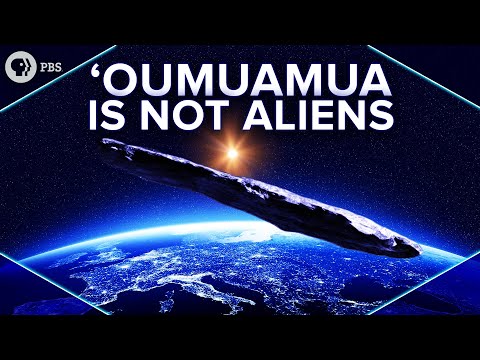
The clearest real-world test of this file's specific framework — not the broader machine-intelligence question this site's companion file addresses, but technosignature detection methodology applied to an actual physical object — arrived within weeks of the October 2017 discovery of 1I/‘Oumuamua, the first confirmed interstellar object ever observed passing through the solar system, found by the Pan-STARRS survey telescope in Hawaii. Its discovery triggered two separate, genuinely mainstream scientific responses this file treats as more directly relevant to its own subject than the object's physical characteristics alone: an actual technosignature search was carried out on it in real time, and a formal scientific consensus process was convened to weigh the artificial-origin hypothesis against natural alternatives.
On December 13, 2017, the privately funded Breakthrough Listen initiative pointed the Robert C. Byrd Green Bank Telescope at the Green Bank Observatory in West Virginia — the same site where Frank Drake had conducted Project Ozma, the first modern radio SETI search, in April 1960 — at 'Oumuamua for several hours, recording roughly 90 terabytes of raw data across a wide radio-frequency band from 1 to 12 GHz in a dedicated search for an artificial signal. No candidate signal was ever found. This is worth stating plainly, since it is easy to overlook next to the louder debate described below: a real, funded, professionally executed technosignature search was carried out on a real interstellar object within weeks of its discovery, using exactly the kind of instrumentation this file's Sensor section describes, and it returned a clean null result — the single most concrete example this file can point to of what an actual search under this framework looks like in practice, as opposed to a proposal for one.
The louder debate began the following year, when Harvard astrophysicist Avi Loeb and postdoctoral researcher Shmuel Bialy published a peer-reviewed 2018 paper in The Astrophysical Journal Letters exploring whether solar radiation pressure on an extremely thin, artificial light-sail could account for 'Oumuamua's small but measured non-gravitational acceleration — a residual motion unexplained by gravity alone, with no cometary outgassing ever detected to explain it conventionally. This exact episode is covered from the general machine-intelligence angle in this site's companion file; this file's interest is in what happened institutionally next. Rather than leaving the artificial-origin question to individual public statements, a fourteen-member international team of comet and asteroid specialists, convened under the International Space Science Institute, undertook a formal, collective review of every dataset gathered on 'Oumuamua during its brief transit and published their consensus findings, “The Natural History of 'Oumuamua,” in Nature Astronomy in July 2019, concluding that the object's observed behavior was consistent with a natural, if unusual, small icy body and finding no evidence requiring an artificial explanation. Two independent natural-origin mechanisms have since been proposed for the same non-gravitational acceleration Bialy and Loeb's paper addressed: a 2021 hypothesis that 'Oumuamua was a nitrogen-ice fragment chipped off a Pluto-like body by an ancient collision, its surface sublimation under sunlight supplying the extra push; and a 2023 hypothesis, published in Nature, that ordinary water ice trapped molecular hydrogen during the object's journey through interstellar space, later released as outgassing once warmed by the Sun. Neither mechanism has been directly confirmed, since 'Oumuamua was never recovered and is now permanently beyond further study, but both demonstrate that the specific anomaly the artificial-light-sail hypothesis was built to explain has at least two credible, independently developed natural competitors — a genuinely different evidentiary situation than “no explanation exists.” A second interstellar object, 3I/ATLAS, briefly reopened the same debate in 2025; that episode is covered in full in this site's companion Non-Human Machine Intelligence Hypothesis file rather than repeated here.
Supporting Case Files
Theoretical Alignment
Because this file is a detection framework rather than a claim about what any specific UAP is, its alignment with this site's other origin theories is best measured by how directly each one shares its passive-observation, artifact-search logic. It overlaps most closely with this site's own Non-Human Machine Intelligence Hypothesis, since both trace to the same 1960 Bracewell paper and the same broader SETI literature, but this file narrows that shared foundation to one specific, testable search program rather than a general claim about UAP origin. It shares real structural overlap with the Zoo Hypothesis, since both propose a long-term, low-interference observational posture consistent with a stationed Lurker. It has almost no overlap with the Psycho-Social Hypothesis, which explains sightings as a product of human perception and culture rather than any real external object or search target.
Non-Human Machine Intelligence Hypothesis
High OverlapShares its 1960 Bracewell-paper origin and its broader SETI literature, but this file narrows that shared foundation to the specific Lurker hypothesis and technosignature research discipline rather than a general claim about what UAP are.
Zoo Hypothesis
High OverlapBoth propose a long-term, deliberately low-interference observational posture; a stationed Lurker probe is, in effect, one specific engineering mechanism by which a Zoo Hypothesis-style policy of non-interference could actually be implemented and searched for.
Psycho-Social Hypothesis (PSH)
Low OverlapPSH treats the phenomenon as substantially a product of human perception, memory, and cultural narrative rather than a consistently real external object; this file assumes a genuine, physically searchable object or byproduct is the thing being looked for.
Sensor & Instrumentation Detection Profile
Because this theory's search targets span from radio silence to infrared excess to physical hull reflectance, the instrumentation it actually relies on looks almost nothing like the sensor suite this site's UAP-specific case files typically discuss, and that mismatch is itself an honest finding rather than a gap to paper over. Passive infrared photometry — the instrument class behind Wright's Ĝ survey — searches wide-field satellite catalogs like WISE for anomalous mid-infrared excess consistent with Dyson-sphere-like waste heat, a search that runs across archival catalog data spanning millions of objects rather than any single real-time sensor reading. Optical photometry searches for a complementary signature: the distinctive, irregular dimming pattern a partial Dyson swarm would produce transiting its own star, the same kind of light-curve anomaly that briefly made the star KIC 8462852 (“Boyajian's Star”) a genuine, credentialed subject of megastructure speculation before follow-up spectroscopy favored an ordinary circumstellar-dust explanation. Radio SETI, the discipline's oldest instrument class, remains central specifically for in-system Lurker searches, exactly as Breakthrough Listen's 2017 'Oumuamua observation demonstrated: a wide-band receiver at a large radio dish, aimed at a specific target for a defined observation window, searching for either a deliberate beacon or unintentional leakage radiation. Benford's proposed active search adds planetary radar to that list — the same instrument NASA's own planetary-defense program already uses routinely to characterize near-Earth asteroids — specifically because a Lurker's radar cross-section and reflectance signature would plausibly differ from an ordinary rock in ways passive listening alone could never reveal. What none of these instrument classes offer is the kind of real-time, single-encounter sensor correlation — simultaneous radar lock, infrared lock, and visual tracking within seconds of each other — that characterizes this site's strongest UAP case files; a technosignature search is closer in spirit to an astronomical survey than to an incident report, trading the immediacy of a live encounter for the statistical power of scanning enormous archival datasets or maintaining years-long dedicated observation campaigns.
Environmental & Geospatial Context
Unlike this site's incident-specific case files, this theory's proposed search geography is defined entirely by orbital mechanics and concealment logic rather than by any single terrestrial location, and the four candidate sites this file's Origin & History section traces form a coherent, escalating sequence of increasingly plausible modern hiding places rather than a scattered list. The 1978 asteroid-belt proposal offered concealment and raw material but covers an enormous search volume across millions of candidate bodies, a poor match for any realistic modern survey budget. Freitas's 1980 Earth-Moon Lagrange-point proposal narrowed the search dramatically to five specific, gravitationally fixed coordinates, but those points hold no natural material and offer a probe nothing to shelter behind, making a genuine artificial object there, if one existed, comparatively conspicuous once specifically searched. This site's own Non-Human Machine Intelligence Hypothesis file covers a third candidate site in detail: the Moon's surface itself, where Alex Ellery's 2025 proposal argues a self-replicating probe's manufacturing base would leave isotopic and magnetic traces detectable by ordinary planetary-science instruments. Benford's 2019 co-orbital-object proposal is this file's fourth and most recent candidate site, and arguably the most practically attractive of the four: concealment among ordinary-looking rock, a stable natural anchor, accessible raw material, and — unlike the Lagrange points — a location that requires no continuous station-keeping fuel expenditure to maintain over geological timescales. None of these four candidate sites has ever been comprehensively surveyed for artificial technosignatures; each remains, in Benford's own framing, a specific and testable proposal awaiting the observation time and instrument access a chronically underfunded research discipline has only recently begun to secure.
Observer Credibility & Occupational Profile
As with this site's companion Non-Human Machine Intelligence Hypothesis file, the credentials profile behind this theory's specific figures is unusually mainstream for a UAP-adjacent site to catalogue, and worth stating plainly rather than assuming a reader already knows it from that other file. Ronald Bracewell was a tenured Stanford radio astronomer publishing in Nature. Freeman Dyson held a permanent faculty position at Princeton's Institute for Advanced Study for more than sixty years, working alongside Albert Einstein and John von Neumann, and remained one of the twentieth century's most honored physicists despite never completing a formal doctorate. Jason Wright holds a tenured professorship at Penn State, directs a named university research center built specifically around this discipline, and received the SETI Institute's Drake Award. James Benford earned a physics PhD from UC San Diego, built a multi-decade career in high-power microwave engineering, and founded and continues to lead an active aerospace research company. Avi Loeb, discussed at greater length in this site's companion file, holds an endowed chair at Harvard University and chaired its astronomy department for nine years. Every one of these figures published the specific claim this file attributes to them in a peer-reviewed journal under their own name and institutional affiliation — a pattern that holds without exception across every proponent this file discusses, and one shared by the theory's most prominent skeptics as well: the fourteen-member 'Oumuamua ISSI review team that concluded against an artificial origin were themselves credentialed comet and asteroid specialists from major research universities, publishing their skepticism through the identical peer-review process as the claim they were evaluating, not from outside it.
Historical Precedents & Archive Matches
This theory's own research history is itself an unusually well-documented case study in how a legitimate but under-resourced scientific idea can sit almost entirely dormant for decades before a change in funding or terminology revives it. The 1978 asteroid-belt search proposal and Freitas's 1980 and 1983 Lagrange-point papers generated only modest follow-up literature through the 1980s and 1990s, a period that coincided almost exactly with Congress's 1993 cancellation of NASA's own brief SETI-related microwave survey program and the institutional wariness that followed toward any search-for-extraterrestrial-technology proposal, artifact-based or radio-based alike. Jill Tarter's 2007 coinage of “technosignature” began a slow rehabilitation that only became fully institutional after Congress's 2018 appropriations language forced NASA's hand. Benford's 2019 “Looking for Lurkers” paper, in this light, reads less as an entirely new idea than as the specific, modern reformulation of a research program that had existed in the technical literature, essentially unread outside a small specialist community, for more than four decades beforehand — a genuine archive match between a 2019 paper's search target and proposals that predate it by a full generation. This site's own Beatriz Villarroel & the VASCO Project case file documents a structurally similar pattern from an adjacent discipline: decades-old Palomar Observatory sky-survey plates, shot years before Sputnik, reanalyzed only recently with modern computational tools to search for a different but related class of anomaly — transient, vanishing point sources rather than a stationed probe — illustrating how much of this broader research tradition depends on returning to old data and old proposals with new instruments and new institutional support, rather than starting fresh each time.
Material Analysis
No physical Lurker probe, probe fragment, or confirmed Dyson-sphere-like megastructure has ever been recovered, examined, or verified by any credentialed research team — the same evidentiary gap this site's companion Non-Human Machine Intelligence Hypothesis file reports for its own, broader claim, and the honest state of affairs here as well. What exists instead is a specific, growing body of completed and proposed search results, each targeting a different physical signature. Wright's Ĝ infrared survey has, to date, searched roughly 100,000 galaxies and a smaller number of individual Milky Way stars for anomalous mid-infrared waste-heat excess and found none consistent with a large-scale Dyson swarm, a genuine null result across a real, completed survey rather than an unexecuted proposal. Breakthrough Listen's December 2017 observation of 'Oumuamua searched roughly 90 terabytes of radio data across a wide frequency band and found no artificial signal. Benford's 2019 proposal to radar-illuminate Earth's co-orbital asteroids while listening for a triggered radio response remains, as of this file's writing, unexecuted — a specific, technically achievable search that has not yet been carried out at any facility, the clearest concrete next step this file can point to. Ellery's 2025 proposal for lunar isotopic and magnetic technosignatures, covered in greater depth in this site's companion file, represents a fifth, more recent search target sharing this same evidentiary pattern: falsifiable, instrumentally achievable, and not yet executed.
Supporting This Framework
- Wright's Ĝ survey and Breakthrough Listen's 'Oumuamua observation are real, completed technosignature searches with clean, falsifiable null results, not unexecuted proposals
- NASA's own 2018 workshop, subsequent funding-language change, and 2020 first-ever technosignature grant demonstrate this is now an institutionally supported research discipline, not fringe speculation
- Benford's co-orbital radar-and-SETI proposal is a specific, technically achievable near-term search using existing planetary-defense infrastructure
Against This Framework
- Zero confirmed technosignatures of any kind — infrared, radio, optical, or physical — have been detected across more than six decades of combined search effort
- The fourteen-member ISSI review team's 2019 consensus and two independent 2021/2023 natural-origin mechanisms both weigh against the one real-world candidate object ('Oumuamua) most often cited in this framework's support
- Benford's most concrete proposed search (radar-illuminating co-orbital asteroids) remains unexecuted years after publication, reflecting the discipline's continuing resource constraints
Theory Development Timeline
| Date | Development |
|---|---|
| 1948 | Arthur C. Clarke's short story “The Sentinel” imagines a passive, automated alien device left on the Moon to signal home once a visiting species becomes advanced enough to reach it — a cultural precursor discussed at greater length in this site's companion Non-Human Machine Intelligence Hypothesis file. |
| May 28, 1960 | Ronald Bracewell publishes “Communications from Superior Galactic Communities” in Nature, proposing autonomous interstellar probes as an alternative to radio dialogue. |
| Jun 3, 1960 | Freeman Dyson publishes “Search for Artificial Stellar Sources of Infrared Radiation” in Science, proposing that waste heat from an advanced civilization's energy use would be detectable in the infrared — the origin of the Dyson sphere concept. |
| 1978 | A paper to the International Astronomical Union proposes the asteroid belt as the most plausible hiding place for a visiting extraterrestrial probe. |
| 1980 | Robert Freitas and a collaborator propose the Earth-Moon Lagrange points as a search target for natural or artificial objects in a pair of papers. |
| 1983 | Freitas coins “Search for Extraterrestrial Artifacts” (SETA) as a formal name for the research program. |
| 1993 | Congress cancels NASA's High Resolution Microwave Survey, leaving SETI-adjacent proposals effectively excluded from NASA funding solicitations for the next 25 years. |
| 2007 | SETI Institute astronomer Jill Tarter coins the term “technosignature,” broadening SETI's search criteria beyond radio and optical signals. |
| 2014 | Jason Wright and collaborators launch the Ĝ infrared survey, searching WISE satellite data for Dyson-sphere-like waste heat across roughly 100,000 galaxies. |
| Oct 2017 | 1I/‘Oumuamua, the first confirmed interstellar object, is discovered by the Pan-STARRS survey. |
| Dec 13, 2017 | Breakthrough Listen observes 'Oumuamua with the Green Bank Telescope across a wide radio band; no artificial signal is detected. |
| Sep 2018 | NASA's Technosignatures Workshop convenes in Houston, following congressional appropriations language, formally naming and taxonomizing the discipline. |
| Nov 2018 | Shmuel Bialy and Avi Loeb publish their artificial-light-sail hypothesis for 'Oumuamua's anomalous acceleration in The Astrophysical Journal Letters. |
| 2019 | James Benford publishes “Looking for Lurkers: Co-orbiters as SETI Observables” in the Astronomical Journal; Wright submits his Astro2020 technosignatures white paper and receives the SETI Institute's Drake Award. |
| Jul 2019 | A fourteen-member ISSI international team publishes “The Natural History of 'Oumuamua” in Nature Astronomy, concluding the object's behavior is consistent with a natural origin. |
| Jun 2020 | NASA awards its first SETI-adjacent external research grant since 1993, funding technosignature-detectability modeling for exoplanet atmospheres. |
| 2020 | The Penn State Extraterrestrial Intelligence (PSETI) Center, directed by Wright, is founded as the first U.S. university research center built around technosignature science. |
| 2021 | A nitrogen-iceberg hypothesis is proposed as a natural explanation for 'Oumuamua's anomalous acceleration. |
| 2023 | A hydrogen-outgassing hypothesis, published in Nature, offers a second independent natural explanation for the same acceleration. |
| 2025 | Interstellar object 3I/ATLAS briefly reopens the artificial-origin debate, resolved in favor of a natural cometary origin — covered in full in this site's companion Non-Human Machine Intelligence Hypothesis file. |
Weighing the Evidence
The central dispute here is not whether Bracewell's and Dyson's founding 1960 arguments are legitimate physics and astronomy — they are, and neither has ever been seriously challenged as sound reasoning by any credentialed critic — but whether six-plus decades of essentially uninterrupted null results across every specific, falsifiable prediction this framework has generated should be read as evidence the search has simply not yet been thorough enough, or as evidence that whatever this framework is looking for either does not exist in a currently detectable form or does not exist at all. Every concrete, real-world test this file can point to — Wright's galaxy-scale infrared survey, Breakthrough Listen's radio search of 'Oumuamua, the ISSI team's formal review of the one object credentialed scientists took most seriously as a candidate — has returned a result consistent with the null hypothesis rather than a detected technosignature, a track record this file states as plainly as this site's Non-Human Machine Intelligence Hypothesis file states its own parallel, and similarly unbroken, string of resolved or unconfirmed candidate cases.
Supporting Arguments
- Built on two genuinely independent, peer-reviewed 1960 papers (Bracewell in Nature, Dyson in Science) that neither side of the modern debate disputes as sound reasoning
- NASA's 2018 workshop, resulting funding-language change, and first technosignature grant since 1993 demonstrate real, current institutional legitimacy rather than fringe status
- Generates sharp, falsifiable, already-tested predictions (infrared excess, radio silence, radar reflectance) rather than unfalsifiable claims
- Benford's co-orbital Lurker proposal offers a specific, technically achievable near-term search path using existing planetary-defense infrastructure
Skeptical Arguments
- Zero confirmed technosignatures across every search category attempted over more than sixty combined years of effort
- The one real-world candidate object most associated with this framework ('Oumuamua) was reviewed by a fourteen-member credentialed team and found consistent with a natural origin
- Two independent natural-origin mechanisms have since been proposed for the same anomaly the artificial-light-sail hypothesis was built to explain
- The discipline's most concrete proposed near-term search (Benford's co-orbital radar illumination) remains unexecuted years after publication
Conventional Explanation Candidate
Because this theory concerns a search framework rather than a single incident, its Conventional Explanation Candidates evaluate whether the strongest evidence offered in its support — anomalous interstellar-object kinematics and unresolved infrared or radio anomalies — genuinely requires an extraterrestrial-technosignature explanation, or whether ordinary astrophysics accounts for the same evidence just as well.
Natural Interstellar Object ('Oumuamua)
PlausibleThe fourteen-member ISSI review team's 2019 consensus, together with two independently developed 2021 and 2023 natural-origin mechanisms for the same non-gravitational acceleration, leaves a natural explanation fully consistent with every dataset gathered on 'Oumuamua during its brief transit.
Ordinary Near-Earth Asteroid Population (Co-orbitals)
PlausibleEvery known Earth co-orbital object, including 2016 HO3, has so far shown a reflectance and rotation profile consistent with an ordinary small rocky body; Benford's proposed radar-and-SETI search of these objects has not yet been carried out, so this candidate explanation remains untested rather than confirmed.
Premature or Underfunded Search
InconclusiveBecause dedicated technosignature search programs are recent, narrow in scope, and only recently freed from decades of NASA funding exclusion, the absence of a confirmed detection to date cannot be treated as strong evidence against the underlying hypothesis; this remains a genuinely open, actively researched question.
A Confirmed Lurker Probe or Technosignature Already Detected
ImplausibleAs a complete, confirmed claim, this remains unsupported: no infrared, radio, optical, or physical technosignature has ever been verified by any credentialed team, and every specific real-world candidate examined so far has trended toward a conventional explanation once sufficiently studied.
Theoretical Assessment Profile
Six-domain evaluation of this hypothesis
Key Proponents
Ronald N. Bracewell
Originated the modern probe-based contact strategy in a 1960 Nature paper, arguing a physical, autonomous interstellar probe would be a more efficient contact method than radio dialogue — the founding half of this file's twin 1960 origin story.
Freeman Dyson
Published, days after Bracewell, an independent 1960 Science paper proposing that advanced civilizations would radiate detectable infrared waste heat — the origin of the Dyson sphere concept and Dysonian SETI, this file's other founding half.
Jason T. Wright
Leads the ongoing Ĝ infrared survey operationalizing Dyson's proposal, organized and led NASA's 2018 Technosignatures Workshop, and directs the Penn State Extraterrestrial Intelligence Center — the figure most responsible for this discipline's modern institutional legitimacy.
James Benford
Coined “Lurker” and proposed Earth's co-orbital asteroids as the most searchable modern hiding place for a stationed extraterrestrial probe in a 2019 Astronomical Journal paper, along with a specific, executable radar-and-SETI search protocol.
Dr. Avi Loeb
Proposed a possible artificial light-sail explanation for 'Oumuamua's anomalous motion in a 2018 peer-reviewed paper, turning the object into technosignature research's single most publicly visible real-world test case, covered at greater length in this site's companion file.
Related Cases
Further Reading
The Galactic Club: Intelligent Life in Outer Space
Bracewell's own book-length expansion of his 1960 probe-based contact proposal, exploring the social and diplomatic implications of a galaxy interconnected by exactly the kind of messenger probes this file traces to their modern Lurker-hypothesis descendants.
Disturbing the Universe
Dyson's own memoir, spanning his wartime work through his Institute for Advanced Study career, including his reflections on the 1960 infrared-technosignature proposal that now bears his name.
The Contact Paradox: Challenging Our Assumptions in the Search for Extraterrestrial Intelligence
A science journalist's survey of modern SETI, built on interviews with leading researchers in the field, covering the shift from pure radio listening toward technosignatures and artifact-search strategies this file documents.
Starship Century: Toward the Grandest Horizon
An anthology of scientific essays and fiction on interstellar travel and detection strategy, co-edited by the physicist who would go on to coin “Lurker” six years later, alongside contributions from Freeman Dyson and Stephen Hawking.
Extraterrestrial: The First Sign of Intelligent Life Beyond Earth
The Harvard astrophysicist's own account of the 'Oumuamua controversy, the object this file treats as technosignature research's clearest real-world test case to date.
DISCLOSURE: Some links above are affiliate links. If you purchase through them, OverClassified receives a small commission at no additional cost to you. This helps support independent research.
Essential Viewing

Sources Cited
- Bracewell, R. N. "Communications from Superior Galactic Communities," Nature 186, 670–671, May 28, 1960.
- Dyson, F. J. "Search for Artificial Stellar Sources of Infrared Radiation," Science 131, 1667–1668, June 3, 1960.
- Papagiannis, M. D. "Are We All Alone, or Could They Be in the Asteroid Belt?" Quarterly Journal of the Royal Astronomical Society 19, 277–281, 1978.
- Freitas, R. A. Jr. & Valdes, F. "A Search for Natural or Artificial Objects Located at the Earth-Moon Lagrangian Points," Icarus 42, 442–447, 1980.
- Freitas, R. A. Jr. "The Search for Extraterrestrial Artifacts (SETA)," Journal of the British Interplanetary Society 36, 501–506, 1983.
- Benford, J. "Looking for Lurkers: Co-orbiters as SETI Observables," The Astronomical Journal 158, 150, 2019.
- Benford, G. "Further Thoughts on 'Lurkers'," Centauri Dreams, March 26, 2019.
- Wright, J. T. et al. "NASA and the Search for Technosignatures: A Report from the NASA Technosignatures Workshop," arXiv:1812.08681, 2018.
- Wright, J. T. "Searches for Technosignatures: The State of the Profession," Astro2020 Decadal Survey White Paper, arXiv:1907.07832, 2019.
- Wright, J. T. et al. "The Ĝ Infrared Search for Extraterrestrial Civilizations with Large Energy Supplies. I. Background and Justification," The Astronomical Journal 149, 104, 2014.
- Bialy, S. & Loeb, A. "Could Solar Radiation Pressure Explain 'Oumuamua's Peculiar Acceleration?" The Astrophysical Journal Letters 868, L1, November 12, 2018.
- 'Oumuamua ISSI Team (Bannister, M. T. et al.). "The Natural History of 'Oumuamua," Nature Astronomy 3, 594–602, July 1, 2019.
- Meech, K. J. et al. "A Brief Visit from a Red and Extremely Elongated Interstellar Asteroid," Nature 552, 378–381, 2017.
- "Breakthrough Listen to Observe Interstellar Object 'Oumuamua," Breakthrough Initiatives, December 2017.
- Jackson, A. & Desch, S. "The Mass Budget Necessary to Explain 'Oumuamua as a Nitrogen Iceberg," presented at the 52nd Lunar and Planetary Science Conference, 2021.
- Seligman, D. Z., Bergner, J. B. et al. "Hydrogen Outgassing as the Origin of 'Oumuamua's Nongravitational Acceleration," Nature, March 2023.
- "Penn State Extraterrestrial Intelligence Center Researcher Jason Wright Awarded NASA Grant to Look for Signatures of Alien Technology," Penn State Eberly College of Science.
- Penn State Extraterrestrial Intelligence (PSETI) Center, official website.
- "Jill Tarter," SETI Institute, official biography.
- "How Big Money Is Powering a Massive Hunt for Alien Intelligence," Science, 2020.
- NASA UAP Independent Study Team Report and ongoing research page.
- "Report on the Historical Record of U.S. Government Involvement with Unidentified Anomalous Phenomena (UAP), Volume I," AARO, March 8, 2024.
- "Bracewell Probe," Wikipedia.
- "Dyson Sphere," Wikipedia.
- "Technosignature," Wikipedia.
- "James Benford," Wikipedia.
- "Freeman J. Dyson (1923–2020), Scientist and Writer, Who Dreamt Among the Stars, Dies at 96," Institute for Advanced Study.
- Green Bank Observatory, official website.
Have corrections, additional research, or peer-reviewed sources? Help improve this entry.
Suggest an Edit