
The Twilight War
The Secret History of America's Thirty-Year Conflict with Iran
Core Thesis
The Twilight War is David Crist's comprehensive covert history of the United States' three-decade shadow conflict with Iran, spanning five presidential administrations from the 1979 revolution through the book's 2012 publication, built on interviews with hundreds of officials and access to classified military archives unavailable to most journalists covering the same subject. Its relevance to this site is specific: this book supplies the fullest available documentary and narrative context for the genuine, independently confirmed American intelligence interest in Iran's nuclear program during 2004 — the exact year and general subject matter of the uncorroborated "luminous object" claim underlying this site's own Arak F-14 Radar Intercept case file.
About the Author
David Crist is a senior historian for the U.S. federal government and a colonel in the Marine Corps Reserve, with direct operational experience underpinning his historical writing: he served in the First Gulf War and completed two tours attached to special operations forces in Afghanistan and Iraq, including firsthand exposure to exactly the kind of covert, high-tension U.S.-Iran confrontations his book documents historically.
Crist holds a B.A. from the University of Virginia and both a master's degree and a doctorate in Middle Eastern history from Florida State University, giving him the academic grounding to situate his firsthand military experience within a rigorous historical framework. His prior published work, Gulf of Conflict: A History of U.S.-Iranian Confrontation at Sea (Washington Institute for Near East Policy, 2009), covered related territory in more focused form before this book's considerably broader scope.
Crist's own family background gives his subject matter an unusually direct personal dimension: his father, George Crist, was a Marine Corps general who served as commander of U.S. Central Command (CENTCOM) from 1985 to 1988, a period covered directly within the book's own historical narrative and placing Crist in the unusual position of writing critical, arms-length military history that intersects with his own father's documented career.
This dual vantage point — a trained professional historian who is also a decorated Marine Corps Reserve officer with direct combat and special-operations experience in the same theater his book covers — is relatively rare within the military-history genre, and reviewers have consistently credited it as a major factor in the book's ability to move fluidly between high-level policy analysis and granular, ground-level operational detail without either register overwhelming the other.
Historical Context & Origins
The book was published in 2012, at a moment of renewed American public and policy attention to Iran driven by its nuclear program's continued development, sanctions pressure, and periodic direct military tension — the same broad geopolitical backdrop this site's own case file cites when assessing why an Iranian military unit might, in 2004, have genuinely believed unidentified aircraft were probing its nuclear facilities. Crist's narrative repeatedly returns to Tehran as the political center of the relationship's decision-making on the Iranian side, even as the book's operational focus ranges across the country's dispersed military and nuclear infrastructure.
Crist's access to "classified military archives" and interviews with officials across five presidential administrations reflects his own institutional position as a federal government historian, a role that gave him documentary and interview access considerably beyond what an independent journalist or academic historian working the same beat could typically obtain, while also meaning his own work passed through the same government review processes that govern other historians' access to sensitive material.
The book arrived roughly midway between the two events most directly relevant to this site's own case file: the 2004 period the Arak claim is set in, and the eventual public confirmation, via President Obama's own 2011 statement following the RQ-170 Sentinel drone's capture near Kashmar, that American reconnaissance drones had in fact operated over Iranian territory — giving Crist's 2012 account a useful, roughly contemporaneous vantage point on the broader pattern of American intelligence activity these later, individually confirmed incidents fit into.
Crist's own historical framing also situates the book within a specific U.S. policy debate active at the time of its 2012 publication: whether continued covert pressure, sanctions, and intelligence operations against Iran's nuclear program represented a sustainable long-term strategy or merely postponed an eventual, more direct confrontation. The book takes no strong advocacy position on this question, instead documenting the historical record in enough sourced detail that readers across the policy spectrum have cited it approvingly, a rare achievement for a book covering such a politically contested subject.
Core Arguments & Key Concepts
The book's central argument is that the U.S.-Iran relationship since 1979 has been characterized not by a single continuous state of either war or peace, but by a genuinely unusual, sustained "twilight" condition — open enough in its hostility to produce direct military confrontations (the 1980 Operation Eagle Claw hostage-rescue attempt, the 1987-88 tanker-war naval clashes, Operation Praying Mantis) while never crossing into the kind of formally declared, full-scale war either side's own domestic politics could sustain.
Crist documents in granular, sourced detail the American intelligence community's sustained, decades-long interest in monitoring Iran's military and nuclear infrastructure, including reconnaissance programs, covert operations, and the institutional friction between different U.S. agencies and administrations over how aggressively to pursue that monitoring — directly relevant background for evaluating the general plausibility of Iranian personnel believing, correctly or not, that specific unidentified aircraft activity near a given nuclear site in a given year represented American surveillance.
The book also traces the specific evolution of American reconnaissance technology and doctrine used against Iran across the three-decade period it covers, from early Cold War-era systems through the more advanced platforms deployed after the September 11 attacks refocused American intelligence priorities toward the broader Middle East, giving readers a technical baseline against which to judge how far any specific claimed capability (such as the Arak claim's described Mach 10, hovering "luminous object") departs from anything the book documents as actually having been fielded.
Crist is candid throughout about the limits of even his own extensive access: significant portions of the covert history he documents remain only partially declassified or dependent on individual officials' own recollection decades after the fact, a methodological honesty this article notes as a useful model for how this site's own case files handle comparably incomplete evidentiary records.
The book also documents in detail the internal American policy disputes between different administrations, and often between different agencies within the same administration, over how aggressively to pursue covert action against Iran — a level of bureaucratic and institutional granularity that helps explain why American reconnaissance activity against Iran was neither uniformly aggressive nor uniformly restrained across the thirty-year period the book covers, but instead varied considerably depending on which administration, and which faction within that administration, held the most influence over Iran policy at any given time.
Key Cases & Evidence Discussed
This site's own Arak F-14 Radar Intercept (claimed November 2004) is the case file this book's inclusion on this list most directly supports. The case file's own analysis cites a January 2005 New Yorker report by Seymour Hersh describing clandestine American reconnaissance operations inside Iran beginning in 2004 as the "real geopolitical backdrop" against which the Iranian "luminous object" claim should be read — and this book supplies the fuller, book-length documentary and narrative context for exactly that backdrop, tracing the broader pattern of American intelligence activity against Iran across the entire post-1979 period rather than a single reported episode.
The book's detailed coverage of the 2011 RQ-170 Sentinel drone capture near Kashmar — the one American reconnaissance drone whose overflight of Iran is independently, publicly, and multiply confirmed — connects directly to this site's own case file's technical comparison, which notes the RQ-170's actual, confirmed performance characteristics (subsonic, propeller-less, no hover capability) directly contradict rather than support the specific Mach 10, hovering capabilities the Arak claim's unnamed Iranian sources described.
Critical Reception & Controversies
The book received outstanding reviews across the political and journalistic spectrum. The New York Times called it "a painstakingly researched and elegantly written account of the United States-Iran cold war," while The Washington Post wrote it "should be required reading for anyone interested in understanding how the United States and Iran went from close allies to enduring enemies."
Military affairs journalist Thomas E. Ricks, himself a respected voice in the same defense-journalism space this site's own case files frequently draw on, called it "the foreign policy book of the year, perhaps of many years" — an unusually strong endorsement from a peer commentator with direct expertise in evaluating comparable military-history and national-security nonfiction.
NPR's own coverage, including a Fresh Air interview with Terry Gross, highlighted Crist's own firsthand experience observing a close call between American and Iranian naval vessels in 2003 while serving with special operations forces — a detail reviewers consistently cited as lending the book's institutional history an unusually direct, personally-witnessed dimension most comparable histories lack.
No critical source located in researching this article raises significant factual disputes with the book's core historical claims; critical commentary instead centers on debating the book's policy implications for how the United States should approach Iran going forward, a question distinct from this article's own narrower interest in the book's historical and documentary value.
The book's reception among specialist intelligence-history and Middle East policy communities has been similarly strong, with several academic and think-tank reviewers specifically praising Crist's success in producing a work detailed enough to satisfy specialist readers while remaining accessible to a general audience — a balance many comparable intelligence-history books, weighted heavily toward one audience or the other, do not achieve as successfully.
Influence & Legacy
This exact edition is cited in this site's own Arak F-14 Radar Intercept case file's Further Reading section specifically for providing "the fullest available context for the genuine American intelligence interest in Iran's nuclear sites during the exact period this case's claim is set in."
The book has become a standard reference work in subsequent journalism and scholarship on U.S.-Iran relations, frequently cited by later reporting and analysis covering the countries' continued tension over the following decade, including coverage of the 2015 nuclear agreement, its 2018 American withdrawal, and subsequent military confrontations.
Crist's institutional position as a federal government historian, combined with the book's wide critical acclaim, has given The Twilight War a degree of documentary authority relatively few popular history books covering active, still-unfolding intelligence and military relationships achieve — a status this site's own case file reflects in treating it as essential background rather than merely one further account among many.
The book's continued relevance was underscored by subsequent events well beyond its 2012 publication, including the 2019 killing of Iranian general Qasem Soleimani and the broader wave of direct U.S.-Iran military tension across the following years, both of which later journalism and analysis frequently situated within the same decades-long "twilight war" framework Crist's book had already documented and named — a durability of framing this article treats as itself a meaningful indicator of the book's lasting analytical value beyond its own specific historical narrative.
The Book
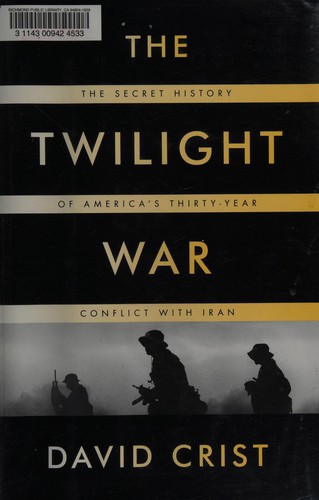
As an Amazon Associate, OverClassified may earn from qualifying purchases made through this link, at no extra cost to you.
Why This Is Essential Reading
The Twilight War earns its place on this list as the single fullest, most rigorously sourced account available of the exact covert American-Iranian intelligence relationship that forms the necessary backdrop for evaluating this site's own Arak F-14 Radar Intercept case file. Read alongside Babak Taghvaee's own Desert Warriors and Seymour Hersh's contemporaneous reporting the case file itself cites, this book supplies the documentary depth needed to judge how plausible — and how far short of independently confirmed — the Arak claim's central assertions actually are.
Related Cases & Theories
Essential Viewing
Sources Cited
- Crist, David. The Twilight War: The Secret History of America's Thirty-Year Conflict with Iran. Penguin Press, 2012 (ISBN-13 9781594203411). amazon.com
- "The Twilight War." Penguin Random House (official publisher page, critical blurbs). penguinrandomhouse.com
- "The Twilight War." Kirkus Reviews. kirkusreviews.com
- "'The Twilight War' Between The U.S. And Iran." NPR / Fresh Air, July 24, 2012. npr.org
- "The Twilight War: The Secret History of America's Thirty-Year Conflict with Iran." Goodreads (reader ratings and reviews). goodreads.com
- "The Twilight War." Open Library (bibliographic record and cover art source). openlibrary.org
- "The Twilight War: The Secret History of America's Thirty-Year Conflict with Iran." Penguin Press via Medium (publisher summary). medium.com
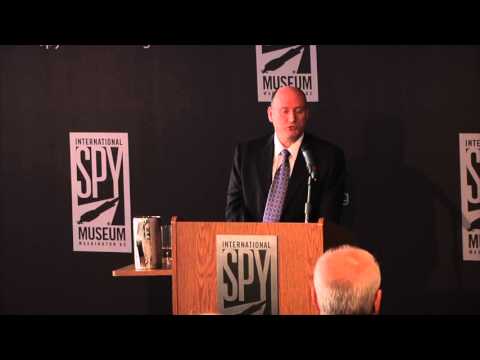
- "Twilight War, David Crist, PhD." International Spy Museum (author lecture). youtube.com
- Hersh, Seymour. "The Coming Wars." The New Yorker, January 2005 (cited in this site's own Arak case file for the same covert-reconnaissance backdrop this book documents at length). newyorker.com
- This site's own case file: Arak F-14 Radar Intercept, for the full analysis this book's context supports.
- This site's own key-figures entry: David Crist, for his full biography and further case connections.
- This site's own essential reading entry: Desert Warriors, Babak Taghvaee's Iranian military history, for comparative context on this site's own Arak case file.
Have corrections, additional research, or peer-reviewed sources? Help improve this entry.
Suggest an Edit