
The Next War in the Air
Britain's Fear of the Bomber, 1908-1941
Core Thesis
The Next War in the Air: Britain's Fear of the Bomber, 1908-1941 is Brett Holman's 2014 academic monograph, developed from his University of Melbourne PhD thesis, tracing how the theory of an aerial "knock-out blow" -- a sudden, war-ending bombing campaign against Britain -- emerged from pre-WWI aviation anxieties beginning in 1908, hardened into public orthodoxy through the 1920s and 1930s, and persisted in the popular imagination even after the actual Blitz of 1940-41 fell well short of the devastation long predicted. This site cites the book for two cases situated within that broader climate of British aerial anxiety: the 1912 Sheerness Phantom Airship Incident and the 1918 Australian Mystery Aeroplane Scare.
About the Author
This site's own Brett Holman key-figures entry documents him as a Melbourne-based independent historian specializing in the cultural and military history of aviation in the early twentieth century, particularly British and Australian "airmindedness." He is the leading researcher of the 1918 Australian Mystery Aeroplane Scare, having published the peer-reviewed articles "Dreaming War: Airmindedness and the Australian Mystery Aeroplane Scare of 1918" (History Australia, 2013) and "The Enemy at the Gates" (2016), and separately authored "The Phantom Airship Panic of 1913" in the Journal of British Studies (2016), the fullest scholarly treatment of the Sheerness-triggered British scare.
Holman earned an MSc in physics from the University of Melbourne in 1998 before shifting to history, completing his PhD there in 2009 -- this book is that thesis reworked into a monograph. He later lectured in modern European history at the University of New England in Australia before moving into communications work, continuing his research as an independent historian. He runs the long-standing research blog Airminded, where he post-blogged the entire 1918 Australian panic day-by-day, and has written for BBC History Magazine and Fortean Times, with a second monograph, Home Fires Burning, under contract to Cambridge University Press.
Historical Context & Origins
The book's core historical argument, per a positive review by Stephen Heathorn in the English Historical Review (2016), is that the knock-out blow theory became self-sustaining in British public culture independent of expert opinion -- once popularized, it retained its grip on public imagination even after aviation and military experts had substantially revised their own predictions downward by 1938, ahead of the Munich Crisis's mass gas-mask distribution and evacuation planning. Holman reportedly characterizes the theory as "a myth with consequences," a framing that gives the book its central thesis.
Within that argument, the book directly addresses the phantom airship sightings of late 1912, including reports from locations described in the text as spanning "Cardiff and Hull, Chester and Sheerness" -- placing this site's own Sheerness case within the book's broader documented pattern rather than treating it as an isolated incident. The 1918 Australian scare also appears within the book's text, per its own indexed subject terms, though its most detailed scholarly treatment remains Holman's separate journal articles on the case, which this site's own key-figures entry documents directly.
Core Arguments & Key Concepts
The book's central claim is that a specific, falsifiable theory -- that bombing alone could knock a nation out of a war within days -- took on a cultural life disproportionate to its actual technical plausibility at any given point between 1908 and 1941, driven by public fear and popular media rather than by the more measured, evolving assessments of military experts.
Applied to this site's own cases, that framework helps explain why isolated, ambiguous aerial sightings like Sheerness in 1912 and the Australian reports of 1918 could generate outsized public alarm and official government response: both incidents occurred within a cultural climate the book documents in which the public had already been primed to interpret unexplained aircraft sightings as evidence of the looming, civilization-ending aerial war it had come to expect.
Key Cases & Evidence Discussed
This site's own Sheerness Phantom Airship Incident case file documents the October 1912 event and the much larger phantom-airship scare it triggered across Britain in far greater depth than this book's broader treatment allows, citing Holman's own separate peer-reviewed "Phantom Airship Panic of 1913" article as showing the wider scare to be "substantially explainable as a media-amplified collective phenomenon." Readers wanting that complete record should consult that case file directly.
This site's own Australian Mystery Aeroplane Scare of 1918 case file similarly documents that case using Holman's own dedicated journal articles as its primary scholarly source, with this book cited instead as the broader cultural-historical backdrop -- the decades-long British "airmindedness" and bomber-anxiety climate -- within which the Australian public's own 1918 reaction can be understood.
Critical Reception & Controversies
As of this article's research (August 2026), the book received serious academic engagement: Stephen Heathorn's review in the English Historical Review (Vol. 131, Issue 550, June 2016) was positive, calling it well-written and praising its identification of the divergence between public belief and expert opinion on the knock-out blow theory as the book's key scholarly contribution. A second academic review, by Joel Morley in Twentieth Century British History (Vol. 27, No. 2, 2015), is bibliographically confirmed but this article could not access its full text to characterize its specific verdict, and does not assert one.
This article found no evidence of a dedicated review in the Journal of British Studies or War in History, despite Holman's own articles appearing in the former -- an absence worth noting rather than a review this article can responsibly summarize.
Influence & Legacy
The book's legacy rests on its status as a peer-reviewed academic contribution to the cultural history of interwar British aviation anxiety, reworked directly from Holman's doctoral research and engaged with seriously by historians in respected journals -- a different kind of standing than the trade-press UFO literature more typically covered on this site.
Set alongside this site's own Sheerness Phantom Airship Incident and Australian Mystery Aeroplane Scare of 1918 case files, this book supplies the broader cultural-historical framework within which both incidents occurred, even as Holman's own more narrowly focused journal articles remain the primary scholarly source for each case's specific documented details.
The Book
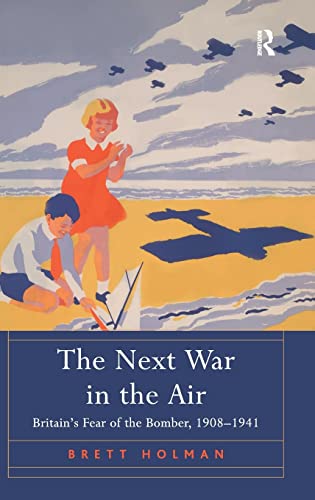
As an Amazon Associate, OverClassified may earn from qualifying purchases made through this link, at no extra cost to you.
Why This Is Essential Reading
The Next War in the Air earns its place on this reading list as a peer-reviewed academic history of the cultural climate of aerial anxiety that gave incidents like Sheerness and the 1918 Australian scare their outsized public resonance. Read alongside this site's own Sheerness Phantom Airship Incident and Australian Mystery Aeroplane Scare of 1918 case files, which draw on Holman's own more specifically focused journal articles for each case's documented details, it remains essential as the broader scholarly context explaining why early-twentieth-century publics were primed to interpret unexplained aircraft sightings as portents of a looming, civilization-ending aerial war.
Related Cases & Theories
Sources Cited
- Holman, Brett. The Next War in the Air: Britain's Fear of the Bomber, 1908-1941. Ashgate, 2014. amazon.com
- Heathorn, Stephen. Review of The Next War in the Air. English Historical Review, Vol. 131, Issue 550, June 2016, pp. 716-717. academic.oup.com
- Morley, Joel. Review of The Next War in the Air. Twentieth Century British History, Vol. 27, No. 2, 2015, pp. 321-323.
- Holman, Brett. Airminded (research blog and publications page). airminded.org
- Routledge, publisher's product page for the paperback edition. routledge.com
- This site's own Brett Holman key-figures entry (his academic career and both case-specific journal articles).
- This site's own Sheerness Phantom Airship Incident case file (full sourcing, including Holman's own separate 1913 phantom-airship article).
- This site's own Australian Mystery Aeroplane Scare of 1918 case file (full sourcing, including Holman's "Dreaming War" and "Enemy at the Gates" articles).
- Holman, Brett. "The Phantom Airship Panic of 1913: Imagining Aerial Warfare in Britain before the Great War." Journal of British Studies 55, no. 1, January 2016, pp. 99-119 (already separately cited on this site's Sheerness case file).
- Holman, Brett. "Dreaming War: Airmindedness and the Australian Mystery Aeroplane Scare of 1918." History Australia, vol. 10, no. 2, 2013 (already separately cited on this site's Australian scare case file).
- This site's own Sheerness Royal Navy Dockyard, Kent location entry.
- The Conversation, Brett Holman contributor profile. theconversation.com
Have corrections, additional research, or peer-reviewed sources? Help improve this entry.
Suggest an Edit