
The Aztec UFO Incident
The Case, Evidence, and Elaborate Cover-up of One of the Most Perplexing Crashes in History
Core Thesis
The Aztec UFO Incident is Scott and Suzanne Ramsey's attempt, with co-author Dr. Frank Thayer, to rehabilitate the 1948 Aztec, New Mexico crashed-saucer claim that San Francisco Chronicle reporter J.P. Cahn had already thoroughly exposed as fraud in 1952. Drawing on more than 25 years of research, over $500,000 of their own money, travel to 27 states, and more than 55,000 collected documents, the Ramseys argue that Silas Newton — convicted alongside Leo GeBauer in 1953 of running a fraudulent oil-detection device scheme built on the crashed-saucer story — was "pretty much framed" by Cahn out of professional envy, and that the crash itself may have been real. This site's own dedicated Aztec case file reaches the opposite conclusion, and this article evaluates the Ramseys' book against that independent research directly rather than treating its central argument as settled.
About the Author
Scott Ramsey, together with his wife Suzanne Ramsey, began investigating the Aztec case as a personal project that grew into a quarter-century research effort, ultimately encompassing travel to 27 states and the collection of more than 55,000 documents at a self-funded cost exceeding $500,000. Their research first reached print as the 2012 self-published The Aztec Incident: Recovery at Hart Canyon, co-authored with Dr. Frank Thayer and researcher Frank Warren, before being substantially expanded and retitled as this 2016 volume, published with a foreword by physicist and prominent UFO researcher Stanton Friedman.
The Ramseys' scale of documentary effort is, by any measure, genuinely unusual for a UFO case rehabilitation project: this site's own case file, while ultimately rejecting the book's central conclusion, credits their "documentary industriousness" as a real research contribution distinct from the argument that research was marshaled to support. Their work followed and substantially expanded on researcher William Steinman's more marginal 1987 book UFO Crash at Aztec, co-authored with Wendelle Stevens, which had made a similar rehabilitation attempt decades earlier to little support even within UFO proponent circles.
Frank Thayer, credited on the book's cover with a doctoral title, and Frank Warren, credited on the earlier 2012 edition, complete the research team; this site's research located comparatively little independently verifiable biographical detail on either beyond their credited role in the Aztec project, a limitation disclosed honestly here rather than papered over with unsupported biographical claims.
Historical Context & Origins
Career Press published The Aztec UFO Incident in 2016, sixty-eight years after the claimed crash and sixty-four years after J.P. Cahn's original 1952 exposure in True magazine had, for most of the intervening decades, left the story with little credibility even within UFO proponent literature. The book arrived four years after the Ramseys' own earlier 2012 self-published edition, giving them time to expand and refine an already-substantial research base before wider commercial publication.
The book's revival attempt follows a specific pattern this site's own research has documented across the wider UFO literature this session: a well-researched, genuinely industrious modern investigation reopening a case the original evidentiary record had already closed, producing real documentary value (newly compiled interviews, records, and timeline detail) even where its central interpretive conclusion does not survive independent scrutiny. Michael Busby's Solving the 1897 Airship Mystery, covered elsewhere in this site's essential-reading library, follows a structurally similar pattern with a different 19th-century case.
The claim's original 1949-50 reception is itself an important piece of context this site's own case file develops in detail: by the time Newton first told the story to Scully, American newspapers had already spent two years covering the flying-saucer phenomenon Kenneth Arnold's June 1947 sighting had launched, wire services had carried hundreds of individual sighting reports, and the Air Force's own Project Sign and successor Project Grudge were both already publicly known to be investigating the subject. A story combining a national security cover-up, extraterrestrial visitors, and recovered alien technology was, in that specific media environment, close to unfalsifiable common currency rather than an extraordinary claim requiring extraordinary scrutiny — which is precisely why no outlet subjected it to serious independent verification until J.P. Cahn began his own investigation nearly three years after Newton first told it to Scully.
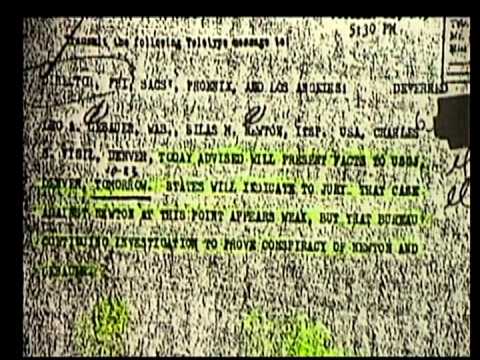
The book also arrived in an environment where the original 1950 FBI "Hottel Memo" — a secondhand report Guy Hottel forwarded to J. Edgar Hoover describing "three so-called flying saucers" recovered in New Mexico, closely matching Newton's own uncorroborated account — had recently begun circulating widely online following its 2013 digitization, giving proponent literature a superficially official-looking document to point to even though the FBI itself has publicly characterized it as "a second- or third-hand claim that we never investigated."
Core Arguments & Key Concepts
The book's central argument, focused on events near Aztec, New Mexico, is that Silas Newton was substantially telling the truth, or was at minimum a genuine believer rather than a knowing fraudster, and that J.P. Cahn's investigation was driven by professional "envy and a relentless vendetta" amounting to what the Ramseys characterize as a "malicious prosecution." This site's own research treats this argument as unsupported: Newton and Leo GeBauer were convicted in December 1953 of fraud and conspiracy in a Denver court, a resolution reached through the ordinary criminal justice system rather than through Cahn's journalism alone, and neither the Ramseys' book nor any other source this site's research located identifies a single named individual associated with prosecuting or trying that case as having acted out of the personal animus the "frame-up" theory requires.
A second theme is treating physical-evidence gaps as suspicious rather than as the expected signature of a fabricated story: the book emphasizes the destruction or non-preservation of certain records and objects associated with the case. This site's own research finds this reasoning does not survive contact with Cahn's own most consequential single piece of physical investigation, which the Ramseys' book does not dispute: Cahn requested a sample of the supposedly "indestructible" alien metal Newton had been showing investors, had it independently analyzed, and it was ordinary aluminum.
A third theme, and the one where this site's own research finds the Ramseys' work genuinely valuable independent of their central thesis, is the sheer volume of primary-source material their 25-year effort compiled: interviews, newspaper archives, and court records that later researchers — including this site's own case-file investigation — can draw on directly, regardless of the interpretive conclusion the Ramseys themselves reached from that same material.
A fourth theme is Robert Sheaffer's own published assessment of the book's core weakness, which this site's research treats as the single most important critical framing available: no version of the Ramseys' argument explains why anyone should trust the word of, in Sheaffer's own phrase, "obvious liars like Newton and Gebauer" over an investigation whose central factual findings — the doodlebug devices were worthless, the "indestructible" metal was aluminum, "Dr. Gee" was an unqualified electronics dealer with no verifiable scientific credentials — the Ramseys' own book does not actually dispute.
Key Cases & Evidence Discussed
The Aztec, New Mexico Crash Claim (Case File #238, claimed March 1948) receives this book's full and central treatment. This site's own case file documents the underlying claim's actual origin in detail: Silas Newton and an associate posing as an anonymous scientist "Dr. Gee" — later identified by Cahn as Leo GeBauer, a Phoenix radio-parts dealer with no verifiable scientific credentials who is documented to have operated under numerous aliases over his career — including Harry A. Grebauer, Harry A. Gebauer, and Arnold Julius Leopold Gebauer — a pattern this site's own research treats as more consistent with a long-running confidence operator than a legitimate researcher using a single disclosed pseudonym for security reasons — told the story to Hollywood columnist Frank Scully, who published it first in two 1949 Variety columns and then as the centerpiece of his 1950 bestseller Behind the Flying Saucers. The original story, as Scully recorded it, described a craft roughly 99.99 feet in diameter whose every structural dimension was evenly "divisible by nine," powered by "Magnetic Lines of Force which originate in the sun," carrying sixteen small humanoid crew dressed in 1890s-style clothing and stocked with "concentrated food wafers" and "heavy water," probably originating from Venus — specific, colorful detail Robert Sheaffer's own review of the Ramseys' book bluntly characterized as "pseudoscientific gibberish" rather than a genuine, if garbled, account of real technology. The crashed-saucer narrative was never an end in itself: Newton and GeBauer's actual business was selling "doodlebug" devices claiming to detect oil and minerals using technology supposedly reverse-engineered from the recovered craft — devices Cahn's investigation found were built from surplus military radio parts at a manufacturing cost of roughly $3.50 apiece, with no demonstrated capability to detect anything. Newton and GeBauer were convicted of fraud and conspiracy in December 1953 after Denver industrialist Herman A. Flader lost roughly $50,000 and Denver optometrist Dr. Alfred D. Kleyhauer lost approximately $15,000 in the scheme. Newton's criminal history did not end there: he violated probation by 1955, pleaded guilty in 1969 to a separate mining-fraud charge involving "salted" ore samples near Silver City, New Mexico, and pleaded guilty again in 1970 to illegal securities sales in Los Angeles — a decades-long pattern this site's own case file treats as directly relevant to assessing the credibility of his original Aztec claim, since the book's central "framed" thesis depends on treating Newton's word as fundamentally trustworthy despite this extensive independent fraud record. This site's own case file's assessment of the Ramseys' book is direct: their documentary effort is real, but their central rehabilitation argument does not survive J.P. Cahn's own undisputed factual findings.
The Farmington Saucer Armada (Case File #210, March 17, 1950) at Farmington, New Mexico sits geographically close to Aztec — roughly sixteen miles away — and chronologically close as well, occurring within two years of the claimed Aztec crash. This site's own case file found the two incidents "tangled up" in popular reputation despite being genuinely separate events with their own independent evidentiary records, and cites the Ramseys' book specifically for its detailed modern investigation of the discredited Aztec claim as useful context for readers untangling the two cases' distinct histories.
Critical Reception & Controversies
On Goodreads, the book carries a 3.55-out-of-5 average from 99 ratings and 22 written reviews (checked August 2026) — a substantial rating sample reflecting real, sustained reader engagement with the case more than a decade after publication, though the reviews themselves are notably mixed. One reviewer called it "persuasive, well-researched" while noting it "would have benefitted from more thorough editing." Several others were considerably more critical: one wrote that the book "put me to sleep consistently after 20 pages" despite not finding the content itself objectionable, while another described it as "mostly 2nd and 3rd hand accounts with no real evidence," adding that the book "focused on unimportant details" and devoted a whole chapter to material the reviewer considered tangential.
This site's research attempted to verify an Amazon rating for this title but Amazon's bot-detection system repeatedly blocked automated requests to the listing during this session, returning a CAPTCHA challenge across multiple attempts. Per this site's own Amazon Rating Display Protocol, this gap is disclosed honestly here rather than fabricated or silently omitted.
The most substantive published critical assessment this site's research located is Robert Sheaffer's contemporaneous review in the November/December 2012 Skeptical Inquirer, written in direct response to the Ramseys' earlier 2012 edition. Sheaffer credits the book's documentary thoroughness while firmly rejecting its conclusions, characterizing Newton and GeBauer's claimed magnetic-propulsion science as "pseudoscientific gibberish" and noting that FBI records independently documented Newton as "a wealthy oil producer and con-man" with an arrest history dating back to 1931 — well before the Aztec claim ever surfaced. Sheaffer also cites independent researchers Kevin Randle and Monte Shriver, the latter having grown up in Aztec himself, as separately finding the witness accounts unconvincing and geographically inaccurate, and expresses open surprise that Stanton Friedman — who had previously rejected the earlier Steinman revival attempt — endorsed what Sheaffer calls this "loopy tale" in his foreword without, in Sheaffer's assessment, adequate new justification. This site's own independent case-file research reaches a consistent verdict: the Ramseys' 25-year research effort produced genuinely useful primary-source compilation work, but their central "Newton was framed" thesis requires trusting the word of men already established, on the book's own undisputed factual record, to have run a $3.50-manufacturing-cost fraud scheme dressed up as recovered alien technology.
Influence & Legacy
The clearest evidence of this book's lasting relevance on this site specifically is its citation record: two case files, covering geographically adjacent but historically distinct 1948 and 1950 incidents, cite the Ramseys' research directly, reflecting its role as the most extensively documented modern reference point for the Aztec claim specifically, whatever conclusion a reader ultimately draws from it.
As the most recent and most heavily resourced of three successive attempts to rehabilitate the Aztec story — following Steinman and Stevens's 1987 UFO Crash at Aztec and preceded by decades of the story's near-total absence from serious proponent literature after Cahn's 1952 exposure — the Ramseys' book represents something close to the maximum documentary effort the claim has ever received, making its failure to overturn Cahn's original factual findings, in this site's own research's assessment, a meaningful data point in its own right rather than simply one more entry in a long revival literature.
J.P. Cahn's own professional standing is itself relevant to weighing his exposure against the Ramseys' later rehabilitation attempt: Cahn was a working San Francisco Chronicle reporter, not an anonymous critic, who spent much of 1952 tracing the story to its source after convincing True magazine's editors the claim was, in Cahn's own framing, either the greatest event or the greatest hoax of modern times — a working journalist's investigation conducted under his own byline and subject to the same editorial and legal accountability as any other piece of 1950s investigative reporting, distinct from the largely anonymous or pseudonymous sourcing that characterized Newton and GeBauer's original claim.
The book's own foreword by Stanton Friedman is itself a notable piece of the case's later intellectual history: Friedman had originally dismissed Steinman's 1987 book over unrelated concerns about Steinman's other claims, and later said he regretted rejecting it without engaging its specific evidentiary claims on their own terms — a reflection on his own review process this site's research does not read as an endorsement of either book's underlying argument, but which nonetheless shaped how seriously the Aztec revival literature was received within proponent circles by the time the Ramseys' own book appeared.
The Book
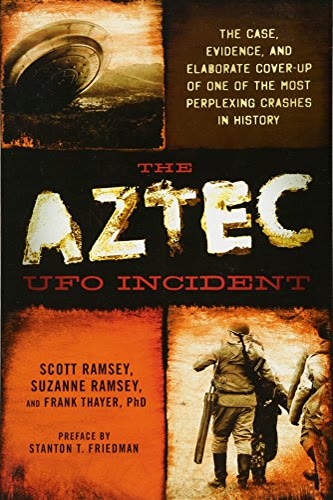
The Aztec UFO Incident
The Case, Evidence, and Elaborate Cover-up of One of the Most Perplexing Crashes in History
Find on Amazon →As an Amazon Associate, OverClassified may earn from qualifying purchases made through this link, at no extra cost to you.
Why This Is Essential Reading
The Aztec UFO Incident earns its place on this list not because this site's own research endorses its central claim, but because it represents the most extensively documented modern attempt to rehabilitate one of American ufology's most thoroughly debunked crash stories, and because engaging with it directly — rather than dismissing it unread — is how this site's own case-file research arrived at its own confident, independently reasoned verdict. Scott and Suzanne Ramsey, working with Dr. Frank Thayer across 25 years, 27 states, and more than 55,000 documents, produced real primary-source research value even though their central "Newton was framed" argument does not survive J.P. Cahn's own undisputed 1952 factual findings: the doodlebugs were worthless, the "indestructible" metal was aluminum, and "Dr. Gee" held no genuine scientific credentials. Its citation record across two of this site's own case files, and skeptic Robert Sheaffer's own direct, substantive published engagement with its arguments, demonstrate that this book earned a serious response rather than casual dismissal — precisely the kind of engagement this site's own research aims to model rather than avoid. Read alongside this site's own dedicated Aztec case file for the fuller record this article deliberately does not re-narrate in full, this book is essential as a case study in how much genuine research effort a compelling but false story can attract, and in why documentary industriousness alone cannot substitute for evidence that survives its own strongest counterargument.
Related Cases & Theories
Essential Viewing
Sources Cited
- Ramsey, Scott, Suzanne Ramsey, and Frank Thayer. The Aztec UFO Incident: The Case, Evidence, and Elaborate Cover-up of One of the Most Perplexing Crashes in History. Career Press, 2016 (ISBN 1-63265-001-0, cited here).
- "The Aztec UFO Incident." Goodreads (rating 3.55/5, 99 ratings, 22 written reviews quoted, checked August 2026). goodreads.com
- "The Aztec UFO Incident." AbeBooks (ISBN 9781632650016, marketplace listing photograph used for this article's cover image). abebooks.com
- Cahn, J.P. "The Flying Saucers and the Mysterious Little Men." True, September 1952 (the original exposé the Ramseys' book attempts to rebut).
- Cahn, J.P. "Flying Saucer Swindlers." True, August 1956 (follow-up documenting the fraud case's legal aftermath).
- Sheaffer, Robert. "UFO Crash at Aztec Reconsidered?" Skeptical Inquirer, Vol. 36, No. 6, November/December 2012, p. 59. skepticalinquirer.org
- Sheaffer, Robert. "Before the Great Debate: My Review of 'The Aztec Incident.'" Bad UFOs blog, August 2013 (fuller version of the Skeptical Inquirer review, quoted directly above). badufos.blogspot.com
- "SCOTT RAMSEY - Aztec, New Mexico UFO Crash." Mutual UFO Network (MUFON), YouTube (video verified via oEmbed; the book's own lead author presenting the case). youtube.com
- This site's own resources library: Full Reading List, where this exact 2016 edition is cited across 2 separate case-file pages.
- This site's own key-figures entry: Scott Ramsey, for his full biography and site-wide case connections.
- This site's own key-figures entry: Robert Sheaffer, whose direct published critique of this book this article draws on.
- This site's own case file: Aztec, New Mexico Crash Claim, this site's own full, dedicated investigation, classified Debunked.
- This site's own case file: Farmington Saucer Armada, the geographically and chronologically adjacent 1950 case this book also touches on.
- This site's own essential-reading entry: Solving the 1897 Airship Mystery by Michael Busby, a structurally similar modern revival-investigation of an earlier, unrelated historical UFO wave.
- "Aztec crashed saucer hoax." Wikipedia (used lightly, for basic orientation and cross-checking only; not relied upon for case facts, which follow this site's own dedicated case file and primary sources above). en.wikipedia.org
- This site's own key-figures entry: Frank Scully, the original 1950 popularizer of the claim this book attempts to rehabilitate.
- This site's own key-figures entry: J.P. Cahn, whose 1952 investigation this book's central argument attempts, unsuccessfully in this site's own assessment, to overturn.
Have corrections, additional research, or peer-reviewed sources? Help improve this entry.
Suggest an Edit