
Search for the Unknown
Canada's UFO Files and the Rise of Conspiracy Theory
Core Thesis
Search for the Unknown: Canada's UFO Files and the Rise of Conspiracy Theory is historian Matthew Hayes's 2022 scholarly history of the roughly 15,000 pages and 4,500 sighting reports held in Canada's own federal UFO archive, spanning four decades of shifting responsibility among the Department of National Defence, Department of Transport, National Research Council, and RCMP. Rather than centering the book's own core analysis on whether any single individual sighting represents a genuine anomaly, Hayes -- who holds a PhD from Trent University and teaches at Northern Lakes College in Alberta -- deliberately, carefully shifts the analytical focus onto the officials who had to respond to public UFO reports and the specific conditions under which their handling of those reports bred lasting public distrust, tracing the emergence of a conspiracy-theory-driven mindset now stereotypical of the broader modern UFO phenomenon. This site's own research draws on it for two of the resulting institutional history's key episodes: Project Magnet, the program this site's own case-file timeline credits the book with situating "as the origin point of Canada's federal UFO-reporting apparatus," and The Shag Harbour UFO Incident, the case Hayes treats within the same continuous institutional history nearly two decades later.
About the Author
Matthew Hayes is a Canadian researcher, filmmaker, and educator who earned his PhD in 2019 from Trent University, where this book originated as his doctoral dissertation, and today teaches as a permanent instructor at Northern Lakes College in Alberta. His academic background in English and philosophy, noted directly by reviewer David Clarke, shapes the book's own literary register and narrative structure: a work that self-consciously negotiates the line between popular UFO-subject accessibility and genuine academic credibility, aimed at a readership broader than a narrow specialist journal audience alone.
Hayes's own scholarly engagement with this material predates the book itself: his peer-reviewed article "'Then the Saucers Do Exist?': UFOs, the Practice of Conspiracy, and the Case of Wilbert Smith," published in the Journal of Canadian Studies, examined Wilbert B. Smith's own specific role in the earliest stages of Canadian UFO-conspiracy thinking well before this book expanded that analysis into a full institutional history spanning 1950 through the 1990s.
Hayes was directly inspired to undertake this research after visiting a 2005 virtual exhibition, also titled Search for the Unknown, curated by Library and Archives Canada -- itself a genuinely pioneering piece of early web-based archival access that predated the UK National Archives' own comparable online release of Ministry of Defence UFO files by a full three years, a specific historical priority this site's own research treats as a genuinely notable, independently verifiable data point about Canada's relatively early institutional openness on this specific subject.
This site's own research treats the direct, documented continuity between that 2005 archival exhibition, Hayes's own later doctoral research, his peer-reviewed journal article, and finally this full 2022 book as a genuinely rare, well-documented example of one single scholarly research program maturing openly over nearly two full decades -- a research trajectory readers can trace in full through the book's own extensive citations back to its original archival starting point, rather than a project that simply appeared without traceable prior development or verifiable scholarly grounding in the underlying primary-source record.
Historical Context & Origins
This site's own Project Magnet case file documents that this book's 2022 publication coincided directly with the Government of Canada's own Office of the Chief Science Advisor launching the Sky Canada Project that same year -- an official historical review explicitly tracing current federal UAP-reporting practice back through Project Magnet and the parallel Defence Research Board program, Project Second Storey. This site's research treats that timing as more than coincidental: Hayes's own scholarly excavation of the archive and the federal government's own renewed institutional interest in its history appear to have emerged from the same broader early-2020s resurgence of serious UAP research attention.
The book's own archival foundation -- roughly 15,000 pages and 4,500 individual sighting reports spanning 1950 through the 1990s -- is, per reviewer David Clarke's own direct comparison, roughly half the volume of comparable UK Ministry of Defence records covering the same period, a difference Clarke attributes specifically to Canada's much smaller, more geographically concentrated population relative to its own vast overall land area, rather than to any genuinely lesser degree of institutional engagement with the underlying subject.
Hayes's own research documents that responsibility for logging Canadian sighting reports was passed back and forth for four decades among officials in multiple different federal departments who were, per Clarke's review, "largely disinterested" in the subject -- a bureaucratic diffusion of responsibility this site's own case-file research treats as directly relevant institutional context for understanding why no single, sustained, well-resourced Canadian UFO investigation ever matched Project Magnet's own original 1950-54 instrumented ambition again.
Core Arguments & Key Concepts
The book's central and most distinctive argument, per its own subtitle and consistent with reviewer David Clarke's assessment, is that it deliberately relocates analytical attention away from UFO witnesses and toward the government officials tasked with responding to their reports -- treating the emergence of public conspiracy-theory thinking about UFOs not as an irrational fringe phenomenon but as a documented, traceable consequence of specific, repeated interactions between an anxious public and an institution that frequently failed to provide satisfying answers.
A second theme concerns the specific historical moment when Canadian UFO reporting peaked: 1967, Canada's centennial year, when annual sightings nearly tripled from 55 the previous year to 169. That same year saw the opening of a dedicated UFO landing pad in St. Paul, Alberta, formally inaugurated by former Canadian Defence Minister Paul Hellyer, who would later become a prominent public advocate for government UFO disclosure -- a detail this site's own research treats as a genuinely striking data point about how deeply the subject had penetrated mainstream Canadian civic life by that specific year.
A third theme, again per Clarke's review, concerns the book's honest, genuinely unflattering assessment of the archive's own investigative rigor across its four decades of accumulated records: even in cases involving physical evidence -- potential radiation traces at the Falcon Lake encounter chief among them -- the surviving official record reveals bureaucratic inertia and a documented failure to properly analyze available hard evidence, rather than any active cover-up. This site's own research treats that specific finding as more consistent with ordinary institutional under-resourcing and disinterest than with any deliberate suppression, a genuinely important distinction the book itself draws carefully rather than collapsing either into a dismissive shrug or an accusatory claim of deliberate concealment.
A fourth theme addresses the specific, debunked provenance of one of Canadian ufology's most frequently repeated claims: the Smith-Sarbacher conversation, in which American defense consultant Robert Sarbacher allegedly told Smith that UFOs were "the most highly classified subject in the [US] Government, rating higher even than the H-bomb." Hayes's own research establishes that the surviving documentation is not a contemporaneous record of that 1950 meeting but Smith's own later personal recollection of it -- an anecdote rather than a verified transcript, a distinction this site's own research treats as directly relevant to evaluating a quote that UFO author Timothy Good and many subsequent writers have repeated as though it carried the weight of an authenticated primary source.
A fifth theme, drawn from the book's own comparative national framing, situates Canada's federal UFO-reporting history alongside the roughly contemporaneous American and British experiences, while carefully preserving the specific institutional differences between them: where the United States eventually centralized its investigation under the single, relatively well-resourced Project Blue Book, and Britain eventually consolidated its own records under a unified Ministry of Defence archive, Canada's own responsibility remained genuinely fragmented across four separate departments for four decades, a structural difference this site's own research treats as directly explaining why no single, comprehensive Canadian equivalent to Blue Book's own final 1969 closing report was ever separately produced.
Key Cases & Evidence Discussed
Project Magnet is treated, per this site's own case-file timeline citation of the book, as "the origin point of Canada's federal UFO-reporting apparatus" -- the founding episode from which every subsequent Canadian government engagement with the subject, including the eventual Shag Harbour response, institutionally descends. Hayes's own account of the program includes Smith's specific personal belief in an extraterrestrial origin for UFOs, which alarmed his superiors sufficiently that the Department of Transport shut Project Magnet down in 1954.
The Shag Harbour UFO Incident (October 4, 1967) is one of three major 1967 cases the book treats at length, per Clarke's review -- a Nova Scotia sighting corroborated by local RCMP officers who witnessed a "dark object" floating in the harbour after multiple reports of a lighted object falling from the sky, prompting boat and helicopter searches that found no hard evidence. This site's own case-file citation of the book credits it as "a scholarly history of Canada's federal UFO-reporting apparatus... that situates Shag Harbour within the broader institutional context this file describes."
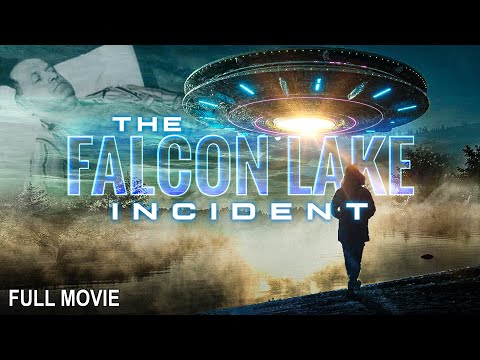
Beyond the two cases this site's own case files cite it for, the book documents the Falcon Lake Incident (May 20, 1967), in which prospector Stefan Michalak reported burns to his abdomen after approaching a landed, cigar-shaped object in Manitoba's Whiteshell Provincial Park -- a case CBC News has separately called "Canada's best-documented UFO case," and which this site's own essential-reading library documents independently through When They Appeared, a book specifically co-authored by Michalak's own son.
Critical Reception & Controversies
This book carries a genuinely strong Goodreads record: 4.22 out of 5 stars averaged across 9 ratings and 3 written reviews, checked August 2026 -- among the higher-rated titles this site's research has checked this session, consistent with the book's own status, per its publisher and secondary coverage, as a well-received work of serious academic UFO history.
The most detailed independent review this site's research located comes from David Clarke, the Sheffield Hallam University historian this site's own key-figures library already documents, who assessed the book directly against his own comparable UK research: he specifically compared the Canadian archive's 21 reproduced UFO drawings unfavorably against those he curated for his own 2017 book UFO Drawings from the National Archives, quoting the book's own description of the Canadian drawings as merely "interesting [and] serve more as accompaniments to the sighting reports" rather than the UK material's "colourful, full of life and energy" quality -- a specific, disclosed critical judgment this site's research treats as a genuinely useful comparative data point rather than a reason to discount the book's broader institutional-history value.
Clarke's review also notes the book can read as "plodding in places," a direct consequence of Hayes's own deliberate effort to hold the line between popular accessibility and academic rigor -- but concludes that readers who persist are rewarded with substantial value in the book's close-encounter chapters specifically, including its treatment of Falcon Lake, Shag Harbour, and Canada's first recorded crop circles, which appeared in an Alberta cattle pasture in 1967, a full decade before the phenomenon reached the United Kingdom. This site's own research treats that specific pacing criticism as an honest, useful signpost for readers rather than a disqualifying flaw: a book built substantially from primary archival correspondence between frustrated citizens and exasperated officials will necessarily include long stretches of genuinely mundane bureaucratic exchange alongside its more dramatic case studies, and Clarke's own review makes clear which specific chapters reward the patience required to read through that material.
This site's research also attempted to verify an Amazon rating for this title, but Amazon's bot-detection system repeatedly blocked automated requests to the listing during this session, the same persistent pattern encountered across every title checked this session. Per this site's own Amazon Rating Display Protocol, this gap is disclosed honestly here rather than fabricated or silently omitted.
Influence & Legacy
Within this site's own essential-reading library, this book joins Project Magnet and The UFO Files: The Canadian Connection Exposed as the third documented title specifically covering Canada's federal UFO-investigation history, together giving careful readers a genuinely layered, multi-angle view spanning Wilbert Smith's own primary-source writings, Palmiro Campagna's earlier documentary-archive-focused account, and Hayes's own more recent, institutionally-focused scholarly synthesis.
The book's direct scholarly lineage from Hayes's own peer-reviewed Journal of Canadian Studies article on Smith specifically demonstrates a research project that matured from a narrow academic case study into a full monograph -- a progression this site's own research treats as a meaningful indicator of sustained, serious scholarly engagement with the subject rather than a single opportunistic popular treatment.
The book's publication alongside the federal government's own 2022 Sky Canada Project review suggests Hayes's academic history and the Canadian government's own institutional self-examination were, whether coordinated or coincidental, part of the same broader wave of renewed serious attention to Canada's UFO-investigation history -- positioning this book as likely to remain a standard scholarly reference point whenever that specific national institutional history is discussed going forward.
As an academic press title from McGill-Queen's University Press rather than a specialist small-press or self-published work, this book also carries a form of institutional legitimacy few other titles on this site's own essential-reading list can claim: peer review, university-press editorial vetting, and a formal, permanent library-catalog presence that together give it a durability and citability within academic contexts that popular-press UFO books, however genuinely well-researched they may otherwise be, typically do not achieve on their own.
The Book
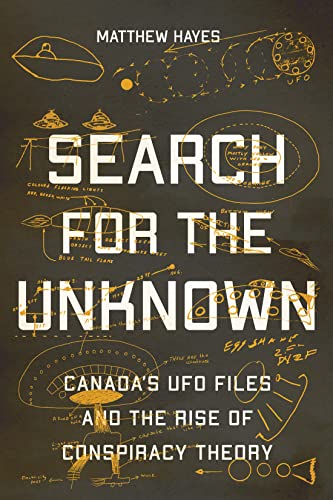
As an Amazon Associate, OverClassified may earn from qualifying purchases made through this link, at no extra cost to you.
Why This Is Essential Reading
Search for the Unknown earns its place on this list as the most rigorously researched single institutional history this site's own library documents of Canada's federal UFO-reporting apparatus, tracing an unbroken institutional line from Wilbert Smith's founding 1950 Project Magnet proposal through the Shag Harbour response seventeen years later and well beyond. Hayes's deliberate choice to center government officials' own reactions rather than witness testimony gives this site's own Project Magnet and Shag Harbour UFO Incident case files a genuinely distinct, valuable institutional-history lens that complements, rather than simply duplicates, this site's own primary-source and witness-focused research into those same underlying cases. Its strong Goodreads reception and detailed, largely favorable review from a comparably credentialed UK archival historian together support this site's own judgment that the book has earned lasting reference status as Canadian ufology's definitive modern scholarly account, and its university-press provenance gives it a lasting institutional durability few comparable popular-press titles on this subject can match.
Related Cases & Theories
Essential Viewing
Sources Cited
- Hayes, Matthew. Search for the Unknown: Canada's UFO Files and the Rise of Conspiracy Theory. McGill-Queen's University Press, 2022 (ISBN 978-0-2280-1074-6, cited here).
- "Search for the Unknown." Goodreads (4.22 average rating, 9 ratings, 3 reviews, checked August 2026). goodreads.com
- "Search for the Unknown: Canada's UFO Files and the Rise of Conspiracy Theory." AbeBooks (ISBN 9780228010746, marketplace listing photograph used for this article's cover image). mqup.ca
- Clarke, David. "Canada's UFO Files: book review." drdavidclarke.co.uk, 2022 (detailed independent review by the Sheffield Hallam University historian). drdavidclarke.co.uk
- Hayes, Matthew. "'Then the Saucers Do Exist?': UFOs, the Practice of Conspiracy, and the Case of Wilbert Smith." Journal of Canadian Studies (Hayes's own earlier peer-reviewed article this book expands on). utppublishing.com
- "The Falcon Lake Incident | Full Documentary." Mediatime Network, YouTube (documentary treatment of one of the book's three major 1967 case studies, video verified via oEmbed). youtube.com
- This site's own resources library: Full Reading List, where this exact 2022 edition is cited across 2 separate case-file pages.
- This site's own key-figures entry: Matthew Hayes, for his full biography and site-wide case connections.
- This site's own key-figures entry: Wilbert B. Smith, the book's own central early figure.
- This site's own case file: Project Magnet, the book's own institutional origin point.
- This site's own case file: Shag Harbour UFO Incident, one of the book's three major 1967 case studies.
- This site's own essential-reading entry: Project Magnet, the 2017 primary-source compilation of Wilbert Smith's own writings.
- This site's own essential-reading entry: When They Appeared, a book on the Falcon Lake Incident co-authored by Stefan Michalak's own son.
- "Falcon Lake incident is Canada's 'best-documented UFO case,' even 50 years later." CBC News (independent secondary coverage of one of the book's three major 1967 case studies). cbc.ca
Have corrections, additional research, or peer-reviewed sources? Help improve this entry.
Suggest an Edit