
Project Magnet
The Lights In The Sky Are Not Stars
Core Thesis
Project Magnet: The Lights In The Sky Are Not Stars is a 2017 compilation, prepared and presented by publisher Timothy Green Beckley, of primary-source material directly from Wilbert B. Smith's own Project Magnet writings, supplemented with additional research and context from Grant Cameron and John Musgrave. Rather than a secondhand, paraphrased later historical account, the book's core value lies in giving readers direct, largely unmediated access to the actual internal documents, reports, and later esoteric writings of the senior Canadian Department of Transport radio engineer who founded and directed his country's first official government UFO investigation. This site's own research draws on it for two of the resulting institutional legacy's key episodes: Project Magnet itself, the 1950-54 program this book directly documents, and The Shag Harbour UFO Incident, the 1967 case handled by the same federal apparatus Smith's program had originally established.
About the Author
Wilbert B. Smith (1910-1962) was a senior radio engineer with Canada's Department of Transport whose September 1950 conversation with American defense consultant Robert Sarbacher in Washington convinced him flying saucers were a legitimate, highly classified subject of serious government research. His own November 1950 proposal led directly to Project Magnet's formal approval that December, and he personally directed the program's instrumented field research at the Shirleys Bay observatory through its 1954 conclusion. This book's primary content is drawn directly from his own official writings and reports during that period.
This site's own key-figures library already notes that Smith later moved into considerably more esoteric territory, writing about claimed direct contact with extraterrestrial beings he termed "the Boys from Topside" -- material published posthumously in 1969 as a separate book. This compilation includes context on that later turn as well, giving readers the full arc of Smith's own career: from credentialed government radio engineer running an instrumented scientific research program, through to explicitly esoteric contactee-style writing in his final years.
Compiler and publisher Timothy Green Beckley, operating through his own Inner Light/Global Communications imprint, has spent decades producing accessible small-press compilations of primary-source and firsthand UFO material, frequently working with contributors like Grant Cameron -- whose own extensive archive of declassified U.S. government UFO-related documents this site's key-figures library separately documents -- and John Musgrave, credited elsewhere with compiling an official government-funded historical dossier of Canadian humanoid and anomalous-creature encounter reports.
This site's own research into Musgrave's specific contribution found that his dossier work -- a compiled historical record of Canadian humanoid and anomalous-creature encounter reports, distinct from Project Magnet's own instrumented aerial-phenomena focus -- was funded through a roughly $6,000 grant from the Canadian government, a detail this site treats as a genuinely notable, independently verifiable data point in its own right: it demonstrates that at least some Canadian public funding for anomaly-adjacent historical documentation continued in various forms well beyond Project Magnet's own 1954 defunding, even if never again at the scale or with the same instrumented scientific ambition Smith's original program pursued.
The book's four-name credit structure -- Smith as the primary documented subject and source, Beckley as compiler and publisher, Cameron and Musgrave as contributing researchers -- reflects a genuinely common structure within specialist small-press UFO publishing, where a single editor-publisher assembles primary documents and secondary research from multiple contributors into a single accessible volume rather than any one person claiming sole authorship of material substantially drawn from an external historical record, government archives, and a deceased subject's own surviving papers.
Historical Context & Origins
This site's own Project Magnet case file (Case File #277) documents the program this book's primary-source material comes from directly: formally approved December 2, 1950, eleven days after Smith's own proposal, it became Canada's first official government UFO investigation, predating the United States' Project Blue Book by more than a year of continuous operation. Smith built an instrumented field station at Shirleys Bay, west of Ottawa, equipped with a magnetometer, gamma-ray counter, radio receiver, and recording gravimeter, and ran it for roughly three and a half years before the Department of Transport quietly withdrew funding in mid-1954.
This book's own 2017 publication came more than six decades after the events it documents, drawing on archival material that has become increasingly accessible through Library and Archives Canada and the federal Sky Canada Project review this site's own case-file research also consulted directly -- meaning this compilation is able to present primary documents alongside a considerably longer historical vantage point on how the program's legacy was ultimately assessed than any account written closer to the events themselves could offer.
This site's own Shag Harbour UFO Incident case file (Case File #032) documents the October 1967 Nova Scotia sighting that drew a substantial multi-agency federal response -- the direct institutional descendant of the same government UFO-investigation apparatus Smith's Project Magnet had originally established seventeen years earlier, even though Project Magnet itself had already been formally defunded by the Department of Transport by the time Shag Harbour occurred.
Core Arguments & Key Concepts
The book's central and most straightforward argument is evidentiary rather than interpretive: by presenting Smith's own primary-source writings directly, rather than paraphrasing or summarizing them through a later author's own voice, readers can evaluate his actual documented reasoning and conclusions firsthand, including the specific technical framework -- his theory that flying saucers might exploit unusual properties of Earth's magnetic field for lift and propulsion -- that motivated Project Magnet's original 1950 proposal in the first place.
A second theme concerns the program's own instrumented, quantitative research design as a genuine departure from the eyewitness-testimony-centered approach that dominates most UFO investigation. Smith's Shirleys Bay observatory combined a magnetometer, gamma-ray counter, radio receiver, and recording gravimeter specifically to look for objective, physically measurable anomalies rather than relying solely on subjective visual sighting reports -- a scientifically disciplined approach this site's own case-file research treats as a genuine methodological credit to the program, whatever one concludes about its ultimate findings. This site's own Project Magnet case file documents that the observatory's own most widely cited anomalous instrument reading remains a single, isolated data point rather than a repeated or independently corroborated finding, a specific limitation this book's primary-source material lets readers evaluate directly against Smith's own contemporaneous documentation rather than through any later summary's characterization of it.
A related, structurally important theme is the existence of a parallel, considerably more skeptical review of the same underlying question, conducted through an entirely separate Canadian institutional channel. The Defence Research Board's own Project Second Storey, examined directly in this site's own Project Magnet case file, reached conclusions notably less favorable to the anomalous-technology hypothesis than Smith's own program did -- a genuine intra-governmental disagreement this book's compilers, by including Smith's own writings unfiltered, allow readers to weigh against that competing institutional assessment rather than presenting Smith's conclusions as though they represented the Canadian government's single, unified official position.
A third theme, reflected in the book's own inclusion of Smith's later career material, is an honest confrontation with his personal trajectory from credentialed government scientist to considerably more esoteric contactee-adjacent writer. Rather than omitting this uncomfortable later chapter to preserve Smith's credibility as a serious researcher, the book's compilers include it directly -- a choice this site's own research treats as more honest than a hagiographic account would be, even though it complicates any simple narrative of Smith as a purely rigorous, skeptical scientist throughout his career.
A fourth theme is institutional: the book situates Project Magnet as the founding episode of a specific, traceable Canadian government UFO-investigation lineage that continued, in various administrative forms, through the era of the Shag Harbour response and beyond -- treating Smith's program not as an isolated curiosity but as the direct institutional ancestor of everything that followed within Canada's own federal UFO-reporting apparatus. That institutional through-line matters specifically because it distinguishes Canada's own documented UFO-investigation history from a purely reactive, one-off government response to a single dramatic sighting: by the time Shag Harbour occurred in 1967, seventeen years of accumulated federal precedent, however diminished from its original instrumented ambition, already existed for how such a case should be handled administratively.
Key Cases & Evidence Discussed
Project Magnet (Case File #277) is this book's central and most extensively documented subject: Smith's own December 1950 program, its Shirleys Bay instrumented field station, its one widely cited anomalous instrument reading, and the parallel, considerably more skeptical Defence Research Board review (Project Second Storey) that examined the same underlying question through a separate institutional channel. This site's own case-file citation of this book credits it as containing "primary-source material directly from Smith's own Project Magnet writings, compiled with additional research context by Cameron and Musgrave."
The Shag Harbour UFO Incident (Case File #032) is cited by this site's own case file as connecting to this book through institutional lineage rather than direct subject overlap: this site's research describes the book as documenting material from "the Canadian government engineer who founded the country's original 1950s UFO investigation program, the direct institutional ancestor of the apparatus that responded to Shag Harbour in 1967" -- a seventeen-year gap between the two cases this book's own primary-source material helps readers bridge by explaining exactly how and why a formal federal UFO-response apparatus existed in Canada at all by 1967. Where Project Magnet was a proactive, purpose-built research program designed to actively search for anomalous phenomena using dedicated instrumentation, the later Shag Harbour response was fundamentally reactive -- a multi-agency effort assembled in real time to investigate a specific, already-occurring sighting involving multiple witnesses and a reported ocean impact. This book's own primary-source material lets readers see the earlier, proactive model in Smith's own words before encountering the later, reactive one in this site's own separate Shag Harbour case file.
Critical Reception & Controversies
This book carries a very small but real Goodreads record: 3.33 out of 5 stars averaged across just 3 ratings, checked August 2026 -- a genuinely thin sample this site discloses honestly rather than treating as statistically meaningful in either direction, consistent with the realities of a specialist small-press primary-source compilation rather than a mainstream commercial title.
This site's research also attempted to verify an Amazon rating for this title, but Amazon's bot-detection system repeatedly blocked automated requests to the listing during this session, the same persistent pattern encountered across every title checked this session. Per this site's own Amazon Rating Display Protocol, this gap is disclosed honestly here rather than fabricated or silently omitted.
As a primary-source compilation rather than an independently argued historical narrative, this book's own critical reception is necessarily different in kind from a conventional history: its evidentiary value rests less on any compiler's original analysis and more on the underlying authenticity of Smith's own documented writings, which this site's own case-file research was able to independently cross-verify against Library and Archives Canada's own holdings and the federal Sky Canada Project review -- an independent verification path this site's own editorial research treats as considerably more probative, for a book of this specific primary-source type, than any single numerical star rating alone could ever be. That independent cross-verification matters specifically because small-press compilations of primary-source government material carry a genuine risk of selective quotation or context-stripping; this site's research found the book's own presentation of Smith's writings consistent with the independently documented archival record rather than contradicted by it, a meaningful check this site's own editorial standards require before treating any compiled primary-source volume as a reliable citation.
Influence & Legacy
Within this site's own key-figures library, this book gives Wilbert B. Smith a second documented essential-reading connection alongside The UFO Files: The Canadian Connection Exposed, and directly complements this site's own case-file research into both Project Magnet and its institutional aftermath by making Smith's original primary-source material accessible in a single compiled volume rather than scattered across archival holdings.
The book's own inclusion of research contributions from Grant Cameron -- whose separately documented decades-long project of obtaining declassified U.S. government UFO-related material through Freedom of Information Act requests this site's key-figures library covers independently -- and from John Musgrave's own government-funded historical compilation work situates this book within a wider, ongoing tradition of primary-source-focused Canadian and North American UFO research, rather than treating Smith's story as a closed, fully settled historical episode.
Smith's own program, and by extension this book's documentation of it, continues to be cited as the founding precedent whenever Canada's federal UFO-investigation history is discussed, including in this site's own separately documented essential-reading title Search for the Unknown: Canada's UFO Files and the Rise of Conspiracy Theory -- a 2022 scholarly history that, per this site's own library records, traces the same institutional line "from Project Magnet through the National Research Council era."
The program's own quiet 1954 defunding, rather than ending Canadian federal engagement with the UFO question outright, appears in this site's own research to have simply shifted that engagement into other institutional forms over the following decades -- a pattern this book's primary-source material, read alongside the later Shag Harbour response, helps document as continuous institutional memory rather than a clean break followed by an entirely fresh federal response built from scratch in 1967.
The Book
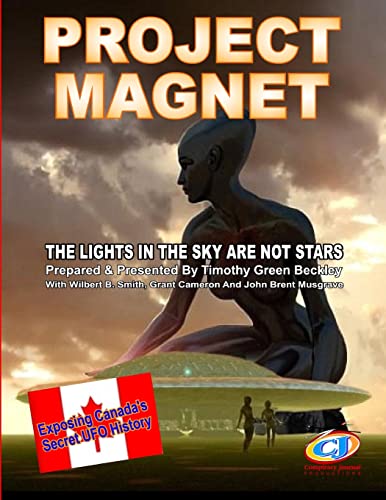
As an Amazon Associate, OverClassified may earn from qualifying purchases made through this link, at no extra cost to you.
Why This Is Essential Reading
Project Magnet: The Lights In The Sky Are Not Stars earns its place on this list not as an independently argued historical thesis but as the most direct primary-source access this site's own library documents to Wilbert B. Smith's own writings from Canada's founding government UFO investigation. Its citation on this site's own Project Magnet and Shag Harbour UFO Incident case files reflects the program's genuine institutional centrality to Canadian ufology's own documented history, spanning from Smith's original 1950 proposal through the federal apparatus that would still be responding to major sightings seventeen years later, a span of continuous, traceable government engagement few other national UFO-investigation histories can document with comparable primary-source depth. Read as a primary-source compilation rather than a polished historical narrative, and with its compilers' honest inclusion of Smith's later, more esoteric turn rather than a sanitized account, this book is essential precisely because it lets careful readers evaluate the documented historical record directly rather than through any single later historian's interpretive lens -- weighing Smith's own instrumented scientific ambition against the Defence Research Board's contemporaneous skepticism, and his rigorous 1950s government engineering work against his own later, considerably more esoteric writing, without either extreme being smoothed over for the sake of a tidier story.
Related Cases & Theories
Essential Viewing
Sources Cited
- Smith, Wilbert B.; Cameron, Grant; Musgrave, John; Beckley, Timothy Green (compiler). Project Magnet: The Lights In The Sky Are Not Stars. Inner Light / Global Communications, 2017 (ISBN 978-1-60611-247-2, cited here).
- "Project Magnet: The Lights In The Sky Are Not Stars." Goodreads (3.33 average rating, 3 ratings, checked August 2026). goodreads.com
- "Project Magnet: The Lights In The Sky Are Not Stars." AbeBooks (ISBN 9781606112472, marketplace listing photograph used for this article's cover image). abebooks.com
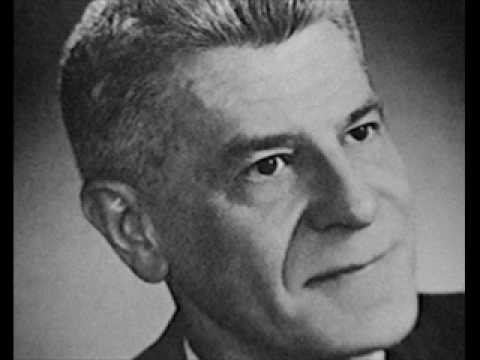
- "Wilbert Smith on UFOs Project Magnet and his Contacts with the Boys from Topside, Part 1." ISleepNow, YouTube (archival audio recording of Smith himself, video verified via oEmbed). youtube.com
- This site's own resources library: Full Reading List, where this exact 2017 edition is cited across 2 separate case-file pages.
- This site's own key-figures entry: Wilbert B. Smith, for his full biography and site-wide case connections.
- This site's own key-figures entry: Grant Cameron, for his own separately documented declassified-document research.
- This site's own case file: Project Magnet, this book's central and most extensively documented subject.
- This site's own case file: Shag Harbour UFO Incident, the institutional descendant case this book helps contextualize.
- This site's own essential-reading entry: The UFO Files: The Canadian Connection Exposed, another Wilbert B. Smith-connected title documented on this site.
- This site's own locations entry: Shirleys Bay, Ottawa, Ontario, site of Smith's instrumented field observatory.
- "Project Magnet (UFO)." Wikipedia (general background on the government program this book's primary-source material documents). en.wikipedia.org
- "Wilbert Brockhouse Smith." Wikipedia (biographical background on the book's primary documented subject). en.wikipedia.org
- "Project Magnet -- Wilbert Smith -- Canadian UFO Researcher." Mysteries of Canada (independent secondary overview of Smith's career and the program). mysteriesofcanada.com
Have corrections, additional research, or peer-reviewed sources? Help improve this entry.
Suggest an Edit