
Men in Black
The Secret Terror Among Us
Core Thesis
Men in Black: The Secret Terror Among Us is Gray Barker's 1983 book-length return to the folklore trope his own 1956 book, They Knew Too Much About Flying Saucers, had first popularized for a mass audience -- published the year before his death and gathering an expanded, updated survey of Men in Black reports that had accumulated across the intervening quarter-century. Where his 1956 book centered on Albert Bender's own claimed visitation, this later book widens the lens considerably, surveying the trope's broader spread through American UFO culture by the early 1980s. This site's own research draws on it for the Maury Island Incident, the June 1947 Washington State case this site's own research documents as the true origin point of the entire Men in Black legend -- predating Bender's own claimed encounter by six years, and predating Barker's first book on the subject as well.
About the Author
Gray Barker (1925-1984) built his career as an American ufology figure specifically around the Men in Black trope, having made it a mass-audience phenomenon through his 1956 book on Albert Bender's case. By the time this later book reached print in 1983, Barker had spent nearly three decades as the trope's single most closely identified popularizer, giving him a genuinely unique vantage point to survey how far the concept had spread and mutated since his own 1956 account first launched it into wide public circulation.
This edition's expanded, annotated form -- credited on its own cover to contributions from researchers including Andrew Colvin, Adam Gorightly, Nick Redfern, and Allen Greenfield -- reflects a broader pattern this site's own research has observed across several of Barker's later-republished works: his own original text preserved and supplemented with later scholarly and critical apparatus from researchers writing decades after his 1984 death, a format that lets modern readers encounter Barker's own voice alongside more recent critical perspective on his documented reliability problems.
This site's own prior research into Barker's career, developed through its They Knew Too Much About Flying Saucers essential-reading entry, documents his well-established professional pattern of embellishment: his own sister said he "wrote the books for the money"; longtime collaborator John C. Sherwood recounted Barker encouraging him to fabricate supporting documents for a story; and Barker himself wrote to skeptic Robert Sheaffer in 1980, three years before this book's publication, "I AM thoroughly dedicated to promoting UFO crackpottery." This site's own research treats that documented pattern as directly relevant context for evaluating this later book's own claims with the same disclosed skepticism applied throughout its coverage of Barker's body of work.
Barker died in Clarksburg, West Virginia in 1984, the year after this book's original publication, making it effectively his final major statement on the trope that had defined his public career -- a genuinely fitting capstone, per this site's own research, to a career built almost entirely around a single, culturally consequential piece of folklore he had done more than any other single writer to create and sustain.
The West Virginia Encyclopedia's own biographical entry on Barker, cited directly in this site's own sources below, documents his origins in Braxton County, West Virginia and his 1947 graduation from Glenville State College, grounding a career that would eventually produce not only his own three Men in Black-adjacent books but also Saucerian Press, the small independent publishing imprint through which he issued much of his own and other researchers' UFO writing across the 1950s, 1960s, and 1970s.
Historical Context & Origins
By 1983, the Men in Black trope Barker's 1956 book had launched already carried nearly three decades of cultural accumulation: Lowell Cunningham's 1990 comic book series and its subsequent 1997 film adaptation still lay in the future, but the concept had already become a recurring, self-sustaining element of American UFO folklore independent of Bender's original, specific claim -- witnesses across the country reporting their own encounters with mysterious dark-suited visitors, largely unaware of, or unconcerned with, the trope's actual documented origins.
This site's own research, developed through its Maury Island Incident case file, establishes that the trope's real origin point predates even Bender's 1953 claim: on June 22, 1947, Harold Dahl told investigators a large man in a black suit, driving a new black Buick, visited his home the morning after his claimed Maury Island sighting and warned him into silence. Kenneth Arnold and Ray Palmer's own 1952 book The Coming of the Saucers gave this specific encounter its first print appearance, predating Barker's own 1956 book by four years -- meaning Barker's role, however historically consequential, was one of mass popularization rather than origination.
This site's own research treats that origin-versus-popularization distinction as directly relevant to evaluating this 1983 book specifically: by the time Barker returned to the subject a third time, the trope's own documented history already ran through at least three separate authorial layers -- Dahl's original 1947 claim, Arnold and Palmer's 1952 dramatization, and Barker's own 1956 mass-popularization -- each adding its own embellishment before this final book attempted to survey the accumulated result.
The book's own 1983 publication also arrived a year before the FBI's own Maury Island file, and decades of subsequent skeptical research into both the Bender and Dahl claims, had been fully absorbed into mainstream UFO historiography -- this site's own research notes that Edward Ruppelt's blunt 1956 verdict on the Maury Island case as "the dirtiest hoax in the UFO history" was already well established in the literature by 1983, meaning Barker's own book necessarily had to reckon with, or work around, a documented record of fabrication sitting at the very root of the trope it surveyed.
Core Arguments & Key Concepts
The book's central argument is that Men in Black reports, whatever their individual evidentiary weaknesses, constitute a genuine and by 1983 well-established pattern within American UFO folklore worth surveying comprehensively rather than dismissing as a single discredited claim -- an argument that implicitly treats the trope's cultural durability as itself a form of significance independent of any individual case's underlying truth.
A second argument, carried by Barker's own choice to return to the subject a third time after 1956's They Knew Too Much About Flying Saucers, treats the trope as having outgrown its original Bender-specific origins by the early 1980s, becoming a recognizable, self-sustaining category witnesses across the country reported experiencing independent of any direct familiarity with the original 1953 or 1947 accounts.
A third argument, this site's own research treats as directly informed by Barker's own documented career-long embellishment pattern, concerns narrative construction: Barker's own established method of building vivid, quotable, dramatically satisfying accounts from thinner underlying source material -- documented extensively in this site's own coverage of his 1956 book -- almost certainly shaped how this later, wider survey selected and presented its own expanded case material.
A fourth argument, implicit in the book's own late-career timing, treats Barker's own three-decade personal association with the trope as itself a form of authority -- the book implicitly positions its own author as the trope's most qualified living chronicler, having personally launched it into mass circulation and tracked its subsequent cultural spread longer than any other single UFO researcher.
A fifth, more structural argument runs through this specific edition's own annotated format: by preserving Barker's original 1983 text alongside later contributions from researchers including Nick Redfern -- himself a documented later chronicler of the Men in Black phenomenon in his own separate published work -- this edition implicitly argues that Barker's original account, however embellished, remains a primary historical artifact worth engaging with directly rather than only through secondhand summary, even as the surrounding scholarly apparatus supplies the critical context this site's own research treats as essential to reading it responsibly.
Key Cases & Evidence Discussed
The Maury Island Incident (June 21-22, 1947) is, per this site's own case-file research, the true documented origin point of the entire Men in Black trope this book surveys. Harold Dahl claimed six doughnut-shaped objects appeared over his boat near Maury Island, Washington, one ejecting hot metallic debris; the following morning, he claimed a large man in a black suit, driving a new black Buick, visited his home and warned him, "Don't pass this around. You don't even know what you saw." This site's own research documents that the underlying sighting claim was thoroughly discredited -- an FBI investigation, prompted by the deaths of two Army Air Forces intelligence officers whose B-25 crashed after collecting the case's physical debris, found the entire episode fabricated by Dahl and his supervisor Fred Crisman, who had separately approached publishers hoping to sell the story for profit. Kenneth Arnold and Ray Palmer's own 1952 book The Coming of the Saucers gave the "man in black" detail its first print appearance, four years before Barker's own 1956 book would take the same basic trope and, per this site's own research, mass-popularize it for an American audience through the considerably more elaborate Bender case -- material this later 1983 book, as Barker's own final statement on the subject, necessarily builds on and extends.
Critical Reception & Controversies
This site's research attempted to verify a Goodreads rating for this specific title but Goodreads' own anti-automation measures blocked repeated requests during this session, returning empty responses rather than usable rating data; per this site's own established practice, this gap is disclosed honestly here rather than fabricated or silently omitted.
This site's research also attempted to verify an Amazon rating for this title, but Amazon's bot-detection system blocked automated requests to the listing during this session, the same persistent pattern encountered across every title checked this session; per this site's own Amazon Rating Display Protocol, this gap is disclosed honestly here rather than fabricated or silently omitted.
The book's critical standing is inseparable from Barker's own extensively documented reliability problems, covered in detail on this site's own They Knew Too Much About Flying Saucers essential-reading entry: a career-long pattern of embellishment, a self-described dedication to "promoting UFO crackpottery," and a documented willingness to encourage collaborators toward outright fabrication. This site's own research treats this book's own claims with the same disclosed skepticism, while still crediting its historical value as a primary artifact of how the trope's originating author himself chose to extend and reframe it by the early 1980s.
This site's own research also treats the book's expanded, multi-contributor annotated edition -- adding later critical and historical context from researchers writing well after Barker's own 1984 death -- as itself a form of retrospective critical engagement, giving modern readers a structured way to separate Barker's own original, embellishment-prone narrative voice from the more rigorous historical framing later scholarship has since applied to the same underlying material, rather than presenting his original claims without any surrounding corrective context at all.
A sixth, more speculative argument this site's own research draws out of the book's own late-career timing concerns Barker's own awareness of his own health and mortality: published the year before his 1984 death, the book reads, in retrospect, as a deliberate final statement from an author who understood he was closing out a body of work rather than opening a new line of investigation, a framing this site's own research treats as consistent with the book's own comprehensive, backward-looking survey structure rather than the more open-ended, forward-looking tone of his earlier 1956 and 1962-era writing on the same broader subject.
Influence & Legacy
The clearest evidence of this book's relevance on this site specifically is its direct connection to the true documented origin point of the entire trope it surveys: the Maury Island Incident's own 1947 "man in black" claim, which predates both Bender's 1953 account and Barker's own 1956 book by years, gives this later 1983 survey a genuine historical throughline back to the actual beginning of the folklore Barker spent his career extending.
The book's own cultural afterlife runs through the same broader lineage this site's own research has documented extensively elsewhere: Lowell Cunningham's 1990 comic book series, the 1997 Men in Black film franchise, and scholars' identification of The X-Files' own government-suppression premise as a direct descendant of Barker's original template all trace back to the same trope this later book chose to survey comprehensively rather than simply restate.
Within this site's own case-file research, this book's greatest value lies in demonstrating just how far a single fabricated 1947 detail -- one large man, one black suit, one unidentified Buick -- could travel over thirty-six years, from a discredited Pacific Northwest hoax through Barker's own two separate book-length treatments to a fully established, self-sustaining category of American UFO folklore by the time of this book's own 1983 publication.
This site's own research also treats the book as a useful case study in an author extending his own earlier commercial success: having built his career substantially on the Men in Black trope's mass appeal in 1956, Barker's return to the same well nearly three decades later illustrates a documented pattern in ufology publishing this site's own research has observed elsewhere -- authors revisiting their own most commercially successful material as a career-capping survey rather than breaking genuinely new investigative ground.
This site's own research finally notes that the book's own posthumous republication history -- an annotated 2012 edition assembled nearly three decades after Barker's own 1984 death, with contributions from researchers who had themselves grown up reading his original work -- extends the same pattern of commercial and cultural durability this site's own research has documented for the trope itself: a body of writing that keeps finding new audiences and new critical apparatus decades after both its author and its original claimed subject matter have long since receded from any live investigative relevance.
The Book

As an Amazon Associate, OverClassified may earn from qualifying purchases made through this link, at no extra cost to you.
Why This Is Essential Reading
Men in Black: The Secret Terror Among Us earns its place on this list as the closing chapter of a story this site's own research has traced from its actual 1947 origin: a fabricated detail in a discredited Pacific Northwest hoax that Gray Barker spent nearly three decades of his career transforming into one of American folklore's most durable modern archetypes. Published the year before his death, this final book-length survey gives readers a direct window into how far the trope Barker helped mass-popularize in 1956 had grown by the early 1980s -- material this site's own Maury Island Incident case file traces back to its actual, considerably more mundane origin point, a discredited 1947 salvage-operator's hoax rather than any genuine encounter with a mysterious visitor. Read against that case file, the book's real value lies not in what it claims about the Men in Black phenomenon, but in what it demonstrates about how thoroughly a single embellished detail can outrun the debunked claim that produced it.
Related Cases & Theories
Essential Viewing
Sources Cited
- Barker, Gray. Men in Black: The Secret Terror Among Us. Saucerian Press, 1983; this edition CreateSpace, 2012, annotated with additional material by Andrew Colvin, Adam Gorightly, Nick Redfern, and Allen Greenfield (ISBN 978-1-4505-6966-8, cited here).
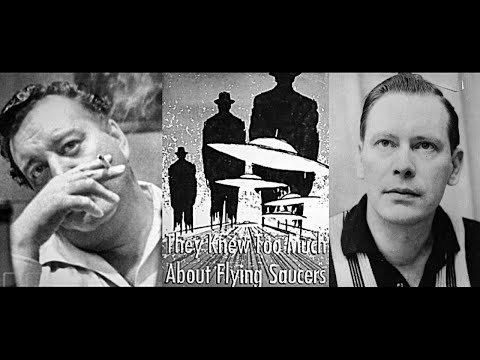
- "UFO enthusiast Jackie Gleason's interview with Gray 'Men in Black' Barker, 1958." Eyes On Cinema, YouTube (archival Long John Nebel radio-show interview footage; video verified via oEmbed). youtube.com
- This site's own resources library: Full Reading List, where this book is cited on this site's own Maury Island Incident case file.
- This site's own key-figures entry: Gray Barker, for his full biography and site-wide connections.
- This site's own case file: Maury Island Incident, citing this book directly as the true origin point of the trope it surveys.
- This site's own case file: Albert Bender & the Three Men in Black, the case Barker's own earlier 1956 book made famous.
- This site's own essential-reading entry: They Knew Too Much About Flying Saucers, Barker's own 1956 book that first mass-popularized the trope.
- This site's own key-figures entry: Kenneth Arnold, co-author of the 1952 book that gave the "man in black" detail its first print appearance.
- This site's own key-figures entry: Fred Crisman, Harold Dahl's supervisor and co-participant in the original 1947 Maury Island hoax.
- This site's own locations entry: Maury Island, Washington, site of the trope's actual 1947 origin.
- This site's own essential-reading entry: Why People Believe Weird Things, for a skeptical framework directly applicable to evaluating Barker's own documented embellishment.
- "Gray Barker." e-WV: The West Virginia Encyclopedia (biographical entry covering his Braxton County origins, Glenville State College education, and Saucerian Press career). wvencyclopedia.org
Have corrections, additional research, or peer-reviewed sources? Help improve this entry.
Suggest an Edit