
In Alien Heat
The Warminster Mystery Revisited
Core Thesis
In Alien Heat: The Warminster Mystery Revisited is Steve Dewey and John Ries's book-length sociological reassessment of the case this site's own Warminster Thing file documents in full and rates DISPUTED: the decade-long wave of unexplained sounds, lights, and mass sky-watching that made the Wiltshire market town of Warminster Britain's best-known UFO hotspot of the 1960s and '70s. Published by Anomalist Books in 2005, nearly forty years after the phenomenon began and almost a decade after journalist Arthur Shuttlewood's death, the book is the direct critical counterweight to Shuttlewood's own founding 1967 account, The Warminster Mystery, already covered in full elsewhere on this site. Written by two authors who grew up in Warminster and were themselves teenage sky-watchers on Cradle Hill during the phenomenon's later years, the book explicitly declines to argue for or against extraterrestrial visitation, instead treating the entire wave as a documented case study in how modern folklore forms, spreads, and sustains itself.
About the Author
Steve Dewey grew up in Warminster and, from around age fourteen, walked to Cradle Hill with friends during the flap's active years; he holds a Bachelor's degree in Society and Technology and a Master's in Popular Culture, and has worked as a technical author for more than three decades. He returned to the subject repeatedly after this book: with Kevin Goodman he co-authored History of a Mystery: Fifty Years of the Warminster Thing, a further retrospective marking the flap's own anniversary, and separately edited The Dead John Miscellany (2014), a posthumous collection of his co-author's poetry and fiction.
John Ries, also raised in Warminster, worked as a computer programmer specializing in databases rather than as a professional writer or researcher; bookseller records for the posthumous collection of his other writing give his dates as 1958 to 2009, indicating he died four years after this book's publication, though this article could not locate a formal obituary independently confirming that date. Both authors' firsthand teenage experience of the sky-watching culture they later analyze is a genuine, documented credential distinct from either pure believer advocacy or outside academic skepticism — they write about a scene they were personally part of, examined decades later with a critical rather than a participant's eye.
The book drew a favorable, widely quoted review from David Clarke, the Sheffield Hallam University journalism academic and UK UFO-files researcher, published in Fortean Times; Clarke served as a reviewer and public endorser of the book, not as a collaborator or co-author, a distinction worth stating plainly since the two roles are sometimes conflated in secondary listings.
Historical Context & Origins
The book arrives as the first substantial critical reassessment of a case that this site's own case file and multiple independent reviewers describe as having fallen into what one reviewer called a "historical black-hole" in the decades after the original flap ran its course, roughly from the unexplained sounds first reported at Christmas 1964 through the sky-watching culture's decline by the mid-to-late 1970s. Shuttlewood himself died in 1996, meaning the book's authors could not interview ufology's central original chronicler directly and instead worked from his own published books, contemporary press coverage, and their own personal memory of the later sky-watching scene.
Dewey and Ries's central methodological move, confirmed across multiple independent reviews, is to treat Warminster's wave not as a claim to be adjudicated on physical evidence but as a documented instance of modern folklore formation: a genuine, unexplained initial trigger (the unexplained sounds) that then, in reviewer Duncan Barford's phrasing, "collided with the zeitgeist and environmental factors" of mid-1960s Britain and was amplified and sustained specifically through Shuttlewood's own prolific writing career, with Shuttlewood himself, in Barford's words, coming to take on "an almost messianic function" within the phenomenon he was chronicling. A Magonia-linked review states plainly that the authors "ably demonstrate that Shuttlewood was not a reliable witness," a direct critical judgment this site's own case file's independent assessment of Shuttlewood's evidentiary record broadly aligns with.
The book's own influence is directly traceable in how this site's case file frames the case today: the Psychosocial UFO Hypothesis analysis in that file's own Theoretical Alignment section draws directly on the same sociological framing Dewey and Ries's book develops at length — a single vivid originating account, a sympathetic and prolific local media figure, and a self-sustaining communal viewing culture, treated as a documented pattern of socially amplified misperception rather than proof the underlying stimulus was anomalous.
The case remains a live piece of local heritage independent of any one book's interpretation: a new, larger commemorative mural featuring Shuttlewood's portrait was unveiled in Warminster in August 2025, timed to a sixtieth-anniversary conference at the town's Athenaeum Centre later that month. This article found no indication that the 2025 commemoration coverage specifically engages with Dewey and Ries's book, which centers its own attention on Shuttlewood and the original flap rather than on any of its later critical reassessments.
Core Arguments & Key Concepts
Structured across sixteen chapters plus two appendices, a bibliography, and an index — per the publisher's own table of contents, including sections titled "The Apparent Beginning," "The British Context," "The Thing Trilogy," "Hoaxes, the Hoaxers, and the Hoaxed," and "Believing in Things" — the book's scope is substantially more historiographical than a simple witness-testimony retelling, working through the flap's origins, its specific British cultural moment, Shuttlewood's own three-book "Thing" series, and the deliberate and accidental hoaxing that became entangled with the genuine phenomenon over its decade-long run.
The authors' stated conclusion, per available reviews, is that Warminster is best explained as a form of collective misperception and rumor amplification — what reviewer Duncan Barford summarized as the authors' own "mass hysteria" framing — while Barford himself, in the book's sole detailed Goodreads review, pushed back on whether that specific label adequately explains why so many ordinary residents and visitors reinterpreted mundane experiences in such consistently extraordinary terms. That tension, between a compelling sociological framework and its own explanatory limits, is presented in this article as a genuine, unresolved feature of the book's argument rather than smoothed over.
Physicist and skeptical writer Peter Brookesmith, in a review cited via the book's own retailer description of a longer notice in the Journal of Scientific Exploration, credited the authors with performing "relentless dissections" of the case's individual claims and said they did "a public service in dragging the Warminster Thing... back into view" for renewed scholarly attention — language this article presents as reported by the book's own marketing rather than independently verified against the original journal text.
Key Cases & Evidence Discussed
This site's own Warminster Thing case file documents the full wave — the Christmas 1964 unexplained sounds, Gordon Faulkner's disputed September 1965 photograph published nationally in the Daily Mirror, and the years of mass sky-watching at Cradle Hill and Cley Hill — in far greater depth than this book review needs to repeat, and readers wanting the complete, evenly weighted account of the underlying case should read that case file directly, alongside Shuttlewood's own original The Warminster Mystery for the believer's first-person account this book directly responds to.
What is specific to this book, rather than to the case generally, is its systematic critical treatment of Shuttlewood's own reliability as a witness and chronicler — a question the original 1967 book, naturally, does not raise about itself — and its broader argument that the entire phenomenon's spread and endurance are best explained by Shuttlewood's own role as an unusually effective, prolific, and self-reinforcing local media amplifier rather than by any single anomalous stimulus.
Critical Reception & Controversies
As of this article's research (August 2026), the book carries a 4.00-out-of-5 rating on Goodreads across a small base of 14 ratings and a single detailed written review, by Duncan Barford, who called it "surprisingly readable and compelling" while raising the methodological question about the "mass hysteria" framing noted above. This article could not retrieve an aggregate Amazon customer rating despite repeated attempts due to access errors on Amazon's own product pages.
The book's strongest documented endorsement is a reported 9-out-of-10 review in Fortean Times by David Clarke, quoted across multiple secondary sources as calling it "an impressive and scholarly tome that should be added to the library of every ufologist and fortean" — a rare score for a niche UFO title from a publication not generally known for uncritical praise, though this article could not independently confirm the exact wording against Fortean Times's own archive directly. The Magonia review site independently credits the book with having been "largely responsible for the resurgence of interest in England's greatest UFO flap," a judgment this article verified directly against that review's own published text.
No skeptical or believer-side rebuttal specifically targeting this book's own conclusions was located in this research; its reception, across the sources this article could verify, is consistently positive on its scholarly and narrative merits even where individual reviewers, like Barford, question specific interpretive choices within it.
Influence & Legacy
The book's clearest legacy is scholarly rather than commercial: multiple independent reviewers credit it directly with reviving critical and fortean interest in a case that had otherwise drifted into obscurity outside Warminster itself, and this site's own case file's analytical framing of the wave as a psychosocial phenomenon draws directly on the same sociological argument the book develops at length.
Dewey extended the same approach in History of a Mystery: Fifty Years of the Warminster Thing with Kevin Goodman, meaning this book's methodology — treating the flap as a documented folklore-formation event rather than adjudicating its physical reality — has become the dominant modern critical framework for discussing Warminster, distinct from both Shuttlewood's own believing 1960s-70s books and the case's earlier, more credulous press coverage.
The Book
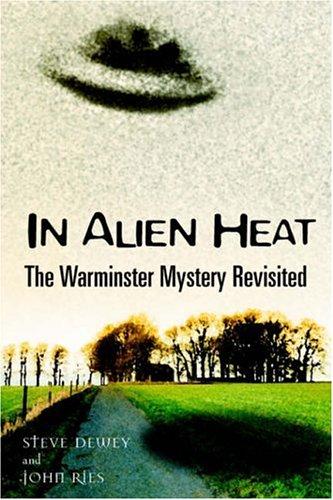
As an Amazon Associate, OverClassified may earn from qualifying purchases made through this link, at no extra cost to you.
Why This Is Essential Reading
In Alien Heat earns its place on this reading list as the direct, decades-later critical counterweight to Arthur Shuttlewood's own founding account: where The Warminster Mystery presents the phenomenon from inside the belief it helped generate, this book examines that same belief formation from the outside, by two authors who lived through its later social culture themselves without accepting its central claims at face value. Read alongside this site's own Warminster Thing case file, which draws directly on the same psychosocial framing this book helped establish, it stands as one of the more methodologically serious skeptical reassessments in this site's entire Essential Reading collection — not a debunking in the dismissive sense, but a genuine attempt to explain how an unresolved mystery became a self-sustaining decade-long cultural event.
Related Cases & Theories
Sources Cited
- Dewey, Steve, and John Ries. In Alien Heat: The Warminster Mystery Revisited. Anomalist Books, 2005 (ISBN 1933665025 / 9781933665023, 328pp). amazon.com
- "In Alien Heat." Anomalist Books, official publisher product page (page count, price, author bios, table of contents). anomalistbooks.com
- "In Alien Heat: The Warminster Mystery Revisited." Goodreads (reader rating 4.00/5, 14 ratings, Duncan Barford review, as fetched Aug 2026). goodreads.com
- "In Alien Heat." Kobo (ebook edition, ISBN 9781933665832). kobo.com
- "In Alien Heat." Google Books entry. books.google.com
- "In Alien Heat." Apple Books (ebook listing, Peter Brookesmith review excerpt). books.apple.com
- Rimmer, John. Magonia review page on the Warminster case and its literature. pelicanist.blogspot.com
- "The Warminster Thing, Part Two." Weird Wiltshire (flap timeline, Shuttlewood's 1996 death). weird-wiltshire.co.uk
- "New Warminster Thing Mural Unveiled Ahead of 60th Anniversary Conference." Warminster Journal (2025 local commemoration). warminsterjournal.co.uk
- "The Dead John Miscellany." Amazon.se listing (posthumous collection of John Ries's writing, edited by Steve Dewey, giving Ries's dates as 1958-2009). amazon.se
- "History of a Mystery: Fifty Years of the Warminster Thing." Amazon listing (Dewey's companion follow-up book with Kevin Goodman). amazon.com
- This site's own Warminster Thing case file and The Warminster Mystery essential-reading entry (complete sourcing documented there).
Have corrections, additional research, or peer-reviewed sources? Help improve this entry.
Suggest an Edit