
Dreamland
An Autobiography
Core Thesis
Dreamland: An Autobiography is Bob Lazar's own first-person retelling — three decades after his story first aired — of the claims already catalogued in detail on this site's own Bob Lazar / S-4 (Area 51) case file (#005): a brief 1988–89 stint reverse-engineering an extraterrestrial disc's Element 115 gravity-propulsion system at a facility he calls S-4, near Papoose Lake, and the fallout — surveillance, a terminated career, and a 35-year credibility fight — that followed his 1989 decision to go public with George Knapp on KLAS-TV. Published in October 2019 as the launch title of Interstellar, a brand-new imprint set up by Tom DeLonge's To The Stars Academy of Arts and Science specifically to carry it, the book adds narrative texture, personal chronology, and Lazar's own account of the emotional cost of coming forward — but it does not, by its own author's design or by any outside reviewer's assessment, produce the one thing that would resolve the case: independent, physical, or documentary confirmation of the MIT and Caltech degrees, or the S-4 employment itself, that remain unverified to this day.
About the Author
Robert Scott Lazar was born in 1959 in Coral Gables, Florida, graduated high school in the bottom third of his class after taking a single science course, and subsequently attended Pierce Junior College in Los Angeles. By the mid-1980s he had built and raced jet-powered cars, a hobby that produced the earliest independently verifiable trace of his technical background: a 1982 Los Alamos Monitor newspaper article about his jet car identified him, in print, as “a physicist at Los Alamos” — years before he had any conceivable motive to fabricate a scientific credential. That contemporaneous local-paper mention, together with an internal Los Alamos National Laboratory phone directory listing his name, is the single strongest piece of independent corroboration for any part of Lazar's professional background, and this site's own case file treats it as such.
The much larger and more consequential dispute concerns two claimed graduate degrees — a master's in physics from MIT and a master's in electronics technology from Caltech — that Lazar has maintained since 1989 and that neither institution has any record of him ever earning, or attending. Nuclear physicist Stanton Friedman, who investigated Lazar's background directly and independently of George Knapp, concluded the academic claims were fabricated, and later commentators including physicist and skeptic Michael Shermer have credited Friedman specifically with exposing them. Lazar has never produced a diploma, transcript, or named classmate or instructor from either school; one professor he named as a Caltech contact, William Duxler, was in fact teaching at Pierce Junior College, not Caltech. Lazar's own explanation — that his academic and employment records were deliberately erased by the government to discredit him if he ever came forward — is a claim this site's own case file describes accurately as “structurally unfalsifiable”: it cannot be independently tested, which is precisely why the credential question remains open rather than resolved in either direction after 35 years.
What is separately documented, and does not depend on Lazar's own testimony, is that he held some form of contractor employment connected to the Department of Energy nuclear-weapons complex: W-2 tax forms in his possession identified his employer as the United States Naval Intelligence Command via an EG&G contracting chain, and he passed a Department of Energy polygraph examination as part of a security-clearance process that someone, at some level, initiated on his behalf. None of this proves the S-4 story; it establishes only that Lazar's employment claims rest on more documentary ground than his academic claims do — a distinction Dreamland itself does not always draw as sharply as this site's own case file does.
Lazar's life after 1989 is itself part of the book's subject matter, and part of what makes his credibility profile more complicated than a simple believer/skeptic binary. In 1990 he pleaded guilty to a felony pandering charge connected to a prostitution operation, a conviction unrelated to his UAP claims that critics have nonetheless cited as a broader credibility concern. He and his wife went on to found United Nuclear Scientific Equipment and Supplies, a radioactive- and chemical-supplies company that pleaded guilty to federal Hazardous Substances Act violations in 2007 and was raided by the FBI in 2019 in connection with a Michigan homicide investigation into a customer's alleged use of company-supplied thallium — a raid Lazar has publicly framed as retaliation connected to his UAP disclosures, a claim that, like the credential-erasure claim, cannot be independently confirmed or ruled out from the public record.
Historical Context & Origins
By 2019, Bob Lazar's story was thirty years old and had already outlived several waves of renewed public attention without ever being definitively resolved. Jeremy Corbell's documentary Bob Lazar: Area 51 & Flying Saucers, which premiered at SXSW in March 2018 and reached a global audience via Netflix beginning that December, had just introduced Lazar's account to a generation of viewers who had never seen the original 1989 KLAS-TV broadcasts, and did so at a moment when the Pentagon's 2017 acknowledgment of the Advanced Aerospace Threat Identification Program (AATIP) had made institutional secrecy around non-human technology claims feel, for the first time, less like fringe conspiracy and more like a live policy question. Dreamland arrived roughly eighteen months into that renewed attention, positioned explicitly as Lazar finally telling the complete story in his own words rather than through an interviewer's or documentarian's framing.
The book's publisher is itself part of its historical context in a way that is unusual for a UAP memoir. Dreamland was not acquired by an established trade publisher through a conventional editorial and vetting process; it was released as the launch title, on October 15, 2019, of Interstellar, a brand-new publishing imprint that musician-turned-UAP-entrepreneur Tom DeLonge's company, To The Stars Academy of Arts and Science (TTSA), announced specifically to carry it — a fact TTSA itself confirmed publicly, and one commentators have noted came with a deliberate effort to keep some distance between the Academy's own institutional reputation and the more contested elements of Lazar's story. That publishing arrangement is consistent with this site's classification of the book as self-published/independent: no major trade house with an independent fact-checking or editorial-vetting apparatus stood between Lazar's manuscript and print.
The book also arrived shortly after Lazar's June 2019 appearance, alongside Corbell, on The Joe Rogan Experience episode #1315 — one of that year's most-viewed podcast episodes and a further amplifier of public interest in the S-4 story just as Dreamland reached shelves. Read together, the documentary, the podcast appearance, and the book form a single, tightly clustered 2018–2019 media moment that reintroduced Lazar's 30-year-old claims to an audience for whom Area 51 was already pop-culture shorthand — a shorthand Lazar's own original 1989 disclosure had done more than any other single event to create.
Historically, the book also predates by several years the next major turn in the same broader institutional story: David Grusch's 2023 congressional testimony describing a classified, contractor-operated crash-retrieval and reverse-engineering program under Naval and Air Force intelligence oversight — an institutional structure this site's own case file notes maps unusually closely onto the one Lazar described in 1989 and again, at greater length, in this book, without either man's account specifically corroborating the other.
Core Arguments & Key Concepts
The book's central narrative thread is Lazar's own chronology of his brief employment at the facility he calls S-4: how he says he came to be hired following a claimed 1988 phone call to physicist Edward Teller at Los Alamos requesting a job reference, his description of being bused blindfolded-in-effect (windows blacked out) to a mountainside hangar complex south of Groom Lake, his account of reading briefing documents describing decades of alleged extraterrestrial contact, and his detailed technical description of the craft he nicknamed the “Sport Model” — a 52-foot metallic disc he says was powered by a reactor using a stable isotope of Element 115 to generate a directed gravitational wave for propulsion. This is the same core technical claim documented at length in this site's own case file, presented here in Lazar's own extended first-person narrative voice rather than through interview excerpts.
A second major thread is Lazar's account of the human cost of coming forward: the surveillance he says he and his then-wife Tracy experienced after his S-4 employment was terminated, the March–April 1989 desert observation trips with Gene Huff and pilot John Lear that produced the Wednesday-night video footage of anomalous lights over the test range, his detention and interrogation at Indian Springs Air Force Base after the group was caught by security patrol, and his decision to go public first anonymously (as “Dennis”) and then, six months later, under his own name. The book frames this sequence as evidence of genuine risk taken for genuine reasons — a framing several reviewers have found emotionally persuasive even where they remain unconvinced by the underlying technical claims.
A third thread, more defensive in character, directly engages the credibility questions this site's own case file organizes around: the missing MIT and Caltech records, the disputed Los Alamos employment level, and the absence, after three decades, of any physical Element 115 sample or other corroborating artifact. Lazar's own explanation throughout the book is consistent with his public statements since 1989 — that his academic records were deliberately erased as part of an effort to discredit him — and the book does not introduce new documentary evidence that would let a reader test that claim independently; it restates the position rather than substantiates it.
A fourth, more scientifically grounded thread revisits Element 115 itself: Lazar recounts, with evident satisfaction, that a team at Russia's Joint Institute for Nuclear Research and Lawrence Livermore National Laboratory successfully synthesized Element 115 (later named moscovium) in 2003, fourteen years after his original claim that the element existed and could serve as a reactor fuel. The book treats this synthesis as significant vindication. It is more accurate, and more consistent with this site's own case-file treatment, to describe the synthesis as a partial and contested vindication: Lazar's prediction of the element's existence and general atomic-number placement was correct, but the actual synthesized isotopes decay within milliseconds, nowhere near the stable, handle-able, kilogram-quantity solid material the book describes powering the Sport Model's reactor.
Key Cases & Evidence Discussed
The book's entire content is, in effect, the primary-source first-person version of this site's own Bob Lazar / S-4 (Area 51) case file (#005, 1988–1989), and readers of this entry are directed there for the fullest independently sourced reconstruction of the same events, including the Five Observables assessment, the Data Integrity Score, and the detailed evidence-for/evidence-against breakdown this book's own narrative does not attempt to replicate.
Lazar's account of his brief association with the actual, documented Los Alamos National Laboratory complex — corroborated independently by the 1982 newspaper article and the internal phone directory — is one of the few threads in the book that connects to verifiable institutional history rather than to Lazar's testimony alone, and it is treated with roughly equal weight in both the book and this site's own case file.
The book's account of the 1989 KLAS-TV broadcasts situates George Knapp's own reporting process — the months Knapp says he spent attempting to verify or falsify Lazar's background before airing the anonymous “Dennis” interview — as central to why the story broke through in the first place; Knapp's foreword to this same book makes the same case for his own diligence in Knapp's own words, giving readers a rare instance of subject and original reporter appearing in the same volume.
Element 115's 2003 synthesis at the Joint Institute for Nuclear Research, discussed above, is the book's most scientifically testable claim and the one most directly engaged by mainstream nuclear physics; readers interested in the fuller technical back-and-forth over the “island of stability” hypothesis and the gap between Lazar's predicted stable isotope and the millisecond-lived isotopes actually produced should consult the Material Analysis section of this site's own case file, which covers the physics in more depth than the book itself does.
Critical Reception & Controversies
Trade and genre-press response to Dreamland was modest in volume — consistent with its release through a newly launched, non-mainstream imprint rather than a major trade publisher with an established review-outreach apparatus — and largely divided along the same fault line that has defined Lazar's reception since 1989. UFO-community outlet Rogue Planet and blogger Mike Damante at Punk Rock and UFOs both reviewed the book favorably as a compelling firsthand account, with Damante calling Knapp's foreword “a perfect lesson in objectivity, fairness and leg work” while explicitly cautioning that the book “does not answer all the questions” and does not “end the validity debate about Lazar.”
More critical reader response, visible across Goodreads and other reader-review platforms, has focused on the book's craft as much as its claims: reviewers have flagged what they describe as unpolished prose, dialogue passages that read as amateur screenwriting rather than memoir, and significant gaps where readers expected more corroborating detail than Lazar's narrative voice supplies. One frequently echoed reader assessment describes the book as an entertaining, absorbing story that is, in the reviewer's own estimation, at least partly fictionalized — a judgment that tracks closely with the “partial truth hypothesis” this site's own case file identifies as the most forensically careful available reading of the entire Lazar case.
The book's foreword author is, unusually, also one of the case's most consequential figures: George Knapp is the journalist whose original 1989 reporting made the story public in the first place, and whose own credibility — a multiple Emmy-winning, decades-long investigative career at KLAS-TV largely unrelated to UFO subjects — has itself functioned as a form of borrowed legitimacy for Lazar's claims ever since. Skeptic-community commentary, including physicist and Skeptic magazine founder Michael Shermer, has continued to credit the late Stanton Friedman specifically — not Knapp — with the most rigorous independent debunking effort against Lazar's academic claims, a distinction this book's own framing, understandably, does not dwell on.
A smaller thread of more recent, sympathetic-but-unresolved commentary, including a 2021 Nevada Current retrospective and independent analysis published on Substack under the title “The Strange Case of Bob Lazar,” has argued that dismissing Lazar outright has become harder precisely because so many of the peripheral, checkable details in his account — Area 51's existence, the general shuttle-bus commuting architecture to remote test-range facilities, Element 115's eventual synthesis — have turned out to be real, even as the core extraordinary claims remain exactly as unverifiable as they were in 1989. That same commentary is explicit that this pattern cuts both ways: a fabulist could simply have gotten lucky on the peripheral details, and the persistence of unresolved doubt is not itself evidence that the core story is true.
It is worth stating plainly what this book does not do, in contrast to what this site's own case file attempts: it does not present a Data Integrity Score, a formal evidence-for/evidence-against ledger, or independent verification of any claim beyond what Lazar's own testimony and his foreword-writer's decades-old reporting already established by 1989. Readers looking for the fullest currently available accounting of what has and has not been independently corroborated in the Lazar case — not merely Lazar's own retelling of it — should treat this book as a valuable primary source to be read alongside, not instead of, this site's own case file.
Influence & Legacy
As the first book-length, single-author account of the S-4 story in Lazar's own words, Dreamland has become a standard citation point in subsequent UAP-disclosure-era commentary that treats Lazar as a possible precursor to more recent whistleblower testimony, even where that commentary does not endorse his specific technical claims.
The book's publication also marks a small but genuine milestone in UAP-adjacent publishing history: it was the launch title of Interstellar, the imprint Tom DeLonge's To The Stars Academy created specifically to carry it, extending TTSA's broader pattern — already visible in its earlier Sekret Machines fiction series — of using its own media and publishing arms to shape how UAP-related claims reach the public, independent of conventional trade-publishing gatekeeping.
Within the specific ecosystem of this site's own content, Dreamland functions as a useful companion text to Annie Jacobsen's Area 51 (2011), which opens with open skepticism toward Lazar's claims from outside his own circle, and to Jacques Vallée's Revelations (1991), which raised the possibility that Lazar had been used, wittingly or not, as a vehicle for deliberate disinformation — a reading this book's own first-person narrative, understandably, does not entertain about itself.
More recent institutional developments — particularly David Grusch's 2023 congressional testimony and the 2026 documentary S4: The Bob Lazar Story, which sought new military witness testimony with Knapp's continued involvement — have kept this book's underlying claims in active circulation nearly four decades after the original 1989 broadcasts, a durability that is itself among the most remarkable features of the entire Lazar case regardless of how the credential and evidence questions are ultimately resolved.
The Book
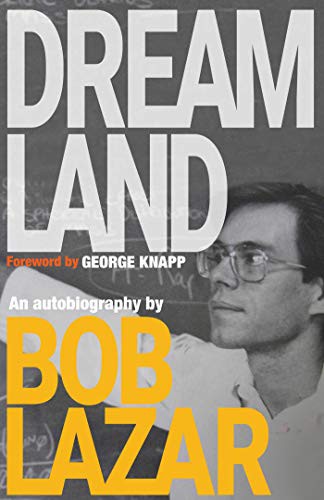
As an Amazon Associate, OverClassified may earn from qualifying purchases made through this link, at no extra cost to you.
Why This Is Essential Reading
Dreamland earns its place on this list not because it resolves the Bob Lazar case — by any honest reading, including its own reviewers' and this site's own case-file assessment, it does not — but because it is the single most complete first-person primary source for a story that reshaped global UFO culture and put Area 51 into everyday language. Read together with George Knapp's own foreword, it is the closest thing to Lazar testifying in his own extended voice, with all the narrative texture and none of the independent verification that a foreword from the original reporting journalist cannot, by itself, supply. The credential and employment questions this book cannot answer — no MIT or Caltech record, no named classmate, no produced Element 115 sample after 35 years — are exactly the questions this site's own Bob Lazar / S-4 case file keeps classified DISPUTED rather than CONFIRMED or DEBUNKED, and this book, for all its narrative value, does not move that needle in either direction. Read it as testimony, not proof — the single richest account of what Lazar says happened to him, alongside, never instead of, the independently sourced case file that tracks what can and cannot actually be verified.
Related Cases & Theories
Essential Viewing
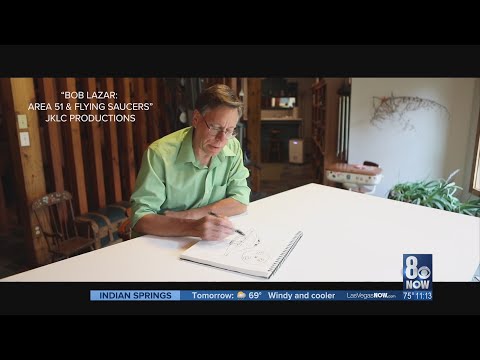
I-Team: A look back at 1989 Bob Lazar interview; it started new UFO conversations
8 News Now — Las Vegas (KLAS-TV's successor newsroom) — A retrospective on the original May and November 1989 KLAS-TV broadcasts that first aired Lazar's claims with George Knapp, the reporting this book's own narrative builds directly on. Verified via YouTube oEmbed before inclusion.
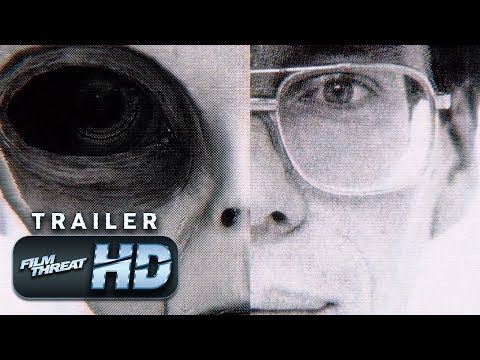
BOB LAZAR: AREA 51 & FLYING SAUCERS | Official HD Trailer (2018) | DOC
Film Threat — The official trailer for Jeremy Corbell's 2018 documentary, whose SXSW premiere and Netflix release directly preceded and helped drive demand for this 2019 book. Verified via YouTube oEmbed before inclusion.
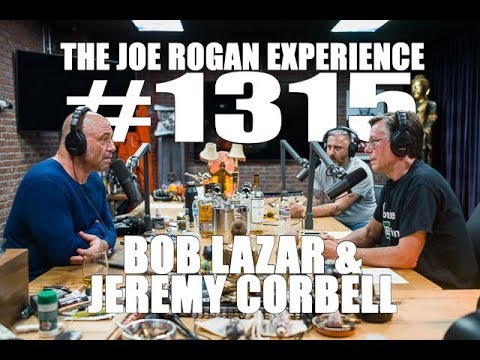
Joe Rogan Experience #1315 - Bob Lazar & Jeremy Corbell
PowerfulJRE — Lazar and Corbell's June 2019 podcast appearance, released the same year as this book and one of the era's most-viewed platforms for his account. Verified via YouTube oEmbed before inclusion.
Sources Cited
- Lazar, Bob. Dreamland: An Autobiography. Foreword by George Knapp. Interstellar, October 15, 2019 (ISBN 9780578437057 / 0578437058, hardcover, 288 pp., matching the exact edition already cited on this site's own Bob Lazar / S-4 case file's Further Reading list). amazon.com
- "Bob Lazar." Wikipedia (biography, education-claim investigation, S-4 claims, 1989 KLAS-TV broadcasts, 2018 documentary, 2019 FBI raid). en.wikipedia.org
- "George Knapp (television journalist)." Wikipedia (career at KLAS-TV, original 1989 Lazar reporting, subsequent UAP journalism). en.wikipedia.org
- To The Stars [@ToTheStarsMedia]. "TTS is excited to announce the launch of our new imprint INTERSTELLAR and its first book hitting bookshelves on Oct. 15th, DREAMLAND: An Autobiography by Bob Lazar." X (formerly Twitter), 2019 (official announcement of the Interstellar imprint's launch specifically to publish this book). x.com
- "Dreamland: An Autobiography." Open Library edition record (Interstellar, October 15, 2019, ISBN 9780578437057 / 0578437058, hardcover, 288 pp.). openlibrary.org
- Damante, Mike. "REVIEW: Bob Lazar's 'Dreamland' a must-read for skeptics, believers." Punk Rock and UFOs, October 22, 2019 (contemporary review, praise for Knapp's foreword, explicit statement that the book does not resolve the validity debate). punkrockandufos.com
- "Dreamland: An Autobiography." Goodreads (reader reviews and ratings, including reader assessments of prose quality and credibility). goodreads.com
- Kinley-Gauthier, Émile. "The Strange Case of Bob Lazar." Skeptic, skeptic.com (independent reassessment of the credibility evidence on both sides of the Lazar case). skeptic.com
- Shermer, Michael [@michaelshermer]. Post crediting Stanton Friedman with exposing Bob Lazar's fabricated MIT and Caltech credential claims. X (formerly Twitter). x.com
- "UFOs, the Pentagon, and the enigma of Bob Lazar." Nevada Current, June 1, 2021 (retrospective on the Lazar case in light of post-2017 Pentagon UAP disclosures). nevadacurrent.com
- "Bob Lazar: Area 51 & Flying Saucers." IMDb (2018 Jeremy Corbell documentary: SXSW premiere, director, narrator, release and distribution details). imdb.com
- "I-Team: A look back at 1989 Bob Lazar interview; it started new UFO conversations." 8 News Now (KLAS-TV's successor newsroom), YouTube. youtube.com
- This site's own case file: Bob Lazar / S-4 (Area 51) (Case File #005), for the fullest independently sourced reconstruction, evidence ledger, and Data Integrity Score for the events this book recounts in Lazar's own words.
- This site's own essential-reading entry: Area 51 (Annie Jacobsen, 2011), which opens with Jacobsen's own skeptical treatment of Lazar's claims from outside his circle.
- This site's own theory page: Government Deception Hypothesis (GDH-001), relevant to the disinformation-adjacent readings of the Lazar case some researchers have proposed.
- This site's own theory page: Psycho-Social Hypothesis (PSH-001), the framework under which this site's own case file scores the Lazar case's highest theoretical alignment.
- This site's own key-figures entries: Bob Lazar and George Knapp, for full biographical detail and further case connections beyond this book.
- This site's own resources library: Full Reading List, where this exact 2019 hardcover edition (ISBN 0578437058) was already cited in connection with the Bob Lazar / S-4 case file prior to this entry.
Have corrections, additional research, or peer-reviewed sources? Help improve this entry.
Suggest an Edit