
UFOlogy
A Major Breakthrough in the Scientific Understanding of Unidentified Flying Objects
Core Thesis
UFOlogy: A Major Breakthrough in the Scientific Understanding of Unidentified Flying Objects is James M. McCampbell's 1976 attempt to apply mainstream physics and engineering analysis to UFO witness testimony, treating correlated reports as usable data from which to infer the physical characteristics of the phenomenon -- its composition, propulsion, and electromagnetic effects. This site's own Electromagnetic Interference / Ignition-Kill Hypothesis theory page credits McCampbell as the researcher who "first systematized" this entire theory pattern in the 1960s-1970s, and lists him as a Key Proponent for this book's chapter on vehicle ignition interference specifically. This article's own research located and personally read, in full, a scathing contemporary review of the book by skeptic James Oberg in The Zetetic (Spring/Summer 1977) -- material this article presents directly rather than omitting, since the site's own existing theory-page framing does not currently mention it.
About the Author
This site's own existing key-figures entry for James McCampbell describes him simply as a "Vehicle-Interference Researcher" and "engineer." This article's own research found a more specific professional background, sourced to a NICAP-hosted biography: eleven years at Bechtel Corporation in scientific development work for USAF and NASA facilities, a position as senior theoretical physicist in American-Standard's Atomic Energy Division evaluating plutonium production, reactor-program work at Westinghouse Electric, fallout-measurement work at the U.S. Naval Radiological Defense Laboratory covering Nevada and Marshall Islands test sites, and management of a $17 million Department of the Interior environmental-protection contract for the Alaska pipeline in 1974. This article treats his background as closer to nuclear physics and large-project technical management than conventional mechanical or electrical engineering, and notes this single-source NICAP biography was not independently cross-verified against a second source.
This article's own research found McCampbell held a senior research role at MUFON for roughly two decades, though it could not independently confirm a specific claimed title and date range ("Director of Research for MUFON, 1975-1993") against MUFON's own published organizational history, which does not mention him. He remained active in UFO research through at least 1999, when he self-published a further compilation of his writings, and died December 7, 2008, in Belmont, California -- a detail this article sourced to a single obituary notice and treats as reasonably, but not conclusively, confirmed.
Historical Context & Origins
This article's own research confirms the book was not universally well-received on publication, despite carrying real institutional endorsement: per Oberg's own review, the Center for UFO Studies called it "a basic primer for the beginner and a textbook for the informed," and AAAS science reviewer Dr. Thornton Page recommended it for general audiences and auxiliary high school and college science reading. That same review, however, argues those endorsements were premature.
This article's own direct reading of the full original review text found Oberg's central objection is methodological, not merely a difference of interpretation: he quotes McCampbell's own introduction instructing readers to "suspend their doubts" and stating that the raw witness data used throughout the book is accepted "without bias," with no attempt made to verify or evaluate individual sighting reports -- an approach Oberg summarized as building analysis on data the author himself admits is untrustworthy.
Core Arguments & Key Concepts
Per this site's own existing theory-page framing, the book's core contribution -- and the reason it remains cited here -- is its chapter-level argument that induced electromagnetic fields could plausibly disrupt the point-contact ignition and low-voltage charging systems common in 1950s-era vehicles, offered as a genuinely engineering-literate mechanism rather than pure speculation.
This article's own reading of Oberg's review found specific, itemized objections that go well beyond the ignition-interference chapter this site draws on: that McCampbell drew a large share of his "raw data" from a book by Jacques Vallée -- a researcher who had explicitly rejected the "nuts and bolts" extraterrestrial hypothesis McCampbell was arguing for -- while omitting the psychic-manifestation material central to Vallée's own thesis; that the book presents contactee George Adamski's claims as fact; that its treatment of the Walesville, New York radar case omits the case's own conventional resolution (a private aircraft engine fire, later identified via cockpit warning-light data); and that its treatment of the RB-47 radar case, one of the book's longest case studies, does not engage electronics engineer Philip J. Klass's 1974 published explanation, which Oberg states the flight crew itself accepted as authentic.
Oberg's review also flagged a specific technical claim this article verified directly from the primary text: McCampbell's assertion that microwave energy increases the electrical resistivity of tungsten, offered as a partial physical basis for reported ignition effects, is footnoted with McCampbell's own admission that he could not locate or verify the source of the claim.
Key Cases & Evidence Discussed
This site's own Levelland case file (Case File #037) documents the 1957 case at Levelland, Texas already connected to McCampbell's ignition-interference research on this site, with far more complete sourcing than this book's brief treatment allows.
This site's own Electromagnetic Interference / Ignition-Kill Hypothesis theory page documents the broader pattern this book's fifth chapter addresses, including Mark Rodeghier's later, more statistically rigorous 1981 CUFOS catalogue. This article's own research confirmed Rodeghier's catalogue directly cites a related 1976 McCampbell conference paper, "UFO Interference with Automobile Electrical Systems, Part 1: Headlights" (Proceedings of the 1976 CUFOS Conference) -- a genuine scholarly link between the two researchers, though this article was not able to confirm the catalogue cites this specific book by name rather than that separate conference paper.
Critical Reception & Controversies
This article's own research located and read in full James Oberg's review of the book in The Zetetic (the journal that became Skeptical Inquirer), Spring/Summer 1977 -- a substantive, case-by-case critique rather than a dismissive pan. Oberg's verdict, in his own words, is that McCampbell "does attempt to sound scientific, but a careful reader may detect more silliness than science in his writing," and that the book fails on its own stated terms: rather than the new science its title claims, Oberg argues it selectively assembles unverified reports to fit a predetermined conclusion, with scientific-sounding citations that repeatedly fail to lead anywhere when checked. Oberg also states he sent McCampbell a copy of the review three months before publication with a direct request for supporting references, and received no response.
This thin-versus-substantial reception gap is itself notable: institutional and general-audience reviewers (CUFOS, Dr. Thornton Page for AAAS) praised the book on publication, while the era's leading technical skeptic subjected its specific evidentiary claims to sustained, case-level scrutiny and found them wanting. This article presents both assessments rather than only the more favorable one, consistent with this site's standing editorial practice.
Influence & Legacy
The book's most durable legacy, reflected in its citation on this site, is narrower than its own ambitious title claims: not a general breakthrough in UFO science, but a specific, still-referenced engineering argument about vehicle ignition interference that later, more rigorous researchers like Rodeghier built on with actual statistical case data rather than the selectively curated anecdotes Oberg's review identifies as the book's central weakness.
Set alongside this site's own Electromagnetic Interference / Ignition-Kill Hypothesis theory page and Rodeghier's 1981 catalogue, this book is best understood as the pattern's first systematized statement rather than its most credible one -- a distinction this site's own theory page does not currently draw, and one this article recommends readers keep in mind.
The Book
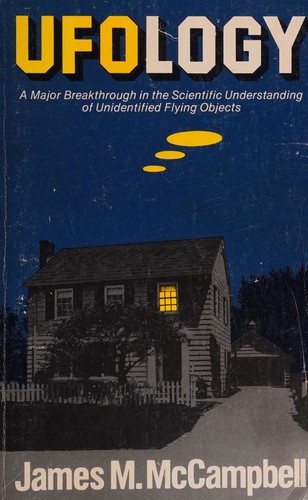
UFOlogy
A Major Breakthrough in the Scientific Understanding of Unidentified Flying Objects
Find on Amazon →As an Amazon Associate, OverClassified may earn from qualifying purchases made through this link, at no extra cost to you.
Why This Is Essential Reading
UFOlogy earns a place on this reading list for a narrow, specific reason: this site's own Electromagnetic Interference / Ignition-Kill Hypothesis theory page credits McCampbell as the researcher who first systematized the vehicle-ignition-interference pattern, connected directly to this site's own Levelland case file. That narrow credit should not be mistaken for the book's own much larger claim to be a general scientific breakthrough -- this article's own direct reading of James Oberg's detailed 1977 review found specific, checkable problems across the book's other chapters, including selectively drawn source data, an unresolved case presented as unexplained despite a published conventional solution, and at least one technical citation the author himself admitted he could not verify. Read McCampbell's ignition-interference chapter as the site's own citation intends, and read the rest of the book, per Oberg's contemporary and still-relevant critique, with real caution.
Related Cases & Theories
Sources Cited
- McCampbell, James M. UFOlogy: A Major Breakthrough in the Scientific Understanding of Unidentified Flying Objects. Celestial Arts, 1976 (ISBN 978-0-89087-144-7, cited here).
- Oberg, James E. Review of UFOlogy. The Zetetic, Spring/Summer 1977, pp. 88-90 -- this article's own direct, full reading of the original review text, personally transcribed rather than relying on secondhand summary. centerforinquiry.s3.amazonaws.com
- Open Library, edition record and cover image for ISBN 9780890871447 (OCLC 2655734). openlibrary.org
- NICAP, biographical page for James McCampbell (career background, MUFON research role). nicap.org
- NICAP, "UFO Interference With Vehicles and Self-Starting Engines," by J.M. McCampbell. nicap.org
- rr0.org, reproduction of Mark Rodeghier's 1981 catalogue reference list, confirming its citation of McCampbell's 1976 CUFOS conference paper. rr0.org
- This site's own James McCampbell key-figures entry.
- This site's own Mark Rodeghier key-figures entry, the later researcher who built on McCampbell's ignition-interference work with statistical rigor.
- This site's own Electromagnetic Interference / Ignition-Kill Hypothesis theory page, which credits this book directly.
- This site's own Levelland case file (Case File #037), connected to McCampbell's ignition-interference research.
- This site's own UFO Reports Involving Vehicle Interference essential-reading entry, Rodeghier's later, more rigorous statistical successor to McCampbell's pattern.
- This site's own resources library: Full Reading List.
Have corrections, additional research, or peer-reviewed sources? Help improve this entry.
Suggest an Edit