
The Truth Behind Men in Black
Government Agents -- or Visitors from Beyond
Core Thesis
The Truth Behind Men in Black: Government Agents -- or Visitors from Beyond is Jenny Randles's 1997 historical survey of the "Men in Black" (MIB) myth, tracing it chronologically from Albert Bender's foundational 1953 case through decades of subsequent reports. This site cites the book on its Aveley Abduction case file for its coverage of the broader apparitional-visitor phenomenon, a thematic parallel to the nighttime visitation the Day family reported in Aveley's own aftermath -- this article's own direct examination of the book's text did not find Aveley, the Day family, or that specific 1970s-1980s visitation discussed by name, and presents this site's citation accordingly as a topical comparison rather than a claim that Randles's book directly addresses that specific case.
About the Author
This site's own Jenny Randles key-figures entry and this site's companion Essential Reading article on her 1983 book The Pennine UFO Mystery already document her broader career and research approach. This article does not repeat that ground, noting only that this later 1997 book shows continuity with the same evidence-weighing, non-dogmatic investigative stance already established in her earlier work.
Historical Context & Origins
This article directly examined the book's own chapter structure and portions of its text via a digitized library scan. The book opens with the 1947 Maury Island incident ("Maury Island: Birth of a Mystery") before turning to "The Three Men" -- Albert Bender's 1953 case, in which he claimed to have been visited and silenced by three mysterious men after publicly speculating about UFOs, an account this site's own key-figures entry on Bender already documents as the MIB myth's foundational origin story. Subsequent chapters move chronologically through MIB-related cases from the late 1950s through the late 1980s before turning to thematic chapters -- "Foreign Affairs," "Grand Deceptions," "Evidence of Aliens," "A History in Black," "Enforcers of the Cover-Up" -- and a closing "Conclusion: Dark Thoughts."
Core Arguments & Key Concepts
This article located and directly quotes Randles's own stated position, rather than relying on a secondary paraphrase: "That they are part of the phenomenon itself -- some sort of shape-changing alien manifestation -- may well seem rather absurd to you... the UFO world is full of surprises and I rule nothing out." She then states the explanation she personally finds more persuasive: "The other option -- and the one that I suspect most readers will find easier to accept -- is that the MIB are the product of a covert operation on the fringes of government study into UFOs."
Randles frames her own project modestly rather than as advocacy for either position, writing that her aim is "not to prove vast government conspiracies... but to probe the evidence that we have and try to understand what is happening." This article's research found scattered discussion of apparitional and poltergeist-adjacent phenomena tied to the broader psychic background of at least one witness (Shirley Greenfield) discussed in the book, consistent with the book covering apparitional-visitor material as part of its wider MIB survey, though this article's access to the full text was partial and this specific connection should be read as a general thematic finding rather than a page-by-page confirmed inventory of the book's contents.
Key Cases & Evidence Discussed
This site's own Aveley Abduction case file (Case File #286) documents the October 1974 Day family encounter and its multi-year aftermath, including the nighttime apparitional visitation this site's own citation connects thematically to this book's subject matter. Readers wanting the complete case record, including Andrew Collins's original investigation, should consult that case file directly.
This site's own key-figures entry on Albert Bender documents the 1953 "Three Men" case this book identifies as the MIB myth's origin point, in greater depth than a single survey chapter allows.
Critical Reception & Controversies
As of this article's research (August 2026), the book holds a 3.41-out-of-5 rating on Goodreads from 51 ratings. Reader reviews are mixed: one review characterized the book's approach as "relatively grounded in rationality," noting Randles "generally rejecting more elaborate, paranormal explanations" in favor of a government-agent theory, while another found the book offered only "conjecture" rather than definitive answers. One reviewer called Randles "rather a plodding writer" prone to occasional errors, while another called the same work "eminently readable" -- a genuinely split reception this article reports honestly rather than favoring either side.
This article was not able to locate any contemporary 1997 print reviews of the book, a gap likely reflecting how poorly indexed pre-2000 niche paranormal paperback reviews are online rather than evidence no such reviews exist. This article also attempted, but could not confirm, whether Nick Redfern -- who has written multiple later Men in Black books, including his own The Real Men in Black (2011) -- directly cites this specific Randles book in his own bibliography; the connection between the two authors' MIB coverage should be treated as topical overlap within the same research tradition, not a confirmed direct citation.
Influence & Legacy
The book's legacy rests on its status as a genuinely historical, chronologically organized survey of the MIB myth from its 1953 origin forward, giving readers a documented timeline rather than only a thematic or anecdotal treatment.
Set alongside this site's own Aveley Abduction case file and this site's companion article on The Pennine UFO Mystery, this book extends Randles's own consistent investigative approach -- weighing competing explanations without dogmatically committing to either -- into the specific, stranger territory of the Men in Black phenomenon.
The Book
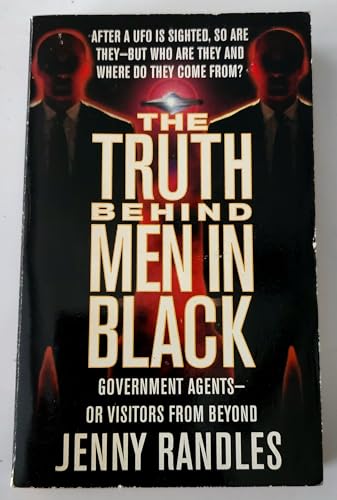
As an Amazon Associate, OverClassified may earn from qualifying purchases made through this link, at no extra cost to you.
Why This Is Essential Reading
The Truth Behind Men in Black earns its place on this reading list as Jenny Randles's historically grounded survey of the MIB myth, tracing it from Albert Bender's 1953 origin case through decades of subsequent reports while weighing a paranormal-manifestation explanation against a covert-government-disinformation one -- ultimately finding the latter more persuasive without fully closing the door on the former. Read alongside this site's own Aveley Abduction case file, which this article connects to the book's subject matter thematically rather than by direct textual reference, it remains most valuable as a chronological reference for the broader MIB phenomenon rather than a source of new case-specific detail on any single British encounter.
Related Cases & Theories
Sources Cited
- Randles, Jenny. The Truth Behind Men in Black: Government Agents -- or Visitors from Beyond. St. Martin's Paperbacks, 1997 (ISBN 0-312-96521-4, cited here).
- Internet Archive, digitized full-text scan of The Truth Behind Men in Black, directly examined for this article's chapter structure and direct quotes. archive.org
- Open Library, edition record and cover image for ISBN 9780312965211 (OL2001484W). openlibrary.org
- Goodreads listing for The Truth Behind Men in Black (rating 3.41/5, 51 ratings, checked August 2026). goodreads.com
- Randles, Jenny. Men in Black: Investigating the Truth Behind the Phenomenon. Piatkus Books, 1997 (UK edition).
- This site's own Jenny Randles key-figures entry.
- This site's own Albert Bender key-figures entry (the 1953 origin case this book opens with).
- This site's own Andrew Collins key-figures entry (the Aveley case's original investigator).
- This site's own Aveley Abduction case file (Case File #286), full sourcing on the Day family's case and aftermath.
- This site's own Essential Reading article on The Pennine UFO Mystery (Randles's earlier 1983 book).
- This site's own Aveley, Essex location entry.
- This site's own resources library: Full Reading List.
Have corrections, additional research, or peer-reviewed sources? Help improve this entry.
Suggest an Edit