
The Simulation Hypothesis
An MIT Computer Scientist Shows Why AI, Quantum Physics and Eastern Mystics All Agree We Are In a Video Game
Core Thesis
The Simulation Hypothesis is Rizwan Virk's 2019 argument, drawing on video-game history, quantum mechanics, information theory, and Hindu and Buddhist philosophical traditions centered on the concept of māyā (illusion), that we may be living inside a computer-generated simulation. This site's own Simulation Hypothesis theory page applies this framework to UAP phenomena, treating reported instant-velocity changes and apparent teleportation as possible rendering-latency errors or developer interventions. This article's own research found that the original 2019 book itself does not discuss UFOs or UAPs directly -- Virk's application of the framework specifically to UAP flight characteristics came later, in media appearances (including NewsNation and multiple UAP-focused podcasts) and a 2026 Substack essay describing the idea as developed "through discussions with Jacques Vallée." This article corrects this site's own prior theory-page citation, which had implied the book itself made that direct application.
About the Author
This site's own Rizwan Virk key-figures entry already describes him as an MIT-trained computer scientist and the most direct popularizer of the simulation framework applied to UAP behavior. This article's own research confirms his specific credentials: a B.S. in Computer Science from MIT with thesis work at the MIT Media Lab, and an M.S. in Management from Stanford's Graduate School of Business. His video-game industry career is substantial and independently verifiable -- he founded Play Labs @ MIT, a startup accelerator, built mobile games including Tap Fish, and developed licensed titles for Game of Thrones, Star Trek, The Walking Dead, and Penny Dreadful. He is a venture partner at Griffin Gaming Partners and, per recent biographical sources, is pursuing a PhD at Arizona State University's College of Global Futures studying the metaverse.
This article's research also confirms Virk serves as an advisor to Harvard's Galileo Project, led by astrophysicist Avi Loeb, and has authored a white paper on UAP-technology venture investment -- giving his later UAP-specific work real institutional grounding beyond media appearances alone, even though that specific application postdates this book by several years.
Historical Context & Origins
This article's research confirmed the book was originally self-published through Virk's own Bayview Books imprint, set up, per the imprint's own site, "for cross-disciplinary books that don't always fit into traditional genres." Six years later, in July 2025, a completely revised and updated second edition was published by Tarcher, a Penguin Random House imprint -- a genuine upgrade from self-publication to major-publisher distribution the book's own promotional copy attributes to reflecting "the rapid advances in artificial intelligence and virtual reality" since 2019. This article was not able to confirm whether that revised edition specifically expands the UAP application developed in Virk's later work.
This article's research located a specific, credited philosophical review: Kenneth Rose, writing for Embodied Philosophy, praised the book's integration of Hindu and Buddhist concepts of māyā as contributing to what he called "a new empirical and idealistic science of spirituality and consciousness," specifically crediting Virk's engagement with those traditions as more than superficial framing.
Core Arguments & Key Concepts
The book's central argument favors what Virk calls the "RPG version" of the simulation hypothesis -- that real, individual consciousnesses are "plugged into" a simulated reality alongside non-player-character-like entities -- over a starker Bostrom-style reading in which all observed minds are themselves simulated. This article treats that distinction as Virk's own stated preference within the broader simulation-argument literature rather than a claim this article independently adjudicates.
Applied to UAP phenomena, per this site's own theory page, the framework proposes that reported extreme flight characteristics -- instantaneous velocity changes, apparent teleportation -- might read as rendering-latency errors or geometry clipping rather than physical maneuvers under conventional orbital or aerodynamic mechanics. This article's own research confirms this specific application is Virk's later contribution, developed after 2019 rather than argued in the original book's own text.
Key Cases & Evidence Discussed
This site's own Simulation Hypothesis theory page documents the framework's full application to UAP case evidence, including its origin-and-history timeline from Nick Bostrom's 2003 formal argument through physicist Melvin Vopson's 2022 "second law of infodynamics" paper, in far greater depth than this book's own non-UAP-specific text allows. Readers wanting the complete UAP-specific application should consult that theory page directly.
This site's own Essential Reading article on Forbidden Science 4 documents Jacques Vallée's own journals, relevant here because Virk credits discussions with Vallée as the origin of his own later UAP-specific application of the simulation framework.
Critical Reception & Controversies
As of this article's research (August 2026), the book holds a 3.73-out-of-5 rating on Goodreads from 1,445 ratings and 188 reviews -- a genuinely mixed reception this article reports honestly: one reviewer called it "mind-blowing," another found it "intriguing" initially but underwhelming, and at least one dismissed it as an "overzealous rant" comparable to flat-earth advocacy. Kirkus Reviews, the only trade review this article located, was more favorably disposed, calling it "a well-crafted discussion of simulation that is unexpectedly persuasive."
This article's research found broader scientific skepticism of simulation theory as a field -- physicist critiques questioning its falsifiability and scientific status are documented elsewhere -- but could not confirm any of that skepticism specifically names or targets Virk's book by title, and reports that distinction rather than implying a direct critique that was not independently verified. Within UAP research and media circles specifically, this article found Virk actively platformed (podcast appearances, a Galileo Project advisory role) but no dedicated critical assessment of his framework's rigor from within that community -- an open question this article flags rather than resolves.
Influence & Legacy
The book's clearest legacy is its role as the direct popularizing bridge between academic simulation-argument philosophy (Bostrom's 2003 paper) and its later, more speculative application to UAP phenomena -- a bridge this article's research confirms Virk built gradually, through post-publication media work rather than in the original book's own argument.
Set alongside this site's own Simulation Hypothesis theory page, this book functions as essential background on the underlying philosophical and technological argument, while the UAP-specific application it eventually inspired remains something readers must trace through Virk's later interviews and essays rather than this book's own pages.
The Book
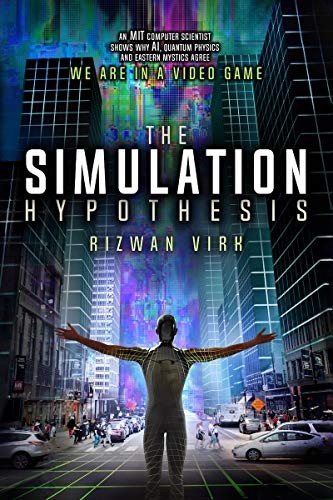
The Simulation Hypothesis
An MIT Computer Scientist Shows Why AI, Quantum Physics and Eastern Mystics All Agree We Are In a Video Game
Find on Amazon →As an Amazon Associate, OverClassified may earn from qualifying purchases made through this link, at no extra cost to you.
Why This Is Essential Reading
The Simulation Hypothesis earns its place on this reading list as Rizwan Virk's foundational argument for the underlying framework this site's own Simulation Hypothesis theory page applies to UAP phenomena -- though this article's own research corrects that page's prior citation, confirming the book's original 2019 text does not discuss UFOs directly. That specific application came later, through Virk's media work and a credited debt to conversations with Jacques Vallée. Read as background on the philosophical and technological argument itself, rather than a source on UAP cases specifically, this self-published book's subsequent 2025 revival by a major publisher speaks to its staying power within a genuinely mixed critical reception.
Related Cases & Theories
Sources Cited
- Virk, Rizwan. The Simulation Hypothesis: An MIT Computer Scientist Shows Why AI, Quantum Physics and Eastern Mystics All Agree We Are In a Video Game. Bayview Books, 2019 (ISBN 978-0-9830569-0-4, cited here); revised 2nd ed., Tarcher/Penguin Random House, 2025.
- Kirkus Reviews. "The Simulation Hypothesis." kirkusreviews.com
- Rose, Kenneth. Review of The Simulation Hypothesis. Embodied Philosophy. embodiedphilosophy.com
- Penguin Random House, product listing for the 2025 revised 2nd edition. penguinrandomhouse.com
- Bayview Labs / Bayview Books, publisher's own site (imprint background). bayviewlabs.com
- Virk, Rizwan. "The Avatar Hypothesis for UFOs/UAP." Substack essay, 2026 (crediting discussions with Jacques Vallée as the origin of the UAP-specific application). rizcambridge.substack.com
- Goodreads listing for The Simulation Hypothesis (rating 3.73/5, 1,445 ratings, 188 reviews, checked August 2026). goodreads.com
- Open Library, edition record and cover image for ISBN 9780983056966. openlibrary.org
- This site's own Rizwan Virk key-figures entry.
- This site's own Simulation Hypothesis theory page, full sourcing on the framework's UAP-specific application.
- This site's own Essential Reading article on Forbidden Science 4 (Jacques Vallée's journals).
- This site's own Massachusetts Institute of Technology (MIT) location entry (Virk's alma mater, cited here for institutional context).
- This site's own resources library: Full Reading List.
Have corrections, additional research, or peer-reviewed sources? Help improve this entry.
Suggest an Edit