
Texas Obscurities
Stories of the Peculiar, Exceptional & Nefarious
Core Thesis
Texas Obscurities is E.R. Bills's 2013 collection of short, overlooked, and often strange chapters from Texas history — ranging from the Porvenir massacre and the tarring and feathering of a German-American priest to the Fence-Cutters' War, the Lake Worth Monster, and the nation's first female sheriff. Its relevance to this site is direct: one dedicated chapter covers the 1897 Aurora "airship crash" legend, situating S.E. Haydon's single-source newspaper story within a wider survey of overlooked Texas curiosities and regional hoaxes, and Bills argues — in a conclusion consistent with this site's own Aurora UFO Crash case file — that Haydon most plausibly fabricated the story to revive economic interest in a town the railroad had recently bypassed.
About the Author
E.R. Bills was born in Fort Worth, Texas, in 1967 and raised in nearby Aledo. He graduated from Texas State University's Honors College with a degree in journalism in 1990, building a career as a working Texas journalist and historian whose writing has appeared in the Fort Worth Weekly, Fort Worth Magazine, the Fort Worth Star-Telegram, the Austin American-Statesman, and numerous other regional publications.
Bills has built a distinctive career niche writing accessible, well-researched popular histories of Texas's more obscure, uncomfortable, or simply strange historical episodes — a body of work Kirkus Reviews has described as harkening "back to an earlier, pulpier era of paperback true crime," while the scholarly Journal of Southern History has praised his research as "accessible to both scholarly and general audiences," a combination of popular readability and genuine documentary grounding not every regional-history writer achieves.
Beyond Texas Obscurities, Bills has written several further books examining difficult or overlooked chapters of Texas history, including The 1910 Slocum Massacre: An Act of Genocide in East Texas (2014), Black Holocaust: The Paris Horror and a Legacy of Texas Terror (2015), and Texas Far and Wide: The Tornado with Eyes, Gettysburg's Last Casualty, the Celestial Skipping Stone and Other Tales (2017) — work that has established him as one of the more consistently productive chroniclers of Texas's less-remembered regional history, willing to tackle both genuinely dark historical episodes and lighter, stranger curiosities within the same broad project of recovering overlooked local stories.
This dual willingness — to treat both a documented act of racial terror like the Slocum Massacre and a comparatively lighthearted curiosity like the Lake Worth Monster with the same basic standard of documentary research — is a useful frame for understanding how Bills approached the Aurora chapter specifically. He does not treat Aurora as either an object of ridicule or a story requiring special deference because of its enduring popular fame; he applies the same evidentiary method (what contemporaneous sources actually survive, what motive the story's teller might plausibly have had, what independent corroboration exists or does not) that structures every other chapter in the collection.
Historical Context & Origins
The book was published in 2013 by The History Press, a publisher specializing in accessible, regionally focused popular history titles distributed largely through local and regional bookstores, historical societies, and museum gift shops — a publishing niche well suited to a collection built around dozens of short, self-contained chapters rather than a single sustained narrative.
Bills wrote the book's Aurora chapter within an established tradition of Texas historians and journalists revisiting the 1897 "airship crash" story with open skepticism, following decades during which the story had been alternately promoted by UFO enthusiasts and Aurora's own periodic tourism efforts and dismissed by professional historians, including the town's own longtime local historian, as an invented tale. Bills's contribution was to place this specific skeptical treatment within a broader, deliberately eclectic collection of Texas oddities, implicitly situating Aurora among a wider regional pattern of tall tales, hoaxes, and genuinely strange but verifiable history rather than treating it as an isolated case demanding specialized ufological analysis.
The book arrived roughly two decades after the 1897 "mystery airship" wave itself had become a subject of renewed academic and journalistic interest more broadly, as historians increasingly recognized the entire 1896–1897 American airship phenomenon — not just the Aurora story specifically — as a rich case study in period newspaper culture, regional rivalry between competing papers for readership, and the public's own eager appetite for sensational, unverifiable stories in an era when instant fact-checking was simply not possible.
Texas's own specific newspaper landscape in 1897 is directly relevant background the book supplies: dozens of small-town and regional papers across the state competed for readership by filing colorful, loosely fact-checked "correspondent" items to larger papers like the Dallas Morning News, a system that gave any single local correspondent, including a part-time cotton buyer like Haydon, real practical latitude to submit a dramatic, entirely uncorroborated story with minimal editorial scrutiny before publication — a structural feature of period journalism this book's broader survey of Texas oddities repeatedly illustrates across multiple unrelated chapters, not something unique to the Aurora case alone.
Core Arguments & Key Concepts
The book's organizing principle is deliberately eclectic: rather than a single thematic argument, Bills presents dozens of short, independently researched chapters unified only by their shared status as genuinely obscure, overlooked, or forgotten episodes in Texas history, ranging from the tragic and historically significant (the Porvenir massacre of unarmed Mexican-American men by Texas Rangers) to the merely strange (the Lake Worth Monster) to episodes of genuine historical importance that have simply faded from popular memory (the nation's first female sheriff).
Within this broader structure, Bills's specific treatment of the Aurora story follows a now-familiar skeptical analytical pattern also applied by this site's own case file: examining what actually survives in the contemporaneous 1897 documentary record (essentially nothing beyond Haydon's single article), weighing the story's own internal implausibilities, and situating it within Aurora's specific, documented local economic circumstances at the time — a town recently bypassed by a planned railroad line, facing a genuine economic downturn that gave a prominent local correspondent a concrete, non-speculative motive for wanting to generate outside attention and interest.
Bills explicitly frames the Aurora story as most plausibly Haydon's own invention, an argument this site's own Aurora UFO Crash case file independently reaches through its own separate analysis of the same absence of corroborating 1897 records, its own review of Kevin Randle's investigative work, and its own weighing of Aurora's longtime local historian's characterization of Haydon as a teller of tall tales.
More broadly, the book's method throughout — treating each obscure story as a genuine historical puzzle worth investigating on its own documentary merits, rather than either uncritically repeating inherited local legend or dismissing every unusual claim out of hand — models the same evidentiary discipline this site aims to apply across its own broader case-file catalog: neither credulous retelling nor blanket dismissal, but careful examination of what the surviving record actually supports.
The Aurora chapter's brevity, characteristic of the book's overall short-chapter format, is itself a meaningful editorial choice worth noting: rather than attempting an exhaustive, book-length treatment of the Aurora legend on its own (as some dedicated UFO-case books elsewhere on this site's Essential Reading list do for their own subjects), Bills deliberately keeps his Aurora chapter proportionate to the story's own actual, sparse documentary record. A story resting on a single uncorroborated newspaper article, in Bills's own implicit editorial judgment, does not warrant more extensive treatment than its own thin evidentiary basis can support — a proportionality this article notes as itself a quietly instructive example of appropriately calibrating narrative length to evidentiary weight.
Key Cases & Evidence Discussed
This site's own Aurora UFO Crash (Case File #056, April 17, 1897) is the case file this book's inclusion on this list most directly supports. Both this book and the case file independently converge on the same core skeptical conclusion: that S.E. Haydon's single, uncorroborated 1897 newspaper article, describing a crashed airship and the burial of a nonhuman pilot on Judge J.S. Proctor's property, most plausibly represents an invented story rather than a genuine historical event, with Aurora's own specific, documented economic distress (the town's recent bypass by a planned railroad line) supplying Haydon a concrete motive absent from many other comparably unverifiable historical hoax claims.
The book's broader chapter on Texas's participation in the 1896–1897 "mystery airship" wave situates Aurora within a considerably larger regional pattern this site's own case file also documents: 38 separate Texas airship sightings across 23 counties in the four days surrounding the Aurora story alone, including a Waxahachie judge's claim to have spoken with airship crew from the North Pole and Farmersville witnesses reporting airship occupants singing hymns and distributing temperance literature — a broader context that helps explain why Haydon's specific story found such a receptive, already-primed regional audience.
This site's own Great Airship Wave of 1896-1897 (Case File #228) is the broader national phenomenon Bills's Texas-focused chapter situates Aurora within, beginning near Sacramento, California, in November 1896 and spreading east through the following spring. Bills's book, though narrower in geographic scope than that full case file's own national treatment, supplies useful additional Texas-specific detail — the precise county-by-county concentration of reports, the specific economic circumstances of individual towns like Aurora that produced their own local variant of the broader national story — that complements rather than duplicates the wave's own site-wide coverage.
Critical Reception & Controversies
The book received generally positive reviews for its accessible, engaging presentation of genuinely obscure regional history, with reader and reviewer commentary consistently praising the variety and readability of its dozens of short chapters — a format well suited to readers wanting a browsable collection rather than a single sustained historical narrative.
Some reader reviews specifically flagged the book's genuine tonal range as worth noting for prospective readers: alongside its lighter, stranger curiosities, several chapters address genuinely dark and disturbing historical episodes, including racially motivated violence, and reviewers cautioned that readers expecting an entirely "light" regional-curiosity read should be aware the collection also includes considerably more serious historical material.
Kirkus Reviews's broader characterization of Bills's writing style — evoking "an earlier, pulpier era of paperback true crime" — has been echoed by other reviewers describing the book's prose as brisk, accessible, and unpretentious, a stylistic choice consistent with the book's target audience of general regional-history readers rather than academic specialists.
No critical source located in researching this article disputes the book's specific treatment of the Aurora story or Bills's own skeptical conclusion about its likely fabrication; critical engagement with the book has focused almost entirely on its broader regional-history content and readability rather than on any single chapter's specific claims.
The book's reception among the ufological community specifically has been more muted than its general regional-history reception, since Bills's own skeptical conclusion offers little for readers specifically invested in Aurora's continued status as a genuine UFO crash-retrieval site; UFO-interested commentary on the book, where it exists at all, has generally simply noted its existence as one more skeptical treatment among several rather than engaging substantively with its specific argument.
This asymmetry in attention — considerably more engagement from general regional-history readers than from dedicated ufology audiences — is itself a modest but genuine data point about how the wider skeptical case against Aurora has been received: it has not generated the kind of sustained, point-by-point ufological rebuttal that a more evidentially contested case on this site's own catalog, such as a well-documented multi-witness radar case, typically attracts.
This relative lack of sustained ufological pushback is itself worth reading carefully rather than simply as an absence of interest: it suggests that even within communities generally inclined to defend contested UFO claims, the Aurora story's own specific evidentiary thinness — a single uncorroborated 1897 newspaper column, no surviving physical evidence, no second contemporaneous witness account — has proven difficult to mount a serious sustained defense of, distinct from cases elsewhere in this site's catalog built on genuinely multiply-corroborated testimony or instrumented data that do continue to generate active scholarly and ufological debate decades later.
Influence & Legacy
This exact edition is cited in this site's own Aurora UFO Crash case file's Further Reading section as including "a dedicated chapter on the Aurora incident within a wider collection of overlooked and strange Texas history, situating the story alongside other regional hoaxes and curiosities."
The book helped establish Bills's broader reputation as a chronicler of overlooked Texas history, a reputation his subsequent books, including his considerably more serious and consequential examination of the 1910 Slocum Massacre, have built on directly — work that has itself drawn wider historical and journalistic attention to an event Texas's own official historical record had long minimized or omitted.
Within the specific, narrower literature on the Aurora UFO crash story, this book represents one of several independent skeptical treatments — alongside Kevin Randle's own investigative work and Aurora's own local historian's characterization of the story — that have converged on broadly the same conclusion from different research approaches, a pattern of independent convergence this site's own case file treats as a meaningful, if not absolutely conclusive, form of corroboration for the fabrication hypothesis.
Aurora's own continued modern tourism economy, built substantially around the UFO legend this book argues never actually happened, represents its own small, ironic postscript worth noting: the town's periodic UFO-themed festivals and the story's enduring presence in regional tourism materials mean the same economic motive Bills identifies as Haydon's likely original 1897 reason for inventing the story has, in a sense, continued operating in Aurora's favor more than a century later, regardless of the underlying claim's actual historical accuracy.
Bills's own subsequent career, particularly his considerably higher-profile 2014 book on the Slocum Massacre, has if anything strengthened rather than diminished the credibility of his earlier Aurora conclusion: a historian willing to spend years building a rigorously documented case for a genuinely difficult, previously minimized historical atrocity is not a writer whose skeptical conclusions about a comparatively low-stakes regional UFO legend should be dismissed as either lazy or reflexively dismissive of the unusual.
The Book
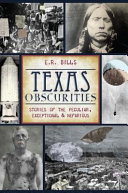
As an Amazon Associate, OverClassified may earn from qualifying purchases made through this link, at no extra cost to you.
Why This Is Essential Reading
Texas Obscurities earns its place on this list as one of several independent skeptical treatments of the Aurora UFO crash story, arriving at broadly the same conclusion as this site's own Aurora UFO Crash case file through its own separate research and regional-history expertise. Read as part of a broader collection of genuinely obscure Texas history rather than a specialized ufological investigation, this book demonstrates how naturally the Aurora story fits within a wider regional pattern of tall tales and economically motivated hoaxes — context that strengthens, rather than merely repeats, the case file's own independent conclusion.
Related Cases & Theories
Sources Cited
- Bills, E.R. Texas Obscurities: Stories of the Peculiar, Exceptional and Nefarious. The History Press, 2013 (ISBN-13 9781626192812). amazon.com
- "E. R. Bills." Wikipedia (full biography: education, career, bibliography). en.wikipedia.org
- "E.R. Bills." Open Road Media (author profile). openroadmedia.com
- "HOME." erbillsbooks.com (author's own site). erbillsbooks.com
- "Texas Obscurities: Stories of the Peculiar, Exceptional and Nefarious." Goodreads (reader ratings and reviews). goodreads.com
- "Texas Obscurities." Google Books (bibliographic record and cover art source). books.google.com
- "Nearly 120 Years After Alleged UFO Crash, Small Texas Town Is All About Aliens." KERA News, April 18, 2016. keranews.org
- "E.R. Bills (Author of The 1910 Slocum Massacre)." Goodreads (author profile). goodreads.com
- "Revisiting the Aurora Spaceman Legend." Fort Worth Magazine. fwtx.com
- "Aurora, Texas, UFO incident." Wikipedia. en.wikipedia.org
- This site's own case file: Aurora UFO Crash, for the full independent analysis reaching a consistent conclusion.
- This site's own key-figures entry: E.R. Bills, for his full biography and further case connections.
- This site's own key-figures entry: S.E. Haydon, for the original 1897 correspondent whose account this book examines.
Have corrections, additional research, or peer-reviewed sources? Help improve this entry.
Suggest an Edit