
Rainbows, Halos, and Glories
The Standard Reference on Atmospheric Optical Phenomena
Core Thesis
Rainbows, Halos, and Glories is physicist Robert G. Greenler's 1980 non-technical study of atmospheric optical phenomena — rainbows, halos, sun dogs, sun pillars, and glories — explaining, with over two hundred illustrations, how ordinary sunlight refracting through ice crystals and water droplets produces effects that can look, to an unprepared observer, dramatically unnatural. This site draws on the book's core physics directly when evaluating historical "sky battle" accounts: the leading conventional explanation for both the 1566 Basel Celestial Phenomenon and the 1561 Nuremberg Celestial Phenomenon is a complex solar halo/parhelion display — exactly the phenomenon class this book documents and illustrates in careful physical detail.
About the Author
Robert G. Greenler was born in Dunkirk, Ohio, and earned his B.S. in physics from the University of Rochester before completing his Ph.D. at Johns Hopkins University in 1957. He joined the physics faculty at the University of Wisconsin-Milwaukee in 1962, where his own research specialty centered on the optical properties of surfaces, and where his pioneering work helped establish the university's interdisciplinary Laboratory for Surface Studies.
Greenler served as president of the Optical Society of America (now Optica) in 1987, a mark of the standing his broader body of optical research carried within professional physics, distinct from and prior to his later popular-science writing on atmospheric phenomena specifically. He received the American Association of Physics Teachers' Millikan Lecture Award in 1988 for creative teaching of physics.
In 1973, Greenler co-founded "The Science Bag," a long-running, family-friendly public physics lecture series at UW-Milwaukee that drew more than 140,000 attendees over three decades and became a widely cited model for university-run community science outreach — a public-communication career running alongside, and clearly informing, the accessible, non-technical explanatory style that made Rainbows, Halos, and Glories so effective for general readers. Greenler died on September 21, 2025, at age 95; obituaries from Optica and his home university specifically credited both his surface-physics research and his decades of public science communication as his lasting legacy.
Greenler's specific research specialty in the optical properties of surfaces gave him an unusually direct technical qualification for writing about atmospheric ice-crystal optics: both subjects require careful attention to how light behaves when it encounters an interface between different media at specific, physically constrained angles, and Greenler's own laboratory work developing precise instrumentation for measuring reflected and refracted light translated naturally into his later interest in modeling how sunlight interacts with the microscopic ice-crystal surfaces that produce halos and sun dogs in the upper atmosphere.
Historical Context & Origins
The book was first published in 1980 by Cambridge University Press, drawing on Greenler's own use of computer ray-tracing methods — then a relatively novel technique — to model precisely how light refracts and reflects through the specific crystal shapes and orientations found in real high-altitude cirrus clouds, allowing him to explain not just that these optical effects occur but exactly why they take the specific forms observers report.
The book arrived as one of the first genuinely accessible, richly illustrated treatments of atmospheric optics written for a general audience rather than a specialist meteorological or optical-physics readership, filling a real gap between highly technical scientific papers on ice-crystal optics and the thin, often inaccurate popular folklore that had long surrounded phenomena like sun dogs and halos.
The book has been reprinted multiple times since 1980, including a 2020 SPIE Press edition — the specific printing cited in this site's own case-file research — reflecting sustained, multi-decade demand for a book atoptics.co.uk's own review described as having become, in its absence from print for a period, a title actively missed by the atmospheric-optics community until its return.
The specific 40-year gap between the book's initial widespread popularity and its 2020 reissue reflects a broader pattern common to durable, technically grounded popular-science works: rather than being superseded by newer research (the underlying physics of ice-crystal optics has not meaningfully changed since 1980), the book instead fell temporarily out of print due to ordinary publishing-industry attrition, only to be recognized as worth actively restoring to print once a specialist community's continued demand for it became clear — a trajectory distinct from books that go out of print because their content has genuinely aged out of relevance.
Core Arguments & Key Concepts
The book's central argument is that the sky's most visually dramatic optical phenomena — effects that have historically inspired religious, supernatural, and more recently ufological interpretation — are fully explicable through ordinary, well-understood physical optics: refraction, reflection, and diffraction of sunlight or moonlight through ice crystals and water droplets of specific, physically constrained shapes and orientations.
Greenler systematically works through the full family of these phenomena, beginning with the comparatively familiar rainbow before moving into rarer and more visually startling ice-crystal effects: parhelia (sun dogs), circumhorizontal and circumzenithal arcs, sun pillars, and the 22-degree and 46-degree halos, each explained through specific, illustrated ray-path diagrams showing exactly how sunlight must travel through a hexagonal ice crystal held at a particular orientation to produce that specific visual effect.
A key structural insight the book develops in detail is that these ice-crystal effects are not fixed, single phenomena but a genuinely wide family of related effects that vary considerably depending on crystal shape, crystal orientation (horizontally floating plate crystals versus randomly tumbling ones, for instance), and the sun's elevation angle — meaning a single high-cirrus-cloud event can, in principle, produce multiple distinct bright points, arcs, and pillars simultaneously, some appearing to move, brighten, dim, or vanish as the underlying cloud of crystals shifts and reorients relative to the observer.
This structural complexity is directly relevant to how this site's own case files interpret historical "multiple objects" accounts: a single complex parhelion display, exactly as Greenler's book documents, can produce what an untrained 16th-century observer might reasonably describe as several distinct bright "spheres" or "orbs" appearing to move, clash, and disappear near the sun — without requiring multiple genuinely separate objects to have actually been present in the sky at all.
The book also carefully documents the specific atmospheric conditions under which these more elaborate, multi-part halo displays occur: high, thin cirrus or cirrostratus cloud composed of ice crystals, typically associated with an approaching weather system, rather than the lower, denser cloud formations associated with ordinary rain or storms. This meteorological specificity gives later researchers a genuinely testable predictive criterion — a complex halo display of the kind Basel and Nuremberg describe requires a specific, physically plausible atmospheric setup, not an arbitrary claim that could equally well describe any cloudy sky.
Greenler is also careful throughout the book to document genuine historical photographs and eyewitness accounts of unusually dramatic, multi-part halo displays from the twentieth century itself, providing modern, independently photographed comparison cases that closely resemble the visual chaos described in centuries-old accounts like Basel and Nuremberg — direct visual evidence, rather than pure theoretical argument, that a complex ice-crystal display really can produce the kind of dramatic, seemingly impossible sky spectacle a 16th-century broadsheet author might reasonably describe as a battle of fiery spheres.
Key Cases & Evidence Discussed
This site's own Basel Celestial Phenomenon (Case File #54, August 7, 1566), observed over Basel, Switzerland, is the case file this book's physical explanations most directly support. The case file's own analysis proposes a complex solar halo display — parhelia, a circumhorizontal or circumzenithal arc, or a sun pillar, singly or in combination — forming through sunlight refracting through horizontally oriented, plate-shaped hexagonal ice crystals in high cirrus cloud, an effect strongest at the low solar elevation angles consistent with the reported sunrise-into-forenoon timing of the "battle of spheres" witnesses described.
This site's own Nuremberg Celestial Phenomenon (Case File #53, April 14, 1561), the closest documented parallel to Basel and one of the two most frequently reproduced primary sources in historical UFO literature, is explained by the identical underlying mechanism this book documents — a point the Swiss National Museum's own historical blog independently makes when treating the two cases as closely parallel specifically on optical grounds.
The book's broader documentation of how genuinely startling these ice-crystal effects can appear to an unprepared modern observer, despite being entirely mundane and well-understood by contemporary atmospheric science, supplies useful comparative context for why 16th-century observers with no comparable scientific framework, working within an active "wonder-sign" (Wunderzeichen) print culture already primed to interpret unusual sky phenomena as portents, would have found a complex solar halo display genuinely alarming and worth urgently documenting.
This article notes, as a reasonable inference rather than a claim drawn from the book itself, that even well-informed modern observers occasionally report being momentarily startled by an unusually complex or unfamiliar halo display before recognizing the phenomenon — a useful corrective against any assumption that only scientifically unsophisticated historical observers would find these displays alarming. If a contemporary observer with ready access to the internet and a basic awareness that such phenomena exist can still be briefly startled, a 16th-century Swiss townsperson with no comparable framework at all finding the same display frightening enough to warrant an illustrated broadsheet is, if anything, the more expected reaction rather than an anomaly requiring special explanation.
Critical Reception & Controversies
The book has been consistently described within the atmospheric-optics community as a classic and foundational popular reference. The specialist website atoptics.co.uk, itself a leading online resource for atmospheric optical phenomena, published a piece specifically celebrating the book's return to print, describing it as a revered treasure trove of knowledge that had been genuinely missed by the community during a period when it fell out of print.
The book's use of pioneering computer ray-tracing methods to model ice-crystal optical effects has been specifically credited by later researchers in atmospheric optics as helping establish the standard visual-explanation approach subsequent popular and semi-technical treatments of the subject have followed.
Reviewers have consistently praised the book's balance of scientific rigor and genuine accessibility — over two hundred full-color illustrations paired with non-technical prose explanations — as achieving a combination that neither purely technical optical-physics papers nor purely anecdotal popular folklore about "sky wonders" had previously managed.
No critical source located in researching this article disputes the book's core physical explanations of the phenomena it covers; its reputation across more than four decades has remained that of an authoritative, essentially unchallenged reference work within its specific subject area.
Amateur and hobbyist atmospheric-optics communities, including the contributors and readers of specialist sites like atoptics.co.uk, have continued to treat the book as their standard entry-point recommendation for newcomers to the field, a form of sustained, organic grassroots endorsement distinct from formal academic or journalistic review and arguably a more meaningful indicator of a popular-science book's genuine long-term utility to the audience it was written for.
Influence & Legacy
This exact edition is cited in this site's own Basel Celestial Phenomenon case file's Further Reading section as "the standard non-technical reference on sun dogs, halos, sun pillars, and related ice-crystal optical phenomena — the physical basis of this case's leading conventional explanation, illustrated in detail."
The book remains, more than four decades after its original 1980 publication, the default popular reference cited whenever a historical or contemporary "multiple objects near the sun" account requires evaluation against the specific physical behavior of ice-crystal optical effects — a role this site's own research on both the Basel and Nuremberg cases relies on directly.
Greenler's death in September 2025 prompted renewed attention to his full body of work, with tributes from Optica and UW-Milwaukee specifically noting this book's continued relevance and use, more than four decades after publication, as evidence of how durable a well-constructed, physically rigorous popular-science explanation can remain when the underlying phenomena themselves are permanent features of Earth's atmosphere rather than time-bound historical curiosities.
Beyond its direct application to this site's own historical case files, the book's broader legacy includes its role in equipping generations of amateur sky-watchers, weather enthusiasts, and photographers with the specific technical vocabulary and visual pattern-recognition needed to correctly identify ice-crystal optical effects in real time, reducing the likelihood that a genuine, currently occurring halo display would itself be mistaken for something anomalous by an observer unfamiliar with the phenomenon — a preventive, forward-looking counterpart to the book's more retrospective usefulness in re-examining centuries-old accounts like Basel and Nuremberg.
The Book
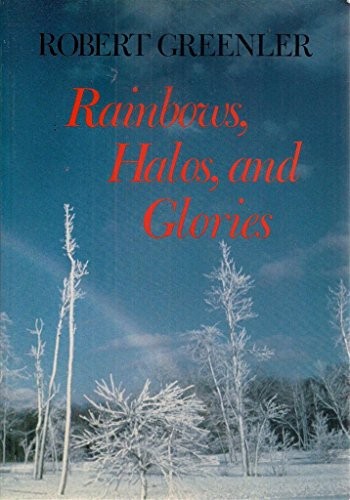
Rainbows, Halos, and Glories
The Standard Reference on Atmospheric Optical Phenomena
Find on Amazon →As an Amazon Associate, OverClassified may earn from qualifying purchases made through this link, at no extra cost to you.
Why This Is Essential Reading
Rainbows, Halos, and Glories earns its place on this list as the single most authoritative, richly illustrated physical explanation available for exactly the class of phenomenon this site's own Basel and Nuremberg celestial-phenomenon case files propose as their leading conventional explanation. Read as a companion to those two case files, this book supplies the physical mechanism in enough visual and technical detail that a reader can independently judge how well a complex ice-crystal halo display actually accounts for the specific "battle of spheres" imagery both 16th-century broadsheets describe.
Related Cases & Theories
Sources Cited
- Greenler, Robert. Rainbows, Halos, and Glories. Cambridge University Press, 1980 (2020 SPIE Press reprint edition, ISBN-13 9780897169264). amazon.com
- "Robert G. Greenler." Wikipedia (full biography: education, career, book, Science Bag). en.wikipedia.org
- "Robert G. Greenler." Optica (obituary, 2025). optica.org
- "UW-Milwaukee remembers the legacy of Robert Greenler." UWM Letters & Science, 2025. uwm.edu
- "Robert Greenler Obituary." All Faiths Funeral Home, September 21, 2025. 866allfaiths.com
- "Greenler's Rainbows halos and Glories is back." atoptics.co.uk (atmospheric optics specialist review). atoptics.co.uk
- "Rainbows, Halos, and Glories." SPIE Publications (official 2020 reprint edition page). spie.org
- "Rainbows, Halos, and Glories." Goodreads (reader ratings and reviews). goodreads.com
- "Rainbows, Halos, and Glories." Open Library (bibliographic record and cover art source). openlibrary.org
- This site's own case file: Basel Celestial Phenomenon, for the full parhelion-explanation analysis this book's physics supports.
- This site's own case file: Nuremberg Celestial Phenomenon, for the closely parallel 1561 case explained by the same mechanism.
- This site's own key-figures entry: Robert G. Greenler, for his full biography and further case connections.
Have corrections, additional research, or peer-reviewed sources? Help improve this entry.
Suggest an Edit