
Intelligent Life in the Universe
A Foundational Text of Astrobiology and SETI
Core Thesis
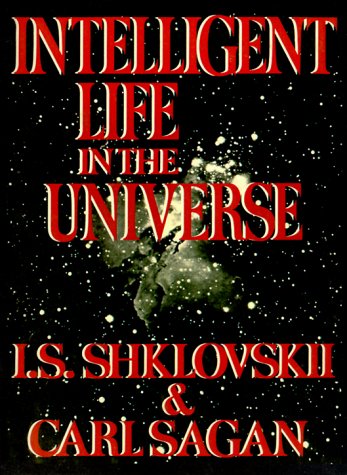
Intelligent Life in the Universe began as Soviet astrophysicist Iosif Shklovskii's 1962 Russian-language book on extraterrestrial life; Carl Sagan, then in his early thirties, substantially revised and expanded it into this 1966 English-language edition, effectively co-authoring a work that became one of the two or three foundational texts of the entire field of astrobiology and SETI (the Search for Extraterrestrial Intelligence). Written and published across the Cold War's East-West scientific divide, the book systematically works through the astronomical, biological, and social-scientific reasoning behind the possibility of extraterrestrial intelligence and the practical strategies for detecting it. This site's own research draws on it for two theory pages that cite it directly: the Non-Human Machine Intelligence Hypothesis, where this site's own research describes it as "the classic early SETI text ... laying out the foundational reasoning on interstellar communication strategy that Bracewell's own probe proposal directly responded to," and the Zoo Hypothesis, where it is cited as "the foundational text of astrobiology, exploring the physics, probability, and social dynamics of mature galactic civilizations."
About the Author
Iosif Samuilovich Shklovskii (1916-1985) was one of the Soviet Union's most prominent astrophysicists, a longtime researcher at the Sternberg Astronomical Institute in Moscow whose own scientific contributions ranged across radio astronomy, cosmic ray physics, and the origins of the solar system. His original 1962 Russian book, Vselennaya, Zhizn, Razum ("Universe, Life, Mind"), laid the groundwork this English-language collaboration would substantially expand -- a genuinely unusual instance, given the Cold War political climate of the mid-1960s, of a major work of Soviet science reaching an American general readership through direct collaborative revision rather than mere translation.
Carl Sagan, then a young Harvard-trained astronomer building his early career at Cornell University's Laboratory for Planetary Studies, took on the task of revising and substantially expanding Shklovskii's original text for an English-speaking scientific and general audience -- adding new material, updating astronomical data, and reworking passages to reflect Western scientific literature Shklovskii's original Soviet publication had not incorporated. The resulting book carries both authors' names and reflects a genuine collaborative synthesis rather than a straightforward translation, an editorial approach this site's own research treats as directly relevant to understanding why the book reads with a coherence unusual for a cross-language, cross-Cold-War-divide collaborative project.
This book represented an early, formative stage in what would become Sagan's decades-long career at the center of American SETI and astrobiology research: he went on to co-design the 1974 Arecibo Message with Frank Drake, transmitted from the Arecibo Observatory toward the M13 globular cluster, to help design the Pioneer plaques and Voyager Golden Record, and to co-found the Planetary Society in 1980 -- a body of work this site's own research treats as directly continuous with the systematic, rigorous approach to extraterrestrial-intelligence questions this 1966 book first established for Sagan's own career.
Sagan's own later career also gives this book an unusual dual legacy within this site's research specifically: as documented on this site's own Non-Human Machine Intelligence Hypothesis theory page, Sagan became, alongside William Newman, one of the most prominent published critics of the Hart-Tipler "Great Silence" argument that grew directly out of debates this very book helped establish -- making Sagan simultaneously the field's foundational popularizer and one of its most rigorous internal skeptics.
Both authors also brought direct observational and theoretical astronomy credentials to the book's technical chapters rather than writing purely as generalist science communicators. Shklovskii's own research on the nature of the Crab Nebula and cosmic radio sources gave him genuine authority when the book turned to questions of stellar evolution and the astrophysical conditions under which planetary systems could form; Sagan's own graduate training under astronomer Gerard Kuiper at the University of Chicago similarly grounded his contributions in mainstream planetary science rather than speculative extrapolation, a combination this site's own research treats as central to why the book reads as rigorous technical literature rather than popular science aimed purely at entertainment.
Historical Context & Origins
The book's 1966 publication came at a specific inflection point for the young field of SETI: Frank Drake's pioneering Project Ozma, the first systematic radio search for extraterrestrial signals, had been conducted only six years earlier in 1960, and the Drake Equation -- Drake's own 1961 framework for estimating the number of communicating civilizations in the galaxy -- was still a novel, largely unformalized way of organizing the relevant astronomical and biological unknowns. Shklovskii and Sagan's book gave that nascent framework its first truly comprehensive, book-length treatment for a general readership.
The book's cross-Cold-War origin is itself historically significant: published at the height of the Space Race and broader U.S.-Soviet scientific competition, a collaboration explicitly crediting a leading Soviet astrophysicist alongside an American co-author represented a genuine, if narrow, channel of East-West scientific exchange during a period when such direct collaboration was politically fraught and comparatively rare in most other scientific fields.
The book's own publication predates by six years radio astronomer John Billingham and Bracewell's foundational 1960 Bracewell-probe concept's fuller development within the SETI literature -- the book's systematic treatment of interstellar communication strategy, comparing the relative merits and costs of radio transmission against physically dispatched probes, gave later researchers a comprehensive reference point against which more specific proposals like Bracewell's could be directly measured and extended.
This site's own research notes that the book's publication also predates by seven years John A. Ball's own 1973 Icarus paper formally proposing the Zoo Hypothesis -- Ball himself, per this site's own Zoo Hypothesis theory page, was a Harvard-trained radio astronomer working in the same broader SETI research community this book helped establish, making Shklovskii and Sagan's earlier synthesis a direct intellectual precursor to the specific non-interference argument Ball would formalize less than a decade later.
The book's American publication also arrived only a few years after the November 1961 Green Bank Conference, the small, invitation-only Cornell/NRAO gathering organized in part around Drake's own newly formalized equation, which brought together roughly a dozen scientists -- including Sagan himself as one of the youngest attendees -- to discuss SETI as a genuinely coordinated research field for the first time rather than a set of scattered individual efforts. This site's own research treats that meeting as the direct institutional seed from which this book's own more comprehensive, published synthesis grew barely five years later, translating a small, closed-door scientific conversation into the field's first major English-language reference work available to any interested reader.
Core Arguments & Key Concepts
The book's central argument is that the emergence of intelligent, technological life elsewhere in the universe is not merely philosophically plausible but a scientifically tractable question, amenable to systematic estimation through astronomy, biochemistry, and population dynamics rather than pure speculation -- an approach that gave the nascent SETI field its first comprehensive intellectual framework.
A second major argument concerns detection strategy specifically: the book systematically compares radio transmission against physically dispatched probes as alternative methods for interstellar communication, weighing the relative costs, timescales, and information-carrying capacity of each -- directly informing the debate this site's own Non-Human Machine Intelligence Hypothesis theory page documents as the foundation for Ronald Bracewell's later 1960 argument that a physically stationed probe could conduct a real-time "conversation" once contact triggers, avoiding the multi-decade round-trip delay any radio exchange between distant stars would require.
A third argument addresses the social and evolutionary dynamics of technological civilizations over cosmic timescales -- how long civilizations might plausibly survive, whether technological development inevitably leads toward either self-destruction or long-term stability, and what those survival probabilities imply for how many communicating civilizations might exist in the galaxy at any given moment. This line of reasoning directly anticipates the population-growth and colonization-timescale modeling this site's own theory page documents Sagan himself later applying, with William Newman, against the Hart-Tipler "Great Silence" argument in their 1983 rebuttal paper.
A fourth argument, developed through the book's biological and biochemical chapters, treats the emergence of life itself as a probabilistic outcome of ordinary chemistry and astrophysics rather than a uniquely terrestrial accident -- reasoning this site's own research treats as directly foundational to the modern astrobiology field's basic working assumption that Earth's own biochemistry, while specific in its details, likely reflects broader, universal chemical principles rather than an irreproducible one-off event.
A fifth, more implicit argument runs through the book's very structure as a joint Soviet-American work: by presenting a rigorously scientific, ideologically neutral treatment of extraterrestrial intelligence, the book implicitly argued that the search for cosmic company was a genuinely universal human scientific question transcending Cold War political division, a framing this site's own research treats as directly relevant to why the book achieved such broad, lasting influence across scientific communities on both sides of the Iron Curtain, at a time when comparatively few other major scientific texts crossed that particular political divide so directly and so visibly.
Key Cases & Evidence Discussed
The Non-Human Machine Intelligence Hypothesis proposes that UAPs could be autonomous probes or self-replicating von Neumann-style machines rather than crewed spacecraft. This site's own theory page cites Shklovskii and Sagan's book directly as the classic early SETI text establishing the foundational reasoning about interstellar communication strategy that Ronald Bracewell's own 1960 probe proposal directly responded to -- documenting a direct intellectual lineage from this book's own comparative treatment of radio-versus-probe communication strategies through Bracewell's specific "lurker probe" concept, Robert Freitas's 1980 self-replication mathematics, and the 1975-1980 Hart-Tipler "Great Silence" debate that Sagan himself, alongside William Newman, directly rebutted in a 1983 paper this site's own theory page discusses.
The Zoo Hypothesis proposes that Earth is deliberately left undisturbed by advanced civilizations practicing a policy of non-interference, formalized in John A. Ball's 1973 Icarus paper. This site's own theory page cites the book directly as the foundational astrobiology text exploring the physics, probability, and social dynamics of mature galactic civilizations that underlie Ball's later argument, and separately profiles Sagan himself among the hypothesis's key proponents -- noting that Sagan, while co-author of this foundational text, was also "among the hypothesis's most prominent critics on falsifiability grounds," a dual role this site's own research treats as directly consistent with the rigorous, skeptical scientific temperament visible throughout this earlier 1966 collaboration.
Critical Reception & Controversies
This book carries a strong Goodreads record: 4.29 out of 5 stars averaged across 378 ratings and 24 written reviews, checked August 2026 -- a substantial sample for a six-decade-old technical text, reflecting its enduring status as a foundational reference within astrobiology and SETI rather than a title that faded after its original publication window.
This site's research also attempted to verify an Amazon rating for this title, but Amazon's bot-detection system blocked automated requests to the listing during this session, the same persistent pattern encountered across every title checked this session; per this site's own Amazon Rating Display Protocol, this gap is disclosed honestly here rather than fabricated or silently omitted.
The book's scientific authority is inseparable from its authors' own subsequent, well-documented careers: Shklovskii remained a leading Soviet astrophysicist until his 1985 death, while Sagan's own subsequent career -- the Arecibo Message, the Pioneer plaques, the Voyager Golden Record, the 1980 founding of the Planetary Society, and his own 1980 television series Cosmos -- gave this comparatively early collaborative work a level of retrospective institutional credibility few other 1960s popular-science texts in this site's own library can claim.
This site's own research also treats the book's continued citation within its own theory pages, more than five decades after publication, as itself a form of ongoing critical validation: both the Non-Human Machine Intelligence Hypothesis and Zoo Hypothesis theory pages reach for this same 1966 text as their foundational reference point, evidence this site's research treats as reflecting the book's continued, active use within the field rather than merely historical or archival interest, a durability this site's own research has found genuinely uncommon among general-audience science titles from the same decade.
Influence & Legacy
The clearest evidence of this book's lasting significance on this site specifically is its citation record: two separate theory pages, addressing distinct hypotheses about how a non-human intelligence might interact with Earth -- automated probe surveillance and deliberate non-interference -- both reach for this same 1966 text as their shared foundational reference, evidence this site's own research treats as reflecting the book's genuinely comprehensive scope across the core questions any SETI-adjacent theory eventually has to address.
The book's own intellectual descendants are directly traceable and well-documented: Ronald Bracewell's 1960 probe concept, Michael Hart's 1975 and Frank Tipler's 1980 "Great Silence" arguments, John Ball's 1973 Zoo Hypothesis, and Sagan and Newman's own 1983 rebuttal all sit within a single continuous, decades-long scientific conversation this book helped establish the terms of -- a lineage this site's own research treats as considerably more direct and better-documented than most other foundational texts in its own essential-reading library can claim.
Within this site's own theory-page research, the book's greatest continuing value lies in supplying the original, rigorously scientific framing against which later, more speculative extensions -- including this site's own UAP-focused applications of both the machine-intelligence and Zoo hypotheses -- can be measured, distinguishing genuinely SETI-literature-grounded reasoning from looser popular extrapolation.
This site's own research also treats the book's cross-Cold-War collaborative origin as a durable, if less scientifically central, part of its legacy: it stands as an early, genuine example of East-West scientific cooperation on a fundamentally human question, one this site's research treats as offering a useful historical counterpoint to the more secretive, nationally siloed government UAP-research programs documented extensively elsewhere in this site's own catalogue.
The book's structural approach -- systematically walking through astronomy, chemistry, biology, and social science in sequence before arriving at a detection strategy -- also established a template later astrobiology textbooks and popular surveys have continued to follow, including works this site's own essential-reading library documents separately. That durability of format, as much as any single specific claim within the book, is itself part of what this site's own research treats as evidence of the book's genuinely foundational status within the field it helped create.
The Book
As an Amazon Associate, OverClassified may earn from qualifying purchases made through this link, at no extra cost to you.
Why This Is Essential Reading
Intelligent Life in the Universe earns its place on this list as one of the foundational texts of an entire scientific field, cited independently on two separate theory pages precisely because its systematic treatment of extraterrestrial intelligence -- detection strategy, civilizational survival probability, and the social dynamics of contact -- established the intellectual framework nearly every subsequent SETI-adjacent argument, including Bracewell's probes, the Hart-Tipler silence argument, and Ball's Zoo Hypothesis, would go on to build from or react against. Carl Sagan's own subsequent, decades-long career at the center of American SETI research gives the book a retrospective authority matched by few other titles in this site's own library, while I.S. Shklovskii's original Soviet contribution gives it a genuinely unusual cross-Cold-War intellectual lineage. Read against either citing theory page, the book's real value lies not in any single UAP claim -- it makes none -- but in the rigorous, foundational scientific reasoning that every subsequent theory about non-human intelligence interacting with Earth, speculative or otherwise, still has to reckon with.
Related Cases & Theories
Essential Viewing
Sources Cited
- Shklovskii, I.S., and Carl Sagan. Intelligent Life in the Universe. Holden-Day, 1966; this edition Emerson-Adams Press, 1998 (ISBN 978-1-892803-02-3, cited here).
- "Intelligent Life in the Universe." Goodreads (4.29 average rating, 378 ratings, 24 reviews, checked August 2026). goodreads.com
- "Intelligent Life in the Universe." Open Library bibliographic record (Emerson-Adams Press, 1998, 509 pages; OCLC 40781778). openlibrary.org
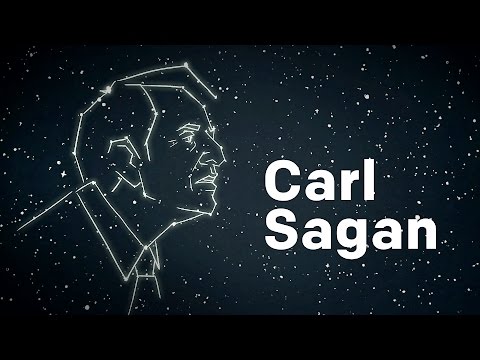
- "Carl Sagan on Extraterrestrials." Blank on Blank, YouTube (archival interview on Sagan's views on extraterrestrial life and SETI; video verified via oEmbed). youtube.com
- "Iosif Shklovsky." Wikipedia (biographical details on Shklovskii's career at the Sternberg Astronomical Institute and his original 1962 Russian text).
- This site's own resources library: Full Reading List, where this book is cited across 2 separate theory pages.
- This site's own key-figures entry: Carl Sagan, for his full biography and site-wide connections.
- This site's own key-figures entry: Frank Drake, co-designer with Sagan of the 1974 Arecibo Message.
- This site's own theory page: Non-Human Machine Intelligence Hypothesis, citing this book directly.
- This site's own theory page: Zoo Hypothesis, citing this book directly.
- This site's own key-figures entry: John A. Ball, whose 1973 Zoo Hypothesis paper built directly on this book's own reasoning.
- This site's own locations entry: Arecibo Observatory, site of the 1974 Arecibo Message Sagan co-designed.
Have corrections, additional research, or peer-reviewed sources? Help improve this entry.
Suggest an Edit