
The Indigo Children
The New Kids Have Arrived
Core Thesis
The Indigo Children: The New Kids Have Arrived is the book that took a single self-described synesthete's private classification system and turned it into an international parenting movement. Lee Carroll and Jan Tober collected essays from parents, teachers, doctors and counselors around Nancy Ann Tappe's claim that children with a new “indigo” aura color were arriving in unusual numbers, bringing unusual traits — and its real argument, the one that gave the book its cultural weight, was clinical rather than cosmic: that the sharp rise in ADHD and ADD diagnoses through the 1990s reflected not a neurodevelopmental reality but the arrival of a kind of child conventional schooling and psychiatry were simply misreading. This site's own Gifted Children Experiencer Hypothesis page traces the modern claim that gifted-identified children are disproportionately UFO experiencers back through several strands, and this book is the origin point of one of them — even though, read on its own terms, it makes no extraterrestrial claim at all.
About the Author
Lee Carroll came to the subject as a channeler. Since the late 1980s he has published material he attributes to a non-physical entity he calls “Kryon,” delivered through a series of books and worldwide seminars. Carroll holds no academic credential in psychology, education or medicine; his authority on this book's subject rests entirely on the channeled material and on the essays he and Tober solicited from others.
Jan Tober is credited as equal co-author, not an assistant. Before turning to metaphysical work she was a professional singer who toured with the Four Freshmen and Benny Goodman and performed with Rowan & Martin and Bob Hope. She and Carroll co-founded the “Kryon light groups” in Del Mar, California in 1991 and have worked as seminar partners since; within the Kryon seminar circuit she leads a “Sound/Color” component distinct from Carroll's own channeling role.
Neither author is the book's primary intellectual source. That is Nancy Ann Tappe, a San Diego woman who described herself as a synesthete able to perceive colored auras and who began, in the 1970s, reporting a new aura color — indigo — appearing in newborns at rising frequency. She set out her full classification system in Understanding Your Life Through Color (1982). Carroll and Tober's contribution was not the underlying idea but the vehicle: an edited anthology that gave Tappe's private taxonomy a mass-market binding and a direct line to anxious parents.
The book's actual authorial voice, chapter to chapter, belongs to its contributors more than to Carroll and Tober themselves. Named contributors include Tappe herself, Doreen Virtue, clinical psychologist Kathy A. McCloskey, Robert Gerard, and Debra Hegerle, among others — a mix of self-help authors, alternative-medicine practitioners and at least one credentialed clinician, whose individual essays carry very different evidentiary weight but are presented in the finished book with none of that distinction marked.
It is worth being precise about what neither author claims. Nowhere in this 1999 edition do Carroll or Tober assert that Indigo children are of non-human origin, in contact with anyone, or connected to UFO phenomena in any way. That extension came later, from other writers — principally the “Crystal,” “Rainbow” and “Starseed” literature of the 2000s, and most explicitly from Mary Rodwell's 2016 The New Human. Attributing the ET claim to this book, as popular summaries routinely do, is a documented misreading of a text that is actually about diagnosis and parenting, not extraterrestrial contact.
Historical Context & Origins
The book arrived at a specific moment in American clinical psychiatry. ADHD diagnoses in children rose sharply through the 1990s, driven by a combination of genuinely improved recognition, expanded diagnostic criteria, and — skeptics would later argue — overdiagnosis under pressure from schools and insurers. Whatever the real balance of those causes, the rise was large enough, and fast enough, to leave many parents looking for an alternative explanation for a child who did not respond well to a stimulant prescription or a standard classroom.
Tappe's aura taxonomy had existed in fringe circles for two decades before this book without reaching a general audience. Understanding Your Life Through Color (1982) was a specialty title with a narrow readership. What changed in 1999 was packaging: Carroll and Tober, both established Kryon-seminar lecturers with an existing international audience, built a Hay House anthology around Tappe's category and gave it the structure of a parenting guide rather than a metaphysical treatise.
The book's own structure signals what it is actually for. It runs in three parts — “What Is an Indigo Child?”, which introduces the category and the human tendency to classify; “What Can You Do?”, covering discipline, positive messaging, and educational alternatives including Montessori and Waldorf schooling; and a closing section on “Spiritual Aspects of Indigos” and “Health Issues,” including specific ADHD-supplementation and nutritional protocols. Two of the book's three sections are practical parenting advice, not metaphysics — a structure the mystical framing of the opening section tends to obscure.
Hay House itself matters to the history here. The publisher had already built a large audience for self-help and New Age titles through authors like Louise Hay and Wayne Dyer, and its distribution and marketing machinery is a large part of why this particular Indigo book, rather than any of the fringe titles that preceded it, became the reference point the entire subsequent movement cites.
The timing also intersected with a broader cultural current the book did not create but rode: end-of-millennium expectation. Published in 1999, the book's framing of a “new kind of child” arriving to change humanity fit comfortably alongside the era's wider appetite for narratives of imminent transformation, from Y2K anxiety to New Age millenarianism, without the book itself making any explicit end-times argument.
Core Arguments & Key Concepts
A new psychological type is arriving in measurable numbers. The book's foundational claim, taken directly from Tappe: children are being born with a cluster of traits — described across its essays as an innate sense of self-worth verging on a “feeling of royalty,” a certainty of “deserving to be here,” difficulty with rigid authority, impatience with tasks that require no creative thought, an intuitive sense of a better way to do things, and a poor fit with conventional schooling — occurring together often enough, and recently enough, to constitute a real generational shift rather than ordinary childhood variation.
ADHD and ADD diagnoses are frequently a misreading of this shift. The book's most consequential and most criticized argument, made repeatedly across its contributors: that a child who is bored by rote instruction, resistant to arbitrary authority and unusually strong-willed is, in a meaningful number of cases, an Indigo child being pathologized rather than a child with a genuine attention or behavioral disorder.
Standard educational and disciplinary methods fail these children specifically. The book's second section argues for alternative structures — Montessori and Waldorf-style education, negotiated rather than imposed discipline, and communication that appeals to a child's sense of purpose rather than to raw authority — as the correct response to Indigo traits, in contrast to conventional classroom management.
The phenomenon has a spiritual dimension beyond psychology. The closing section frames Indigo children as part of a broader human evolutionary or spiritual advance, without specifying a mechanism, a source, or — critically for later derivative literature — any non-human origin. This is the section later writers expanded into an explicit extraterrestrial-contact claim; in the original text it remains a generalized spiritual framing.
Health and nutrition play a role in supporting Indigo children. Individual contributor essays, including material credited to Doreen Virtue and to clinical contributors, propose supplementation and dietary approaches as alternatives or complements to stimulant medication — the section of the book mental-health professionals have most consistently flagged as a genuine treatment-delay risk rather than a harmless framing choice.
Key Cases & Evidence Discussed
This is a concept book built from parent and practitioner testimony, not a case-file investigation, and its evidentiary structure should be read accordingly: it offers no controlled comparison, no diagnostic criteria distinguishing an “Indigo” child from a non-Indigo child, and no follow-up data on any child described in its pages.
The book's own “ten traits” list — repeated in nearly every secondary summary of the book, including retail listings for it — functions less as a diagnostic checklist than as a description broad enough to fit almost any strong-willed, intelligent, or independent-minded child. That breadth is precisely what later critics, discussed below, identify as the book's central methodological problem.
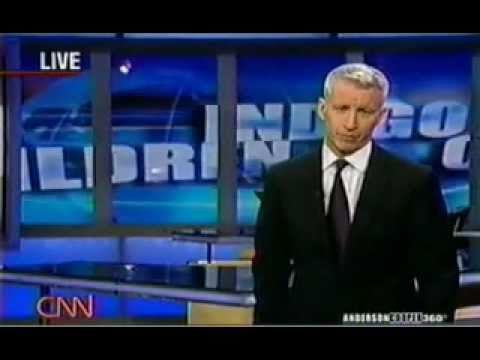
The clearest real-world test case this book generated is not in its own pages but in its aftermath: the wave of parents who, in the years following publication, chose the Indigo framing over a clinical ADHD evaluation for their own children. Contemporary reporting — including a widely discussed 2006 ABC News Good Morning America segment profiling a self-identified Indigo teenager previously treated for ADHD, and a 2005 CNN Anderson Cooper 360° segment examining the phenomenon directly — captured this pattern as it was happening, years before any academic study attempted to measure it.
No child named or described in the book itself has ever been the subject of independent, published follow-up assessment. That absence is itself informative: a book whose central claim is about children's outcomes has generated a large surrounding literature and no outcome data.
Critical Reception & Controversies
The book was not reviewed by mainstream psychology or psychiatry publications on release — it moved through the same self-help distribution channel as Hay House's other New Age titles, reaching a large lay audience well before clinicians engaged with it at all.
When psychologists did engage, the central objection was methodological rather than dismissive of children's real struggles. Research psychologist Russell Barkley, a leading ADHD researcher, has argued that the traits the Indigo literature attributes to these children are so generically framed — sensitive, creative, resistant to authority — that they describe nearly anyone, an instance of what personality psychology calls the Forer effect: statements vague enough to feel personally accurate to almost any reader.
Robert Todd Carroll, in The Skeptic's Dictionary, made the diagnostic-substitution argument explicit, writing that “given the choice, who wouldn't rather believe their children are special and chosen for some high mission rather than that they have a brain disorder?” — identifying the book's emotional appeal, not its evidence, as the actual engine of its popularity.
Psychologist David Cohen made a closely related point: that the Indigo framing competes with an ADHD diagnosis because “the idea of 'gifted' is much more appealing than the idea of a disorder” to a parent choosing between the two explanations for the same behavior.
The most concrete clinical concern came from autism researcher Mitzi Waltz, who warned that parents drawn to the Indigo explanation may “deny the existence of impairments, avoid proven treatments and spend considerable money on unhelpful interventions” — converting a diagnostic disagreement into a real, measurable harm when it delays evidence-based treatment for children who do have ADHD, autism spectrum conditions, or other genuine developmental differences the book's own contributors sometimes describe as Indigo traits instead.
No part of this critical literature argues that the children described in the book do not exist or are not, in many cases, genuinely bright, sensitive or nonconformist. The argument is narrower and, on the evidence presented here, harder to answer: that a real population of temperamentally distinctive children has been given an unfalsifiable, spiritually-loaded label in place of an ordinary developmental or diagnostic one.
Influence & Legacy
Carroll and Tober followed this book with An Indigo Celebration: More Messages, Stories, and Insights from the Indigo Children (2001) and later The Indigo Children Ten Years Later, extending the original anthology format across two further volumes without substantially revising its central claims.
The concept moved rapidly into film. New Age writer James Twyman produced a 2003 dramatic feature, Indigo, built around the concept, followed by a 2006 documentary, The Indigo Evolution, that presented the by-then-expanded movement — including its extraterrestrial-origin variants — as established fact. The first international conference on Indigo children convened in Hawaii in 2002 and drew roughly 600 attendees, a measure of how far the concept had traveled from Tappe's original private classification system in just three years.
The book's most consequential legacy for this site's own subject matter is indirect. Carroll and Tober's Indigo Children made no extraterrestrial claim, but the category and its ten-trait profile became the template later writers filled with one. Mary Rodwell's 2016 The New Human is the clearest modern statement of that extension, and this site's own Gifted Children Experiencer Hypothesis page traces the full chain from Tappe's 1970s aura theory through this book to the modern claim that gifted-identified children are disproportionately UFO/UAP experiencers — a claim this specific 1999 text never makes, but that could not exist in its current popular form without it.
A separate, unrelated strand later attached itself to this same cultural territory: a 2023–25 social-media conspiracy theory holding that 1980s–90s American Gifted and Talented Education (GATE) programs were a covert intelligence-screening operation. That theory has no documented connection to Carroll and Tober's book, but it occupies the identical cultural niche — a formal childhood-identification process reinterpreted as evidence of hidden significance — that this book pioneered for a general audience twenty-five years earlier.
The Book
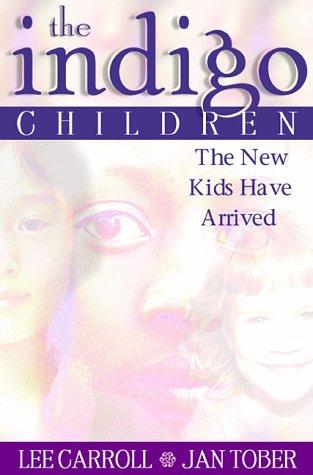
As an Amazon Associate, OverClassified may earn from qualifying purchases made through this link, at no extra cost to you.
Why This Is Essential Reading
Read on its own terms rather than through the movement it spawned, The Indigo Children is a 1999 self-help anthology making a specific, checkable clinical argument — that some children diagnosed with ADHD are being pathologized rather than parented correctly — dressed in the aura-based classification system of a single self-described synesthete, Nancy Ann Tappe. It makes no claim about extraterrestrial origin, non-human contact, or UFO phenomena of any kind; that entire dimension was added by later writers, most explicitly Mary Rodwell nearly two decades later. What the book actually did — package a fringe idea for a mass audience, offer parents a more flattering alternative to a difficult diagnosis, and describe a set of traits broad enough to fit almost any child — is precisely what research psychologists like Russell Barkley have identified as its real mechanism, and precisely why the label persists despite forty years of psychological literature finding no distinct population behind it. This site's own Gifted Children Experiencer Hypothesis page traces the rest of that chain; this book is where the chain, as a mass phenomenon, actually begins.
Related Cases & Theories
Essential Viewing
Sources Cited
- Carroll, Lee & Tober, Jan. The Indigo Children: The New Kids Have Arrived. Hay House, Carlsbad, CA, 1999. ISBN-10 1561706086 / ISBN-13 9781561706082. amazon.com
- Internet Archive, The indigo children: the new kids have arrived — bibliographic record confirming 1999 Hay House publication, xviii + 249 pp., and table-of-contents structure across three sections. archive.org
- Open Library edition record — bibliographic verification and cover-art source. openlibrary.org
- Wikipedia, "Indigo children" — the concept's 1970s origin with Nancy Ann Tappe, this book's 1998/1999 popularization, its linkage of Indigo traits to ADHD diagnosis, James Twyman's 2003 film Indigo and 2006 documentary The Indigo Evolution, the 2002 Hawaii conference, and named critical responses from Russell Barkley, Robert Todd Carroll, David Cohen and Mitzi Waltz. en.wikipedia.org
- Robert Todd Carroll, "Indigo child," The Skeptic's Dictionary — the sourced critical assessment quoted in this article. skepdic.com
- "So-Called Indigo Teen Says She Can Read People," ABC News / Good Morning America, 24 July 2006 — contemporary profile of a self-identified Indigo teenager previously treated for ADHD. abcnews.go.com
- CNN, Anderson Cooper 360°, "Examining Indigo Children," 14 November 2005 — contemporary network news segment on the phenomenon this book popularized. transcripts.cnn.com
- Kryon.com, official biography of Lee Carroll — career history, Kryon channeling since the late 1980s, and the Del Mar, California origin of the Kryon light groups with Jan Tober. kryon.com
- PenguinRandomHouse.com, publisher catalogue record for The Indigo Children — publisher-of-record confirmation and later reissue edition. penguinrandomhouse.com
- This site's own Gifted Children Experiencer Hypothesis theory page, Origin & History section — the fuller documentary chain from Tappe (1970s) through this book (1999) to Mary Rodwell's explicit extraterrestrial-origin claim (2016).
- Tappe, Nancy Ann. Understanding Your Life Through Color. 1982 — the original comb-bound statement of the Indigo/“life color” classification system this book popularized, later expanded and republished as Understanding Your Life Thru Color (1986).
- "Indigo Children: Myth, Metaphor, or Misdiagnosis?", Disabled World — a clinical-perspective overview of the ADHD-misdiagnosis concern raised against this book's central argument. disabled-world.com
- "Indigo Kids: Does the Science Fly?", cited via the Cult Education Institute archive — a further skeptical review of the empirical basis for the Indigo-child category this book advanced. culteducation.com
Have corrections, additional research, or peer-reviewed sources? Help improve this entry.
Suggest an Edit