
Alien Abduction of the Wyoming Hunter
First Person Story of Carl Higdon, October 25, 1974
Core Thesis
Alien Abduction of the Wyoming Hunter: First Person Story of Carl Higdon, October 25, 1974 is Margery A. Higdon's 2017 first-person account of her husband Carl Higdon's widely investigated 1974 abduction claim and the decades the family spent living with its aftermath. This site's own Carl Higdon / Rawlins Encounter case file describes it as "the closest thing available to a primary-source retrospective from inside the family," written by the one person present for both the original October 1974 search and every year of the case's long public life since.
About the Author
Margery Higdon is not merely this book's author but a direct participant in the case itself: on the night her husband went missing, October 25, 1974, she and friends Don and Marilyn James independently reported a red-green-white flashing light moving back and forth over the search area near Rawlins, Wyoming — the only corroborating observation by a second party anywhere in the case, though it does not independently confirm her husband's own humanoid-encounter account.
Margery was also present for the case's early physical-evidence chain: she discovered the flattened, inside-out rifle bullet in her husband's jacket pocket, an object ballistics experts were unable to explain through any conventional firearm malfunction, and one Carl himself said had stalled in mid-air and dropped roughly 50 to 60 feet from where he stood just before the encounter began.
Her husband, Everett "Carl" Higdon Jr., was a 41-year-old oil-rig foreman with fifteen years in the petroleum industry and a Korean War Air Force veteran whose crew nicknamed him "the Wyoming Coyote" for his relentless work ethic. He passed polygraph examinations regarding his account, never sought to profit from the story commercially, returned to oil-field work, retired in 1997, and later relocated to Texas, where he died on January 26, 2022, of COVID-19 pneumonia — making this 2017 book, published five years before his death, a record set down while both spouses were still alive to reflect together on the case's full decades-long arc.
That combination — a witness with a genuinely conventional, respectable working-class background, no history of prior paranormal claims, no financial motive, and a passed polygraph — is precisely the profile that has kept the Higdon case under sustained researcher attention for five decades even as its central literary-parallel puzzle remains unresolved. Margery's own decision to write this book decades later, well after any window for financial exploitation of the story's initial novelty had closed, is consistent with that same pattern of restraint rather than commercial opportunism.
Historical Context & Origins
The book was self-published in 2017, forty-three years after the original October 1974 encounter, giving Margery Higdon a genuinely rare vantage point: rather than writing in the immediate aftermath, she was recording a family perspective shaped by more than four decades of the case's public life, including its extensive contemporary press coverage, its formal psychological investigation, and the family's own long private experience of being permanently associated with one of the era's most scrutinized single-witness abduction claims.
The underlying case itself was investigated almost immediately: on November 2, 1974, University of Wyoming counseling psychologist Dr. R. Leo Sprinkle, APRO's consultant in psychology, spent four hours with Carl and Margery Higdon together, using hypnotic and pendulum techniques to draw out additional detail — meaning Margery's own presence at that founding investigative session, more than four decades before this book, gave her direct firsthand knowledge of the case's earliest formal documentation.
The book's 2017 publication also followed by several years the specific literary-parallel discovery that has become one of the case's most debated details: researchers identified striking thematic correspondences between Higdon's hypnotically recovered account and Maurice Renard's 1911 French science-fiction novel Le Péril Bleu (published in English as Up Above in 1912) — both featuring invisible aircraft that capture humans into transparent aerial cells, both featuring captives assessed and found unsuitable for an alien purpose, and both built around genuinely similar "transparent craft observing Earth from above" imagery.
Renard's novel itself circulated in English translation under more than one title across the 20th century, meaning some chain of plausible cultural transmission from the 1911 French original to a 1970s Wyoming hunter is not inherently implausible on purely historical grounds, even though no specific, documented path by which Higdon himself might have encountered the story was located during this article's research.
Core Arguments & Key Concepts
As a family memoir rather than an investigative or skeptical treatment, the book's central purpose is documentary and personal: preserving Margery Higdon's own direct account of events, including her own independent light sighting and her discovery of the flattened bullet, as a primary record from someone who lived through the case's every stage rather than reconstructing it secondhand from press clippings and investigator reports.
The book's first-person framing gives readers access to details a purely investigative account might treat as peripheral but which carry real evidentiary weight precisely because they come from an eyewitness participant: the emotional and practical reality of searching for a missing husband for nearly eight hours, the family's own encounter with the flattened bullet before any UFO researcher had examined it, and the lived experience of the following decades under sustained public and researcher attention.
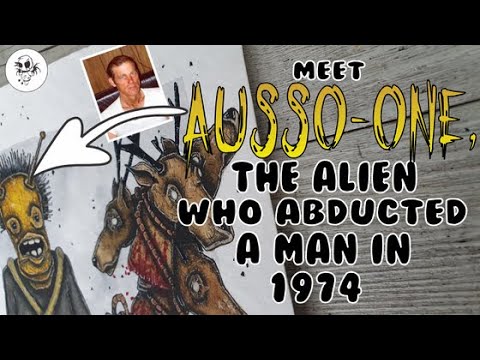
Carl Higdon's own account, as recorded through Sprinkle's 1974 hypnosis sessions, described a six-foot humanoid calling itself "Ausso One" that invited him aboard a transparent, cube-shaped craft after his rifle shot inexplicably stalled in mid-air; Higdon drew both the entity and craft during the sessions and described the being's voice as sounding "like a record played backward" — specific, consistent sensory detail Sprinkle later cited when stating he found "no evidence of hoax" across his broader body of abduction-case investigations.
The book's existence as a spousal account also implicitly engages with the Le Péril Bleu literary-parallel question that has become central to skeptical analysis of the case: whether Carl Higdon could plausibly have encountered Renard's novel or its ideas through 1970s popular culture before his hypnosis sessions, a question a family memoir is uniquely positioned to address through direct knowledge of what books and media the household actually had access to, even if this specific book's content on that question was not independently verified for this article.
Key Cases & Evidence Discussed
This site's own Carl Higdon / Rawlins Encounter (Case File #215, October 25, 1974) is this book's entire subject, and this site's case file draws on it specifically as the family's own primary-source retrospective, distinct from the contemporary press coverage, Sprinkle's clinical investigation record, and the later literary-parallel research into Le Péril Bleu that together make up the case's fuller documentary record.
This site's own Herbert Schirmer Encounter (Case File #154, December 3, 1967) connects to this book through its shared investigator: Dr. Sprinkle's hypnotic-regression work with Nebraska patrolman Herbert Schirmer seven years before the Higdon case established the same investigative method — structured hypnosis sessions aimed at recovering additional detail from a missing-time experience — that he later applied directly to Carl Higdon, making the two cases a useful paired example of Sprinkle's consistent methodology across distinct decades and distinct Great Plains states.
Critical Reception & Controversies
As a self-published family memoir rather than a commercially marketed or critically reviewed title, the book has not attracted mainstream book-review coverage; its value to this site's own research rests on its status as firsthand testimony from a direct participant rather than on independent critical assessment of its literary merits.
The broader Higdon case itself has drawn sustained secondary coverage across podcasts, regional journalism, and UFO-research websites for five decades, with Cowboy State Daily's 2023 retrospective noting Carl Higdon passed polygraph examinations and never sought to profit from the story — a detail this book's own existence as a modest, self-published title, rather than a sensationalized commercial release, is broadly consistent with.
This site's own research treats the book's evidentiary status honestly: as an insider family account rather than an independently investigated or peer-reviewed treatment, its value lies specifically in the firsthand details only Margery Higdon could provide — her own light sighting, the bullet's discovery, and the family's lived experience — rather than in independent verification of Carl Higdon's own hypnotically recovered abduction narrative.
No source located during this article's research disputes the book's good-faith documentation of the family's own experience; the case's central unresolved question remains whether Higdon's account represents a genuine anomalous experience or reflects cryptomnestic influence from earlier science-fiction narratives like Renard's, a question this book, as a family memoir rather than a forensic investigation, does not itself attempt to resolve.
Influence & Legacy
This exact title is cited in this site's own Carl Higdon / Rawlins Encounter case file's Further Reading section as the closest available primary-source family retrospective on the case, distinguished there from both the original 1974 press coverage and later academic literary-parallel research.
Published five years before Carl Higdon's death in January 2022, the book stands as a documented record set down while both spouses could still reflect together on the case's full public life — a window that closed permanently with his death, making this book an increasingly important primary source as the case's living witnesses become fewer.
The book's existence alongside the case's other major documentary threads — Sprinkle's original 1974 clinical investigation, contemporary Rawlins Daily Times coverage, and the later Le Péril Bleu literary-parallel research — gives readers a genuinely multi-perspective documentary record for one of the 1970s' most closely examined single-witness abduction cases, spanning family memoir, clinical psychology, contemporary journalism, and comparative literary analysis.
The case's continued presence across podcasts and regional media coverage decades after 1974, including a dedicated 2023 Cowboy State Daily retrospective pairing it with a second, separate Wyoming abduction claim from the same general period, indicates the case has retained genuine cultural currency within Wyoming regional history specifically, not only within specialist ufology circles — a durability this book's own family-perspective account contributes directly to.
The Book
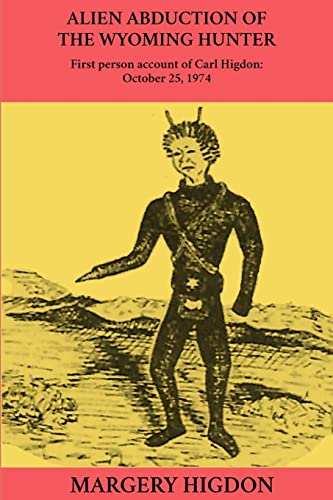
Alien Abduction of the Wyoming Hunter
First Person Story of Carl Higdon, October 25, 1974
Find on Amazon →As an Amazon Associate, OverClassified may earn from qualifying purchases made through this link, at no extra cost to you.
Why This Is Essential Reading
Alien Abduction of the Wyoming Hunter earns its place on this list as genuine firsthand testimony from inside the family at the center of one of the 1970s' most closely examined abduction cases — not a substitute for the clinical or literary-comparative scrutiny this site's own Carl Higdon / Rawlins Encounter case file also documents, but an irreplaceable complement to it, recorded by the one person present for both the original 1974 search and every year of the case's long aftermath since.
Related Cases & Theories
Essential Viewing
Sources Cited
- Higdon, Margery A. Alien Abduction of the Wyoming Hunter: First Person Story of Carl Higdon, October 25, 1974. CreateSpace Independent Publishing Platform, 2017 (ISBN-13 9781981812899). amazon.com
- "Alien Abductions Of 2 Wyoming Men In The 1970s Remain Unexplainable." Cowboy State Daily, September 30, 2023 (case retrospective: Higdon's background, investigation, outcome, and death). cowboystatedaily.com
- "Carl Higdon's humanoid/UFO encounter." UFO Evidence (contemporary case documentation, Sprinkle investigation detail). ufoevidence.org
- Reid, Gideon. "Science Fiction and The Carl Higdon Alien Encounter Story." (Analysis of the Le Péril Bleu literary-parallel research this article's Historical Context section references.) gideonreid.co.uk
- "Alien Abduction of the Wyoming Hunter." Goodreads (author page, bibliographic listing). goodreads.com
- "Alien Abduction of the Wyoming Hunter." AbeBooks (bibliographic listing, cover art source). abebooks.com
- This site's own case file: Carl Higdon / Rawlins Encounter, for the full 1974 case this book documents from inside the family.
- This site's own case file: Herbert Schirmer Encounter, another Dr. Sprinkle-investigated hypnotic-regression case.
- This site's own key-figures entry: Margery Higdon, for her own role in the case and further connections.
- This site's own key-figures entry: Carl Higdon, for his full biography and case details.
- This site's own key-figures entry: Dr. R. Leo Sprinkle, the psychologist who investigated both this case and the Herbert Schirmer case.
- "Le Péril Bleu." Wikipedia (background on Maurice Renard's 1911 novel identified as a literary parallel to Higdon's account). en.wikipedia.org
Have corrections, additional research, or peer-reviewed sources? Help improve this entry.
Suggest an Edit