
Pliny's Burning Shields
Buried in Book 2 of Pliny the Elder's vast first-century Natural History, alongside chapters on comets, eclipses, and shooting stars, sits a single terse sentence: a burning shield, scattering sparks as it went, crossed the sky from west to east at sunset. Pliny dates it with unusual precision — not to a vague era, but to a specific consular year, 86 BCE, the same year the seven-time consul Gaius Marius died in office. Unlike most cases in this site's Ancient Records series, this one carries almost no narrative framing at all: no army, no siege, no divine warning, just a bare astronomical record from history's most systematic ancient compiler of natural phenomena. That plainness is exactly what makes it useful — and exactly what this file traces back to its actual Latin.
Theoretical Alignment
This file is the plainest case in this site's Ancient Records series, and that plainness matters. Pliny does not frame the burning shield as a divine omen, does not connect it to any military or political crisis, and supplies no narrative at all beyond the sighting itself and its consular date — a striking contrast with the elaborately theologized accounts in this site's Josephus and Sigiburg files. Pliny's Natural History is, whatever its era's limitations, a genuine attempt at systematic natural philosophy: Book 2 catalogs comets, eclipses, meteors, and related celestial phenomena as a connected scientific subject, not as isolated wonders. Read in that context, "a burning shield, scattering sparks, ran across the sky from west to east" is very close to a plain-language description of a bright fireball meteor (a bolide) — a real, common, still-observed astronomical event — using the only visual vocabulary available to a culture whose soldiers carried round shields into every battle. The paleocontact reading has essentially no independent support here beyond the passage's evocative wording.
Sensor & Instrumentation Detection Profile
As with every case in this site's Ancient Records series, there is no instrumentation record. Unusually for this site's files, there is also no claimed eyewitness testimony chain at all: Pliny does not say who saw the shield, does not claim personal knowledge of it, and does not cite an intermediate source by name, unlike his practice elsewhere in the Natural History where he frequently names earlier authorities. The entry reads as drawn from an existing Roman prodigy-record tradition — likely the same annalistic and pontifical record-keeping tradition this site's Livy's Roman Prodigia Records file documents at length — compressed by Pliny into a single sentence for his own encyclopedic purposes. The event is dated only to a consular year (86 BCE) and a time of day ("at sunset"); no month, day, duration, or precise location is given.
Environmental & Geospatial Context
Pliny does not state where the shield was seen. Roman prodigy records of this era, when unlocated, are conventionally treated by historians as referring to Rome itself or its immediate vicinity, since the city's own religious and administrative institutions were the primary channel through which such reports were collected, evaluated, and eventually preserved in the literary record Pliny drew on. No solar or lunar eclipse is independently associated with this specific date. The description — sparking, crossing from west to east, near sunset — is consistent with the well-documented visual signature of a bright bolide meteor entering the atmosphere at a low, near-horizontal angle, a genuine and still-observed astronomical event class capable of producing exactly this kind of trajectory and spark trail.
Observer Credibility & Occupational Profile
Gaius Plinius Secundus (23/24 – 79 CE) was a Roman equestrian, military commander, and administrator who served in several provincial and naval postings before his death commanding the fleet at Misenum during the eruption of Vesuvius. His Natural History, completed and dedicated in 77 CE, is a genuinely encyclopedic 37-book compilation covering astronomy, geography, zoology, botany, mineralogy, and art, drawing (per his own preface) on some 2,000 volumes by around 100 earlier authors. Pliny was not personally present for an event nearly 90 years before his own birth; his role here is entirely that of a compiler working from earlier Roman records, most likely the same annalistic prodigy tradition preserved independently by Livy and, in epitome, by Julius Obsequens. Modern historians of science, including scholars represented in the standard Loeb and Penguin critical editions, generally regard Pliny's astronomical reporting as more reliable and less embellished than his zoological and geographical material, where he more readily repeats secondhand marvels without independent verification — a relevant distinction for weighing this specific entry.
Historical Precedents & Archive Matches
The "burning shield" vocabulary situates this case directly within the Roman prodigy-reporting tradition this site documents at length in its Livy's Roman Prodigia Records file, which covers the formal registration of "round shields" (parmae) and "phantom ships" seen in the sky during the Second Punic War (218–217 BCE), roughly 130 years before this event. This site's Josephus's Sky-Armies before the Fall of Jerusalem file documents the same martial "shield/army" descriptive convention persisting into the 1st century CE in Judaea, and the Sigiburg Castle Apparition file documents its recurrence in Carolingian Europe some 850 years after Pliny's shield. What distinguishes this specific case within that broader pattern is precisely its lack of narrative elaboration: Pliny's version is the closest thing in this site's Ancient Records archive to a pure astronomical data point, unembedded in any military, religious, or political story.
Historical Background
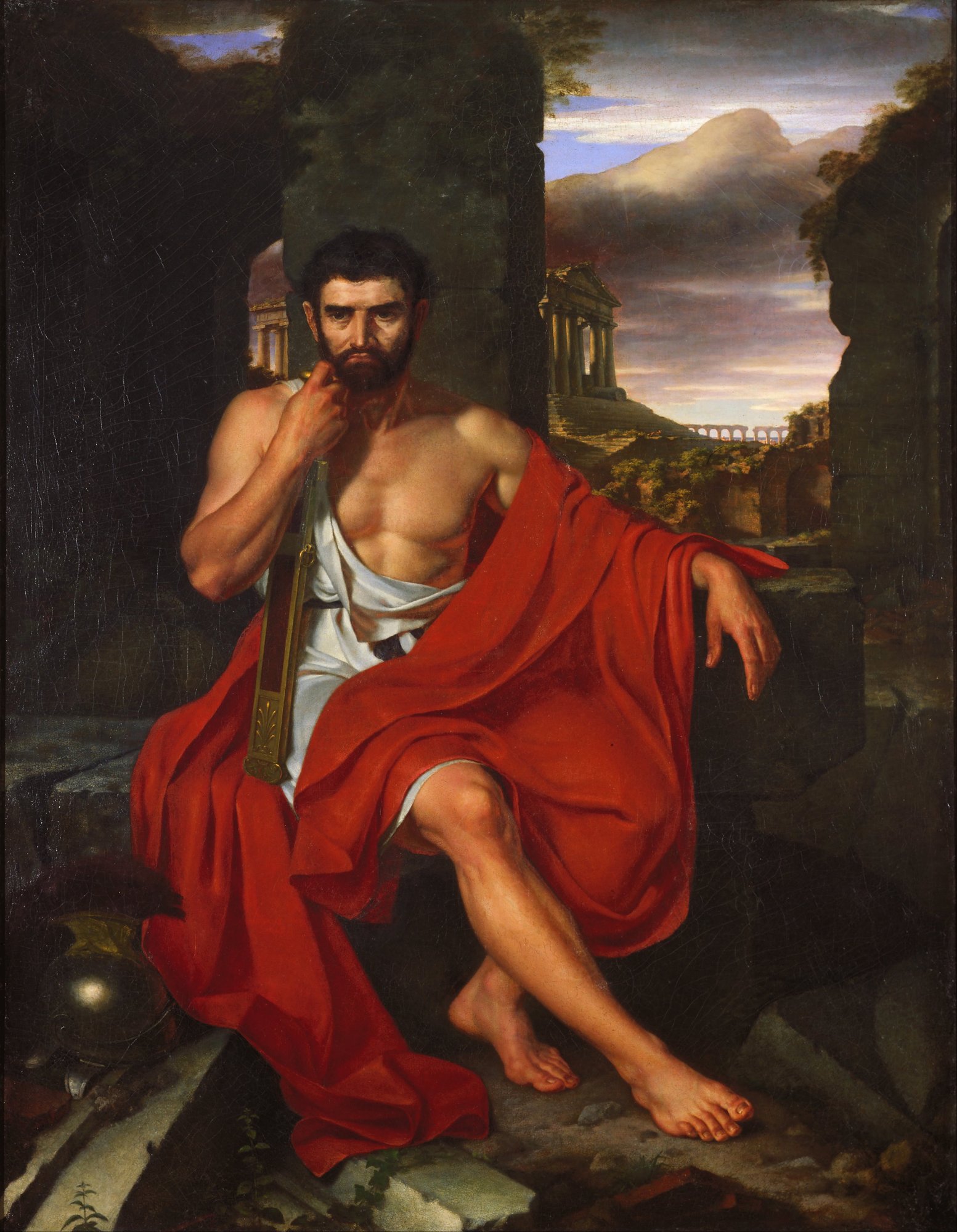
The year 86 BCE fell in one of the most violent periods of the late Roman Republic. Gaius Marius, a novus homo (a man without consular ancestors) from Arpinum who had risen to become Rome's most celebrated general by defeating the Numidian king Jugurtha and, later, the invading Cimbri and Teutones, had already been consul six times by 100 BCE. After years of bitter political rivalry with Lucius Cornelius Sulla, Marius was driven into exile during Sulla's first march on Rome in 88 BCE — the first time in Roman history a general had led his own army against the city itself. Marius returned the following year, in 87 BCE, allied with the consul Lucius Cornelius Cinna, retook Rome amid a bloody purge of political opponents, and was elected to an unprecedented seventh consulship for 86 BCE. He held the office for only seventeen days before dying, on January 13, 86 BCE, reportedly of pleurisy, at around age 70 or 71.
Pliny's dating convention — "in the consulship of L. Valerius and C. Marius" — is the standard Roman method of dating by the year's two eponymous consuls, and places this sighting somewhere within that same turbulent consular year: either during the final weeks of Marius's own life, or in the months immediately following his death, as Cinna and his allies consolidated control of a city that had just endured a general's second forcible seizure of power in two years. This site's research found no ancient source connecting the burning shield explicitly to Marius's death or to the political crisis of 86 BCE — Pliny's dating is a chronological marker, not a claimed omen — but the coincidence of dates is a genuine, checkable historical fact, and a natural point of comparison to this site's other prodigy files, in which sky-signs cluster disproportionately around years of acute military or political crisis.
Complete Timeline
| Date | Event |
|---|---|
| 157 BCE | Gaius Marius is born near Arpinum, Italy, to a family of the local equestrian elite. |
| 107–86 BCE | Marius is elected consul a total of seven times, an unprecedented achievement in Roman history, defeating Jugurtha and the invading Cimbri and Teutones along the way. |
| 88 BCE | Sulla marches on Rome for the first time in Roman history; Marius flees into exile. |
| 87 BCE | Marius returns to Italy, allies with consul Cinna, and retakes Rome amid a violent purge of political opponents. |
| 86 BCE (Jan. 13) | Marius, in his seventh consulship, dies in Rome after only seventeen days in office. |
| 86 BCE | Per Pliny, during the consulship of L. Valerius Flaccus and C. Marius, "a burning shield, sparkling as it ran from west to east, crossed the sky at sunset." |
| 23/24 CE | Gaius Plinius Secundus (Pliny the Elder) is born at Novum Comum (Como), northern Italy. |
| 77 CE | Pliny completes and dedicates his 37-book Natural History to the future emperor Titus, including the burning-shield entry in Book 2. |
| 79 CE | Pliny dies near Stabiae while commanding the Roman fleet during the eruption of Mount Vesuvius, an event described by his nephew, Pliny the Younger, in two surviving letters. |
| 1938–1963 | H. Rackham, W.H.S. Jones, and D.E. Eichholz complete the ten-volume Loeb Classical Library critical edition and translation of the full Natural History, the standard modern scholarly reference. |
| 1991 | John F. Healy's Penguin Classics abridged translation, Natural History: A Selection, is first published, becoming the most widely circulated popular English edition. |
| Present day | The passage remains in active circulation both in classical-astronomy scholarship on ancient meteor and fireball records, and in popular ancient-astronaut/UFO catalogs listing it among the oldest classical "disc" or "shield" sightings. |
The Primary Source Document
The passage sits in Book 2 of Pliny's Natural History, Section 34, within a sequence of entries on unusual celestial lights — comets, "torches," "beams," and related meteoric phenomena — that Pliny treats as a coherent scientific subcategory of astronomy rather than as isolated marvels.
The Text, In the Original Latin
"Clipeus ardens ab occasu ad ortum scintillans transcucurrit solis occasu L. Valerio C. Mario consulibus."
Pliny the Elder, Naturalis Historia, Book 2, §34, as transcribed at LacusCurtius (University of Chicago), reflecting the standard Mayhoff (Teubner) critical Latin edition
The Text, In Published Translation
"A burning shield, sparkling as it ran from west to east, crossed the sky at sunset, in the consulship of L. Valerius and C. Marius."
Pliny the Elder, Natural History, Book 2, §34, standard modern English rendering, as hosted at Attalus.org and consistent with the Loeb (Rackham) and Penguin (Healy) published translations
The sentence is complete in itself — there is no surrounding narrative, no claimed witness, and no interpretive commentary from Pliny beyond its placement among his other meteor and comet entries. This is characteristic of Pliny's method throughout the Natural History: for astronomical phenomena specifically, he tends toward terse, dated, catalog-style entries, in contrast to the more discursive treatment he gives some of his zoological and geographical material.
The Witness Record
Pliny the Elder (as Compiler, Not Eyewitness)
Pliny was born roughly a century after this event and makes no claim to personal knowledge of it; his role is entirely that of a compiler drawing on earlier Roman records, almost certainly the same annalistic and pontifical prodigy-recording tradition independently preserved by Livy and Julius Obsequens.
No Named Eyewitness Survives
Unlike this site's Josephus or Sigiburg files, no collective or individual witness group is named, described, or even gestured at in the surviving text. This is, evidentially, the thinnest witness chain in this site's Ancient Records series — but also the least narratively embellished, a genuine trade-off this file treats as worth stating plainly rather than papering over.
Confirmed Textual & Archival Holdings
The full Latin text of Book 2, including §34's burning-shield entry, from the standard Mayhoff critical edition.
PUBLIC DOMAIN (freely accessible)A freely accessible English translation of Book 2, including the burning-shield entry and its full surrounding context of comet and meteor reports.
PUBLICLY ACCESSIBLE SCHOLARLY SOURCEAn independent open digital edition of the same Latin text, allowing direct cross-checking of the passage's wording.
PUBLIC DOMAIN (freely accessible)Search Primary & Institutional Archives Directly
Evidence Assessment
Supporting a Genuine Reported Phenomenon
- Pliny's astronomical reporting is generally regarded by modern scholarship as his more reliable material, in contrast to some of his more credulous zoological and geographical entries
- The passage is dated with unusual precision (a specific consular year), unlike many vaguer ancient prodigy reports
- The described trajectory, brightness, and spark trail are all consistent with a real, still-observed class of astronomical event (a bright bolide meteor)
- The entry sits within a broader, independently attested Roman tradition of formally recording sky prodigies, documented separately by Livy and Julius Obsequens
Supporting a Purely Descriptive / Compilation-Distance Explanation
- No eyewitness, named or collective, is identified anywhere in the surviving text
- Pliny was compiling the entry roughly a century after the event, from an unnamed earlier source, with no claimed chain of verification
- The "shield" descriptor is a well-documented ancient Mediterranean convention for describing bright, ambiguous sky objects, independently attested from Republican Rome (218 BCE) through Carolingian Europe (776 CE), rather than a technical or literal description
- No location is even specified, making independent verification of any kind impossible
Comparative Analysis
Livy's and Obsequens's Roman Shield Prodigies (218–217 BCE)
This site's own Livy's Roman Prodigia Records file documents the same "shield" (parma) vocabulary used roughly 130 years earlier, during the Second Punic War, to describe round objects seen in the sky, officially registered as prodigies and answered with expiatory rites. Pliny's shield uses a related but distinct Latin term (clipeus, a larger round shield, rather than the smaller parma), and receives no comparable religious or political response in the surviving record — a genuine, if minor, textual distinction worth noting for readers comparing the two files directly.
Josephus's Sky-Armies and the Sigiburg Apparition
Both this site's Josephus file (c. 66 CE) and its Sigiburg Castle Apparition file (776 CE) embed their martial sky-vocabulary within elaborate providential narratives tied to specific military crises. Pliny's shield, by contrast, carries no such narrative at all — it is this site's clearest example of the same descriptive convention appearing in a purely scientific-catalog context, stripped of theological or political framing, which this file treats as evidence that the "shield" vocabulary functioned as an ordinary descriptive term across Roman culture generally, not merely as a rhetorical device deployed only in crisis narratives.
Material Analysis: The Manuscript Evidence
There is no physical trace evidence of any kind — no meteorite, no crater, no recovered fragment associated with this event. What exists is the manuscript and editorial history of Pliny's text itself. The Natural History survives through a substantial medieval manuscript tradition; the standard modern critical edition is Karl Mayhoff's Teubner Latin text (1875–1906), which underlies both the Loeb Classical Library's bilingual edition (Rackham, 1938) and, in abridged form, John F. Healy's Penguin Classics translation (1991). This file was able to confirm the wording of the burning-shield passage against two independent open digital hostings of the standard Latin text (LacusCurtius, University of Chicago; Perseus Digital Library, Tufts University) and cross-check it against a published English translation (Attalus.org, consistent in substance with the Rackham and Healy renderings), but did not undertake independent manuscript-tradition collation beyond what these standard critical editions already represent.
The Paleocontact / Ancient-UFO Interpretation
Within ufological literature, Pliny's shield is frequently cited — often alongside the Livy and Obsequens material — as one of the oldest classical "disc" sightings, occasionally grouped by paleocontact writers with modern UFO reports on the strength of its shape descriptor alone. Jacques Vallée's historical anomaly catalogs have likewise included Pliny's astronomical prodigy entries among their pre-modern source material. It is worth being precise about what the primary text itself does and does not claim: Pliny does not describe controlled flight, maneuvering, or any device-like structure; his entry sits within a chapter explicitly organized around comets, shooting stars, and other conventional celestial phenomena, treated by Pliny himself as a unified scientific subject rather than as evidence of anything artificial or intelligently directed.
The Mainstream Scientific Interpretation
The dominant explanation, and the one this file finds best supported by the text itself, treats the passage as a genuine ancient description of a bright fireball meteor (a bolide) — a real, common, still-documented class of astronomical event capable of producing exactly the visual signature Pliny records: a bright, spark-scattering object crossing the sky along a roughly horizontal trajectory near sunset, when such events are most readily visible against a darkening sky. This reading requires no assumption of exaggeration, fabrication, or elaborate literary convention; it treats Pliny's account as more or less what it appears to be on its face, a plain-language ancient description of a genuine natural phenomenon his culture lacked the technical vocabulary to describe any other way. The astronomical record independently confirms that bright bolide events, while individually rare at any given location, are a regular and expected feature of Earth's night sky over any century-long span, making a real fireball a fully sufficient, unremarkable explanation for this specific entry.
Five Observables Assessment
The Five Observables framework, developed decades later by former AATIP director Luis Elizondo to classify modern UAP performance characteristics that exceed known technology, is included here for structural consistency with the rest of OverClassified's case files, but it does not meaningfully apply to a single-sentence, pre-instrumentation ancient text.
Assessment: As with this site's other pre-modern files, the Five Observables framework is the wrong instrument for a two-thousand-year-old, one-sentence astronomical catalog entry. Its inclusion should not be read as suggesting genuine exotic-performance evidence exists for this case.
Conventional Explanation Candidates
Two candidates are assessed below.
1. Bright Fireball Meteor (Bolide)
The leading and, in this file's assessment, most probable explanation: a genuine bright meteor, of a class still regularly observed and documented today, fragmenting and sparking as it crossed the sky near sunset. This candidate requires no assumption of literary exaggeration and treats Pliny's terse, catalog-style entry as a reasonably faithful ancient description of a real, ordinary (if individually striking) natural event.
Plausibility Rating: HIGHLY LIKELY
2. Roman Prodigy-Recording Convention (Descriptive Vocabulary, Not Fabrication)
This candidate does not compete with the fireball explanation so much as explain the specific choice of words: Roman observers without modern astronomical vocabulary reached for their own soldiers' equipment — the round shield — as the most readily available descriptive comparison for a bright, round, fast-moving sky object, a convention independently attested across multiple centuries and cultures in this site's Ancient Records archive.
Plausibility Rating: HIGHLY PLAUSIBLE (explains the vocabulary, not an alternative to the fireball candidate)
3. Genuine Anomalous / Paleocontact Phenomenon
Included for completeness, per this site's standard framework. No positive evidence, textual or physical, supports a literal non-natural aerial object over the fireball explanation; the case for it rests almost entirely on the passage's evocative "shield" wording, read in isolation from its own explicit placement among Pliny's other conventional astronomical entries.
Plausibility Rating: SPECULATIVE / UNVERIFIABLE
Why "Verified"
This case receives a VERIFIED classification — a rarer stamp in this site's Ancient Records series — because both halves of what can actually be checked here check out cleanly. The primary source is unquestionably genuine: a real sentence, in a real, securely dated first-century encyclopedic text, confirmed against two independent open critical editions of the Latin and cross-checked against a published English translation. And the underlying phenomenon it describes is not a mysterious or contested claim requiring special pleading: a bright meteor crossing the sky, sparking as it fragmented, near sunset, is exactly the kind of real, still-documented astronomical event this description would produce, described in the only visual vocabulary available to an observer without a telescope or a modern taxonomy of meteoric phenomena. VERIFIED here does not mean "confirmed alien craft" — it means the reverse: a real ancient text, reliably transmitted, describing what is very probably a real, ordinary natural phenomenon, with the "shield" language doing exactly the descriptive work a Roman soldier's culture would expect it to do.
Related Entries
Further Reading — Recommended Literature
Natural History: A Selection
The most widely circulated modern abridged English translation, including the astronomical material in Book 2.
Natural History, Volume I: Books 1–2
The standard complete scholarly Latin/English critical edition of the book containing the burning-shield passage.
Gaius Marius: The Rise and Fall of Rome's Saviour
A modern biography of the general whose death fell in the same consular year Pliny dates the burning shield to.
Religions of Rome, Volume 1: A History
The standard academic survey of Roman religious institutions, including the prodigy-recording tradition this file situates Pliny's entry within.
Essays in Ancient and Modern Historiography
A landmark collection on ancient historiographical method and source-critical practice, relevant to evaluating Pliny's own compiling method.
DISCLOSURE: Some links above are affiliate links. If you purchase through them, OverClassified receives a small commission at no additional cost to you. This helps support independent research.
Essential Viewing

The Natural History, Volume 1 by Pliny the Elder (Full Audiobook, Part 1/2)
LibriVox Audiobooks — a free public-domain audio reading of Pliny's own text, including the astronomical material this file examines.
The Tumultuous Life of Gaius Marius
TheCollector — a biographical overview of Marius's career and death in 86 BCE, the consular year this file's burning shield is dated to.
Sources
- Pliny the Elder. "Naturalis Historia," Book 2, §34 (Latin text, Mayhoff/Teubner edition). LacusCurtius, University of Chicago. penelope.uchicago.edu
- Pliny the Elder. "Natural History," Book 2 (English translation). Attalus.org. attalus.org
- Pliny the Elder. "The Natural History," Book 2 (Latin text). Perseus Digital Library. perseus.tufts.edu
- "Natural History (Pliny)." Wikipedia. en.wikipedia.org
- "Pliny the Elder." Wikipedia. en.wikipedia.org
- "Gaius Marius." Wikipedia. en.wikipedia.org
- "86 BC." Wikipedia. en.wikipedia.org
- Healy, John F. (trans.). Pliny the Elder: Natural History, A Selection. Penguin Classics, 1991.
- Rackham, H. (trans.). Pliny: Natural History, Volume I: Books 1–2. Loeb Classical Library 330, Harvard University Press, 1938.
- Hyden, Marc. Gaius Marius: The Rise and Fall of Rome's Saviour.
- Beard, Mary; North, John; Price, Simon. Religions of Rome, Volume 1: A History. Cambridge University Press, 1998.
- Momigliano, Arnaldo. Essays in Ancient and Modern Historiography. University of Chicago Press.
- "File: John Vanderlyn - Caius Marius Amid the Ruins of Carthage - Google Art Project.jpg." Wikimedia Commons (public domain). commons.wikimedia.org
- "The Natural History Volume 1 by Pliny the Elder, Part 1/2 (Full Audio Book)." LibriVox Audiobooks, YouTube. youtube.com
- "The Tumultuous Life of Gaius Marius." TheCollector, YouTube. youtube.com
See something inaccurate? Have additional information or sources?
Suggest an Edit →Last Updated: August 2026